
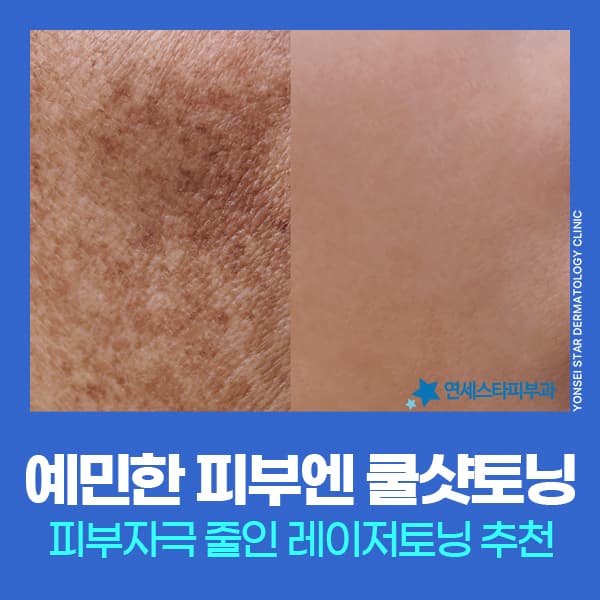
After the vacation season, we see an increase in people coming in saying that melasma and blemishes, which were not usually visible, have become more prominent.
Laser toning is often the first thing that comes to mind for pigment management, but if your skin is thin or sensitive, the heat and irritation during the procedure can be a concern, causing hesitation.
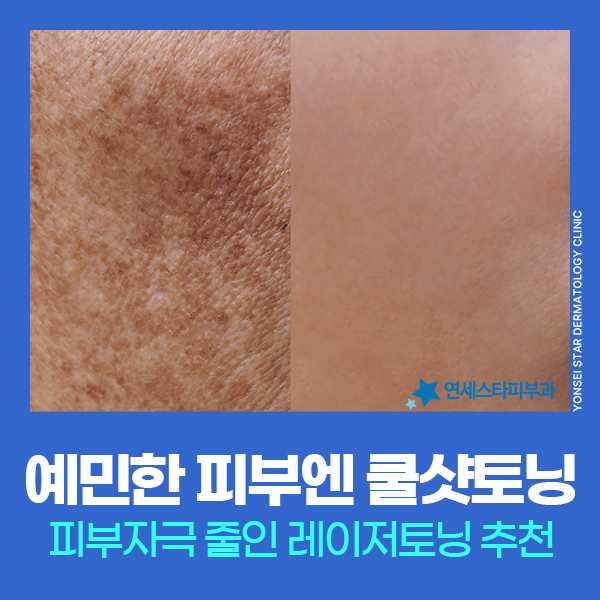
It won't fade if you leave it alone
It is rare for established pigment to disappear on its own.
Home care can help prevent it from getting worse, but there are limitations to reversing existing melasma.
The problem is what comes next. If you have received toning repeatedly and your skin easily reddens or reacts sensitively to irritation, it's worth re-evaluating which toning method to choose rather than continuing with the same approach.

Toning with cooling
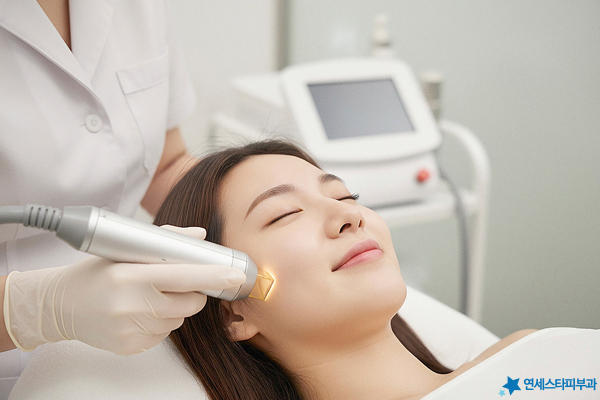
Cool Shot Toning, as the name suggests, is a method that delivers laser energy while cooling the skin surface.
This structure reduces the time heat stays on the skin while still delivering energy to the target area, allowing for an approach that can lower the heat and irritation burden felt with traditional toning.
Since this heat is mostly what makes sensitive skin hesitate to undergo treatment, simply reducing that variable changes the options available.
Wavelengths are divided according to pigment depth
CureMax Cool Shot Toning uses two wavelengths.
| Wavelength | Target Area |
|---|---|
| 1064nm | Melanin pigment in the deep layer of the skin |
| 532nm | Pigment relatively on the surface, like blemishes |
Each type of pigment is located at a different depth. If you try to treat all of them with a single wavelength, it will be too much for some pigments and not enough for others.
The ability to choose wavelengths according to depth is the core of this method.
Still, the condition must be checked first
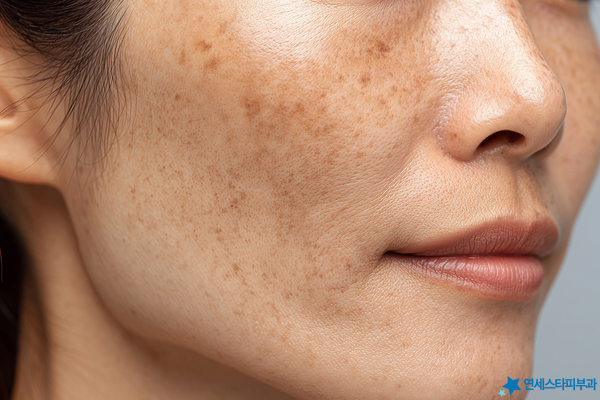
Just because a method uses cooling does not mean it is suitable for all sensitive skin types.
The starting point and intensity will vary depending on whether there is redness, whether the barrier is damaged, and at what depth the pigment is located.
Especially for those who have reacted sensitively to irritation repeatedly, it is more stable to first check what state your skin is in rather than focusing on the device name.

In summary
Pigment won't fade if left alone, but repeating the same toning on sensitive skin is also not the answer. A method that delivers energy while cooling the surface and selecting wavelengths tailored to pigment depth is an approach that can reduce that burden.
Since you need to personally confirm which method and intensity are right for your current skin condition, please try consulting via chat for toning directions suitable for your pigment.
This article was reviewed by Dr. Lee Sang-Joo (Dermatologist), the chief director of Yonsei Star Dermatology Sinchon, and president of the Korean Dermatological Association in 2026. First published 2026-08-13 · Last reviewed August 16, 2026
This text contains general medical information, and individual differences in condition and treatment response may occur. Please decide on treatment and methods through consultation.