

Hello, this is Yonsei Star Dermatology Sinchon.
If a burn from spilling hot soup or drinks leaves a mark even after time passes, it can be quite alarming. The first questions that come to mind are usually similar: Will this scar naturally fade over time? To answer directly, burns that have damaged the dermis have limitations with natural recovery alone, and the treatment direction varies depending on the depth and condition.
Why Burn Scars Are Particularly Tricky
Burns often occur suddenly in unpredictable situations, so their shape and color vary from person to person. They can sometimes rise as thick, raised scars, or conversely, the skin can thin and become deeply indented.

While scars are often associated with redness, it's not uncommon for them to darken due to hyperpigmentation or turn white due to hypopigmentation. If the damage is deep, it can affect not only the skin surface but also bodily movement, requiring treatment tailored to the condition.

Even a minor burn leaves the damaged skin in a very vulnerable state to external stimuli. If left untreated, inflammation can worsen or lead to secondary complications. Rather than assuming it will heal naturally, it's better to carefully check the condition early on to minimize problems.
1st, 2nd, 3rd Degree: What's the Difference?
Burns are classified from 1st to 3rd degree based on the depth of damage. The smaller the number, the milder the stage.

| Classification | Damage Extent | Characteristics |
|---|---|---|
| 1st Degree | Epidermis | Not severe, but emergency first aid is necessary |
| 2nd Degree | Epidermis and part of Dermis | Common in daily life, can leave scars |
| 3rd Degree | Entire Dermis or deeper | Deep damage requiring active treatment |
First-degree burns only affect the epidermis, so they are not a major concern, but emergency first aid is essential. Second-degree burns are common in daily life, and depending on the case, they can leave scars, so they should not be taken lightly; appropriate measures should be taken according to the condition.

Superficial vs. Deep: The Crossroads of 2nd-Degree Burns
Even within the same 2nd degree, burns are classified as superficial or deep depending on the extent of dermal damage. Our skin is composed of multiple layers, and the criterion is how much the dermis, not just the visible epidermis, has been damaged.
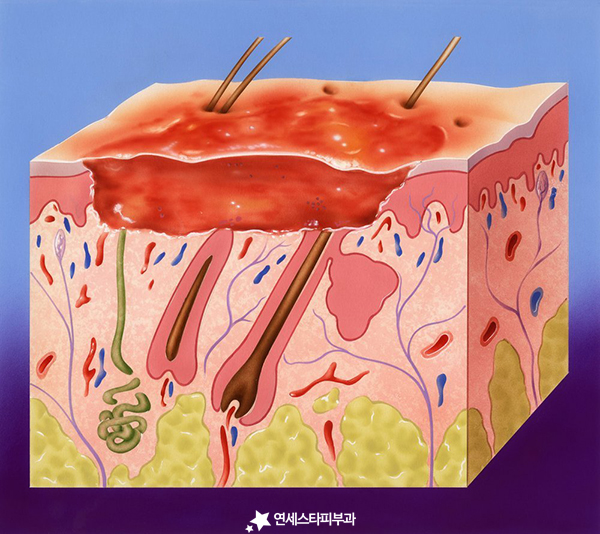
Deep second-degree burns, in particular, require more careful management due to longer treatment periods and a higher likelihood of scarring.
Burns that have progressed to the dermal layer are not sufficiently managed with simple home care. Accurately identifying the depth and adding appropriate treatment is the way to reduce scarring.

Basic Home Care Guidelines
If damage has progressed to the dermal layer, home care alone is not sufficient, but basic rules for creating a healing environment are still important. Please follow the guidelines below:
- Do not forcibly remove attached scabs.
- Protect the affected area from external stimuli.
- Maintain sufficient moisture to aid skin regeneration.
- Reduce the risk of hyperpigmentation by blocking UV rays.
- If inflammation or changes are observed, seek medical attention instead of self-diagnosing.
Along with these basic care measures, if dermal damage is present, adding laser treatment can aid recovery. If you are concerned about burn marks, you may consider inquiring via chat consultation whether burn scar treatment is needed.

Beyond the Days When Surgery Was the Only Option
In the past, for scars like deep second-degree burns, it was generally believed that there was almost no suitable option other than surgical methods. Now, with improved device performance and technological advancements through research, significant changes can be expected even with laser treatment.

This approach aims to improve the problematic area to resemble the surrounding tissue, and Pinhole Technique is a prime example. The Pinhole Technique was developed at our clinic starting in the early 2000s and reported to the European Academy of Dermatology in 2005. Since then, fractional lasers applying this technique have been widely used worldwide.

Expanded Treatment Scope with Pinhole Technique
The advantage of Pinhole Technique treatments like Pinhole Alpha is the wide range of scars they can address. They can be applied to thin skin, deeply thick scars, and cases accompanied by hyperpigmentation. The low burden of returning to daily life after the procedure makes it a good option for those with limited time.
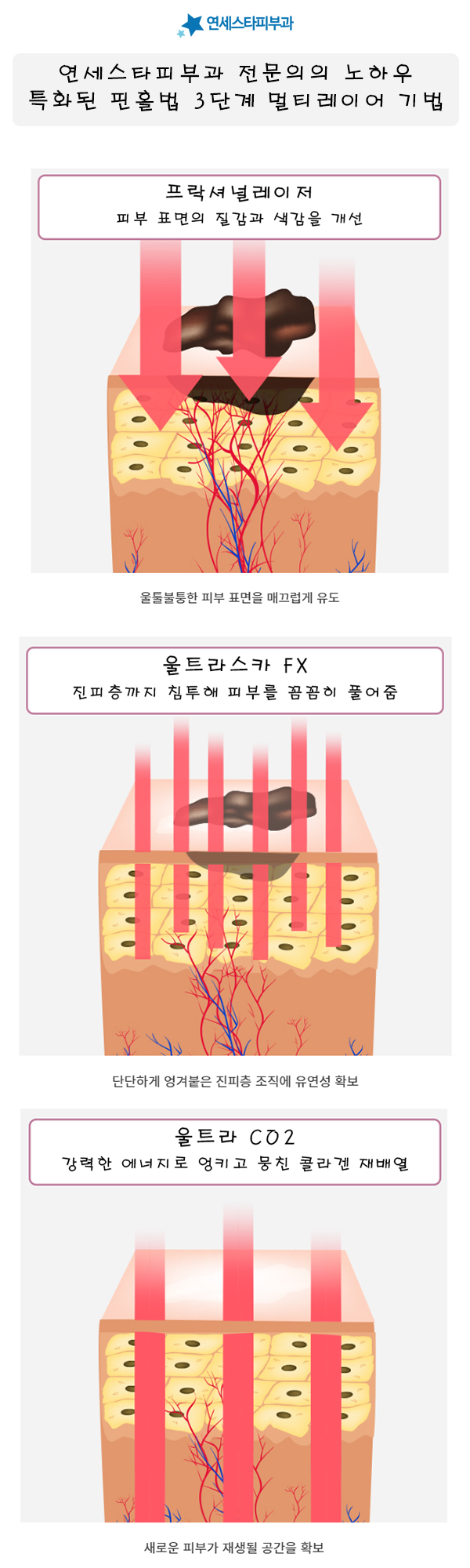
In the clinic, even with the same Pinhole Technique, the quality of the results depends on the practitioner's skill. This is because the entire skin layer needs to be treated, requiring high laser output, and some processes are performed manually. Therefore, it is recommended to receive treatment at a facility with good equipment and from medical staff with experience and expertise. Mild Pinhole is also used, which is a more specialized method tailored to depth and area.


Recovery Takes Time and Patience
Burn scar treatment does not end in a short period. A long-term plan, observing the gradual recovery, leads to good results. Since it's a method that encourages new skin growth, it is recommended to receive it at least 5 times on average. With consistent management to ensure smooth skin regeneration, even deep second-degree burn scars can be expected to improve significantly with laser treatment. Recovery speed and results may vary from person to person.

In addition to Burn Scar treatment, which approaches with similar principles, Surgical Scar and Keloid Scar with keloid tendencies also have different treatment directions depending on their condition. Even old marks can be expected to improve depending on their state, so if you have any further questions, please feel free to ask below.
💬 Consult NowChief Director Lee Sang-Joo (MD, PhD, Yonsei University College of Medicine and Graduate School, Completed Dermatology Residency at Severance Hospital, President of the Korean Dermatological Association) Chief Director Lee Sang-Joo's Profile First Published 2025-02-04 / Last Reviewed 2026-06-16
This content provides general information for understanding and is not a substitute for professional medical advice. The depth of burns and scar conditions vary from person to person, so please confirm an accurate diagnosis and treatment plan through consultation with medical staff.