
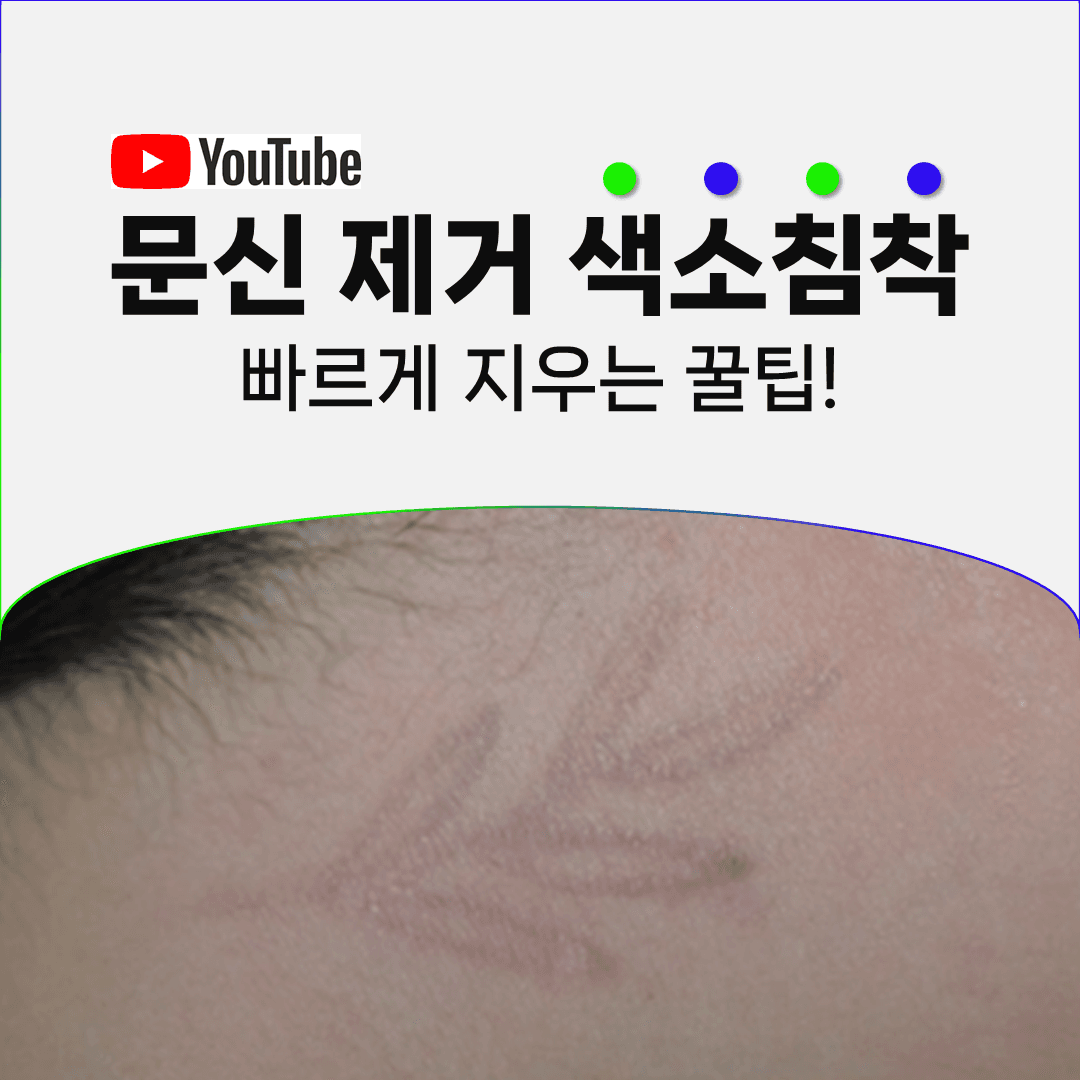
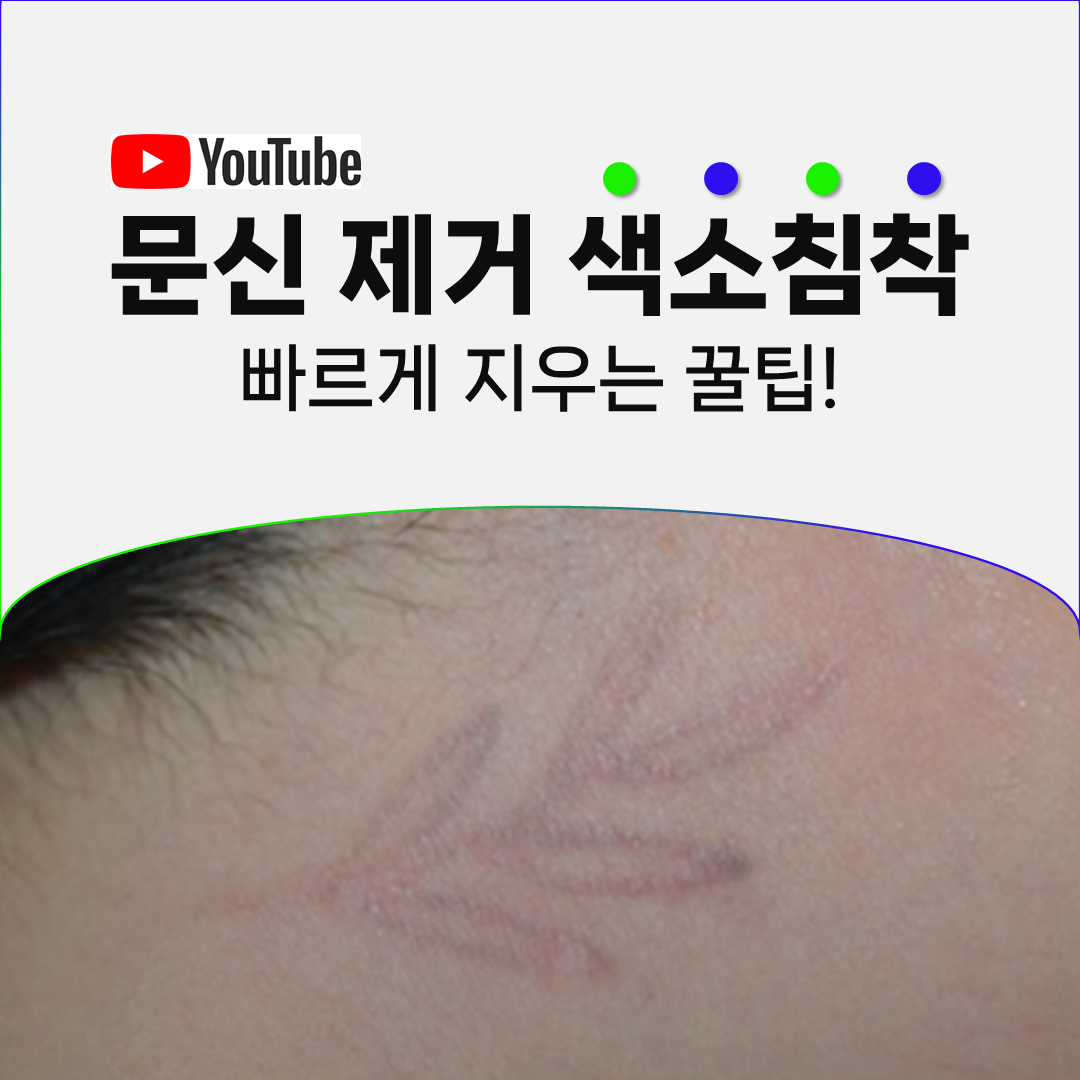
Many people want to remove their tattoos cleanly but are concerned about the brown marks that remain after removal.
At this point, the tattoo pigment is almost completely removed, so even if the laser is applied strongly, there is often virtually no reaction.
Brown marks can also be a sign that removal is complete
Even if brown marks remain after tattoo removal, the removal procedure can be considered complete, and further treatments may not be necessary.
The process of mark formation
As the tattoo pigment in the skin is broken down by the laser, the skin experiences a slight irritation. Therefore, immediately after removal, the skin may be slightly swollen and red.
Over time, it gradually turns brown and remains as post-inflammatory hyperpigmentation.

They do fade over time
Although there are individual differences, brown marks usually return to normal skin naturally within 6 months to 1 year, and sometimes up to 2 years, without separate treatment.
However, since tattoo removal itself can take anywhere from 6 months to several years, it can be difficult to wait a long time for the remaining marks to fade.
Strong irradiation can actually make them darker
Brown marks, like other pigment treatments, can worsen if the laser is applied strongly, stimulating melanocytes.
Therefore, the approach is the opposite of tattoo removal.
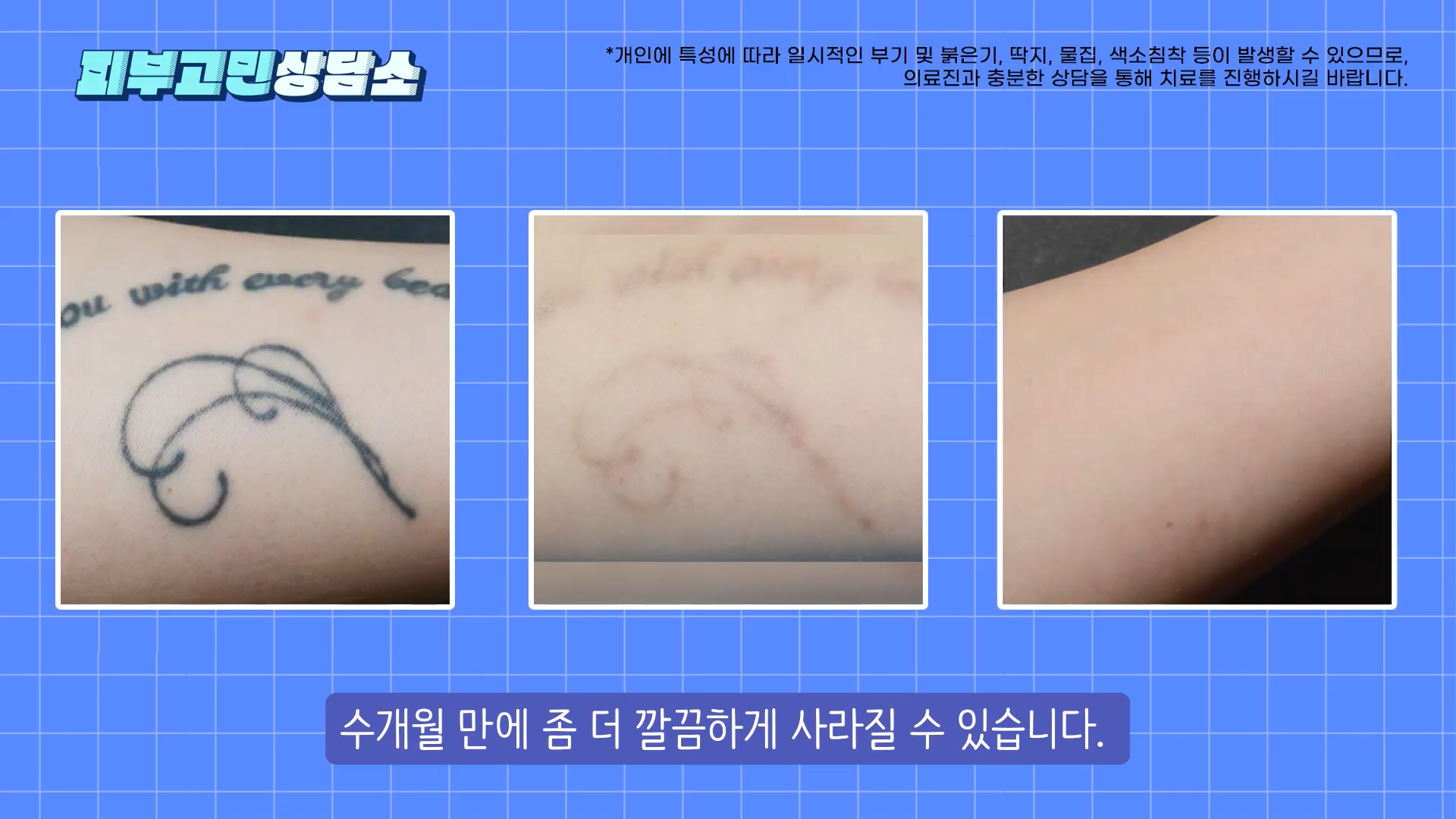
The principle is weak intensity, multiple times
- Trace removal procedures using a tattoo pigment removal laser are performed at 2 to 3-week intervals.
- Laser toning, repeated with weak intensity, is performed about 5 to 10 times.
| Approach | Irradiation Intensity | Result |
|---|---|---|
| Strong at once | Stimulation of melanocytes | Marks may become darker |
| Weak, multiple times | Repeated irradiation with reduced stimulation | Marks tend to lighten |
The goal is to resolve brown marks that would gradually fade over a year or so, within a few months. You can find details about the procedure in the Pico·Dual·Gold-Diamond Toning guide.
If you are concerned about remaining marks
The overall process of removal is summarized in the Tattoo Removal Treatment guide and the R-Zero Pico-Frectat Tattoo Removal guide.
If you find it difficult to determine whether what remains is tattoo pigment or post-inflammatory hyperpigmentation, please let us know your condition via Chat Inquiry. Recovery speed may vary individually.

Authored · Medically Reviewed by Chief Director Lee Sang-joo (Dermatologist) Graduated from Yonsei University College of Medicine · Resident in Dermatology at Severance Hospital Ph.D. in Medicine from Yonsei University Graduate School · Author of "Pigmentary system" View Medical Staff Profile
First Published 2024-04-05 · Last Reviewed 2026-07-29
This article contains general medical information and does not substitute for individual diagnosis and treatment. Results and recovery progress may vary individually.