

When you want to remove a tattoo, you might wonder if cosmetics will work, if surgery is better, or if a laser is the answer. Ultimately, you want to know which method most reliably reduces the traces. To put it simply, because tattoo pigment is located deep in the dermis, methods that only act on the surface have limitations. Lasers, which directly target the pigment in the dermis, are currently considered the most reasonable choice.
Why are tattoos so hard to remove?
The reason tattoo pigment remains in the skin for a long time is due to the location where the pigment is embedded. When ink particles penetrate the dermis below the epidermis and settle there, our body recognizes them as large foreign substances but cannot expel them all at once. This is why the color remains unchanged over time.
The difficulty of affecting dermal pigment with methods that only act on the epidermis is why tattoo removal differs from simple exfoliation. Regardless of the method, the key is how to deal with the pigment embedded in the dermis. Detailed symptom information can be found on the Tattoo Removal Treatment page.
Limitations of cosmetic (cream) removal methods

Many people look for overseas direct-purchase creams because they can be easily applied at home. However, it is more accurate to say that removing dermal pigment with cream alone is realistically difficult. This is because it is not easy for the active ingredients to sufficiently reach the depth where the pigment is located.
Instead, repeatedly applying strong irritating ingredients can lead to the following problems:
- Skin irritation such as rashes or stinging
- Epidermal damage comparable to burns
- Pain and pigmentation
- Potential for larger scars
It could be a situation where you try to remove a problem only to create a bigger one, so it is safer to have your skin condition checked by a professional rather than attempting self-treatment.
When is surgical excision possible?

Surgery involves directly excising the tattooed area and then pulling the surrounding skin together for suturing. The characteristic of this method is that it can remove the pigmented skin itself in one go.
However, this method is only possible if there is enough skin to pull together, so its application is limited. It can be considered for very small tattoos or areas where the skin is elastic, but if the area is wide, there may not be enough excess skin to suture, making the procedure difficult. It is also important to consider the possibility of keloid scars or suture scars forming during the recovery process.
Since attempting to remove a tattoo could result in another scar, a careful assessment of the location and size is necessary.
If you are concerned about tattoo marks or scars and are unsure which method is right for you, feel free to check by contacting us via chat for tattoo removal methods.
Laser Removal: What is the R20 method?

When removing a tattoo with a laser, white bubbles appear on the treated area. The method of waiting approximately 20 minutes for this bubble layer to subside before re-irradiating with the laser is called R20. It is an attempt to break down more pigment by irradiating the same spot multiple times.
In the clinic, R20 has limitations in that the waiting time is long, and it is realistically difficult to irradiate more than twice in one session.
While we hope that the swelling and bubbles will subside sufficiently during the waiting time, there is the burden of the procedure flow being prolonged.
Principle of the laser method with Pinhole Technique
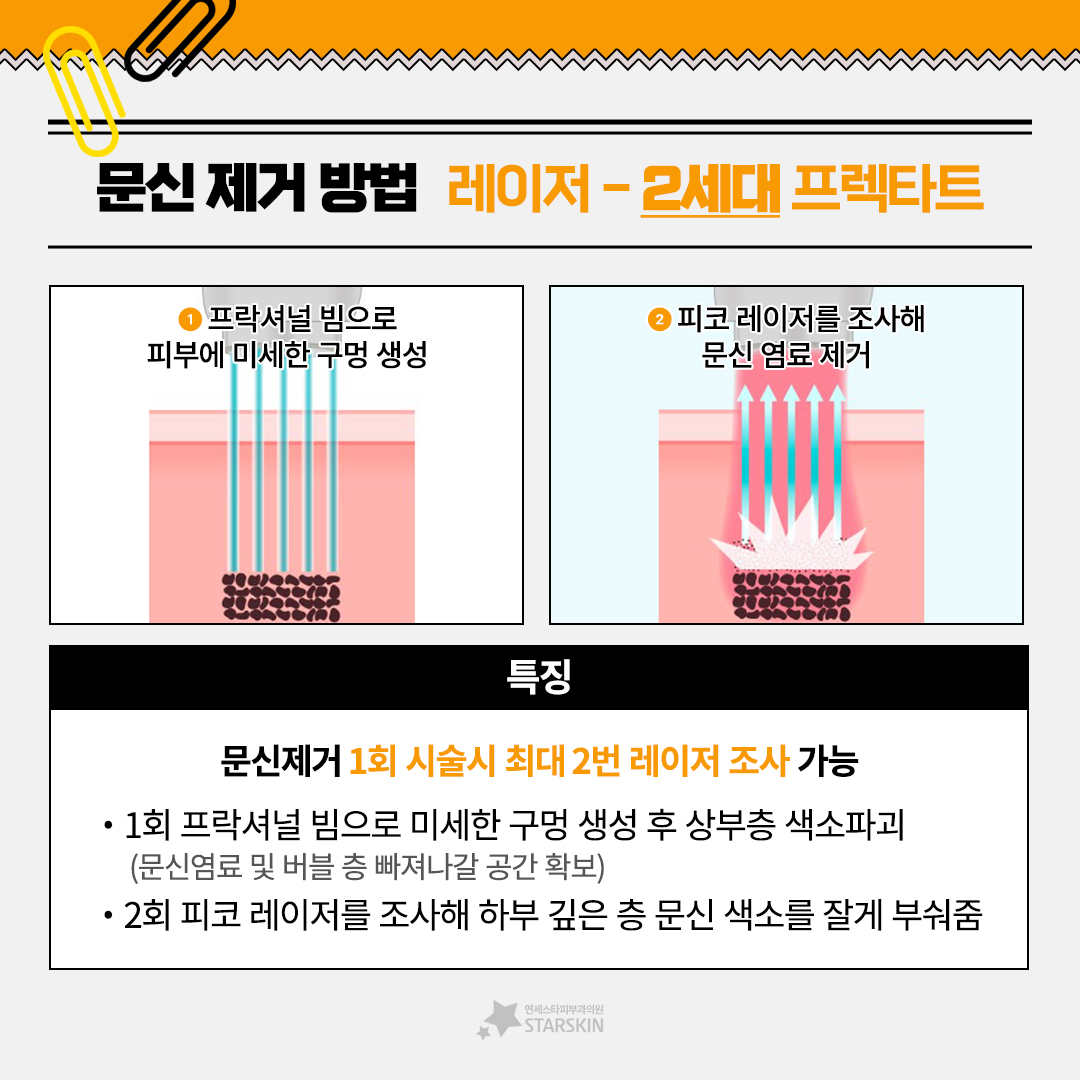
If tiny holes (Pinhole Technique) are made in the skin first, a pathway is created for the bubble layer that appears after laser treatment to escape quickly. The reason for adding Pinhole Technique is that it helps inflammation subside relatively easily even if it occurs afterward.
Furthermore, using a picosecond laser that irradiates in trillionths of a second works on the principle of breaking down tattoo pigments into finer particles, increasing removal efficiency. This approach aims to reduce the burden per session, as the smaller the pigment particles are broken down, the easier it is for the body to excrete them.
The role of R-Zero Technique and PFD
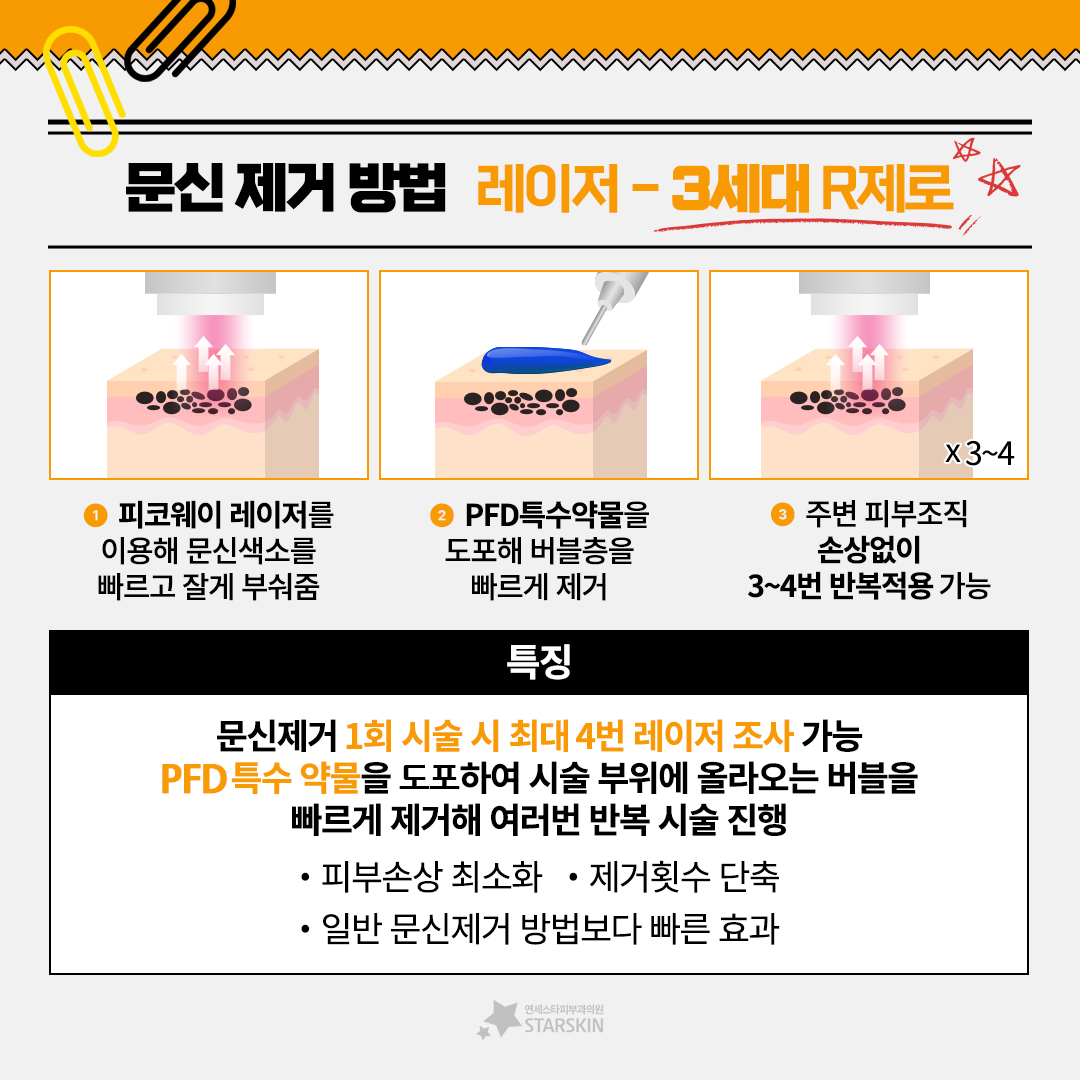
The R-Zero Technique is a method available at Yonsei Star Dermatology Sinchon. Its biggest feature is that the bubbles that appear after PicoWay Laser irradiation are quickly subsided with a special medication called PFD.
There is no need to wait long for the bubbles to disappear, and repeated irradiation up to 4 times is possible in one session. Some people worry about skin damage when irradiating multiple times, but in a clinical environment focused on scar treatment, the emphasis is on proceeding while protecting the skin.
Here's a comparison of the three methods at a glance:
| Method | Principle of Application | Considerations |
|---|---|---|
| Cosmetics (Cream) | Applied to the epidermis | Difficult to reach dermal pigment, irritation reported |
| Surgery | Excision and suturing of pigmented area | Only possible for small areas, potential for suture scars |
| Laser | Breaks down dermal pigment into fine particles | Requires repeated sessions, individual differences may occur |
If you are curious about laser-based procedures, it may also be helpful to look at RePott Laser procedure information.
Which method should you choose?
The appropriate method varies depending on the size, color, location, and skin condition of the tattoo. Due to the commonality of pigment being embedded in the dermis, an approach that directly targets dermal pigment is currently more reasonable than methods that only address the surface.
Checking the following items in advance can be helpful before starting:
- Size, color, and depth of the tattoo
- History of scars or keloid tendencies
- Ability to manage recovery time and number of repetitions
- Plan for UV protection and moisturizing care after the procedure
If you are also concerned about surgical scars or pigmentation, you can refer to Cosmetic Surgery Scar symptom information.
If you are wondering which method is right for your skin and tattoo condition, we recommend checking first by contacting us via chat for tattoo removal comparison before making a decision.
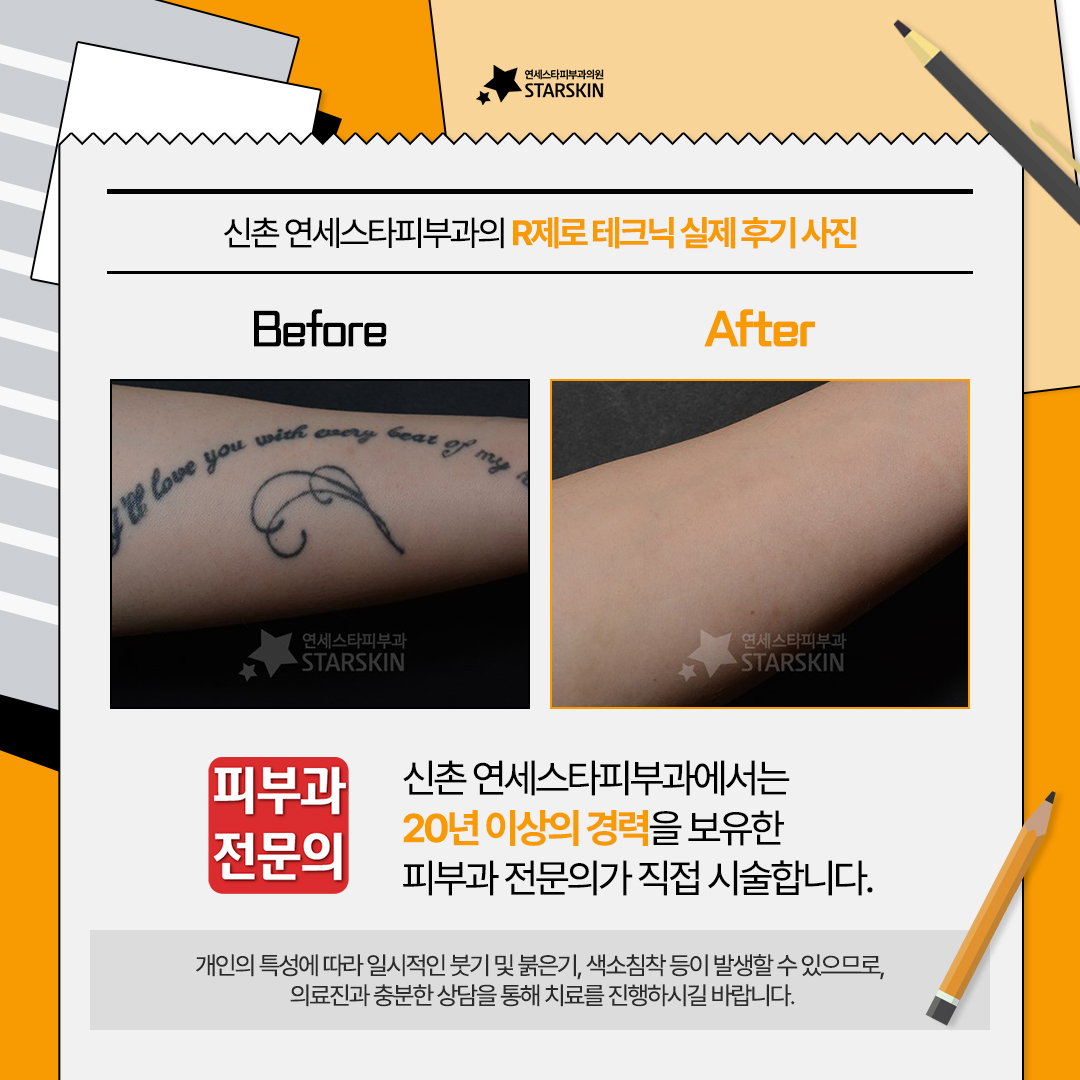
Today, we compared three tattoo removal methods: cosmetics, surgery, and laser, and also looked at the principle of the R-Zero Technique. Regardless of the method, individual results may vary, so it is important to have a thorough consultation to find the right approach for you.
Chief Director Lee Sang-joo (MD, PhD, Yonsei University College of Medicine and Graduate School, completed dermatology residency at Severance Hospital, President of the Korean Dermatological Association) Chief Director Lee Sang-joo's Profile First published 2023-07-28 / Last reviewed 2026-06-16 This article is for general informational purposes only. Results may vary depending on skin and tattoo condition, and accurate diagnosis and treatment direction should be determined through consultation with medical staff.