
![Sinchon Finger Mini Tattoo Removal: Why Even Small Tattoos Take Time and How to Reduce Pain | [Yonsei Star Dermatology Sinchon]](/_next/image?url=https%3A%2F%2Fagqdgbuateknhwpocrgu.supabase.co%2Fstorage%2Fv1%2Fobject%2Fpublic%2Fassets%2Fyonsei-star%2Fblog%2F224389875319%2F1.jpg&w=3840&q=75)

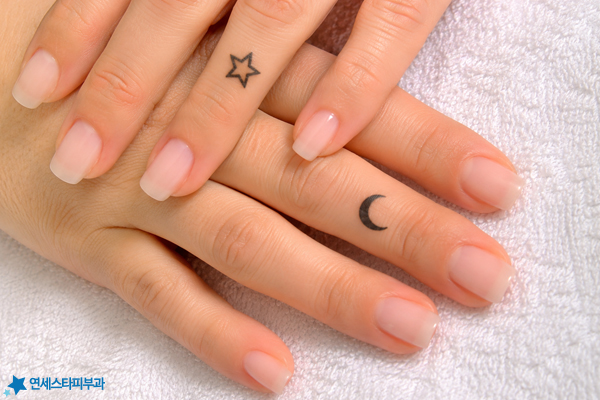
Mini tattoos on small areas like fingers or the inner wrist are often expected to be quick and easy to remove due to their simple design. However, during consultations, it's not uncommon for finger mini tattoo removal to take longer than anticipated, regardless of size. We've compiled information on why finger mini tattoo removal specifically takes time, and methods to reduce pain during the process.
Three Reasons Why Multiple Sessions Are Needed, Regardless of Size
There are three reasons why mini tattoo removal can take longer than expected.
First, the ink is often densely packed into a small area. Mini tattoos are often filled with pigment to achieve clear expression even in small spaces. In such cases, regardless of size, the total amount of pigment the laser needs to break down increases.
Next, there are cases where the pigment is located in the deep dermal layer. Depending on the artist's technique, even a small mini tattoo with deeply embedded color may require the tattoo removal laser to approach it in stages, increasing the number of sessions. The same applies to old or re-inked tattoos.
Finally, it takes physical time for the body to expel the broken-down pigment. The speed at which immune cells process the pigment does not increase just because the size is small, so finger tattoo removal also requires maintaining appropriate treatment intervals.
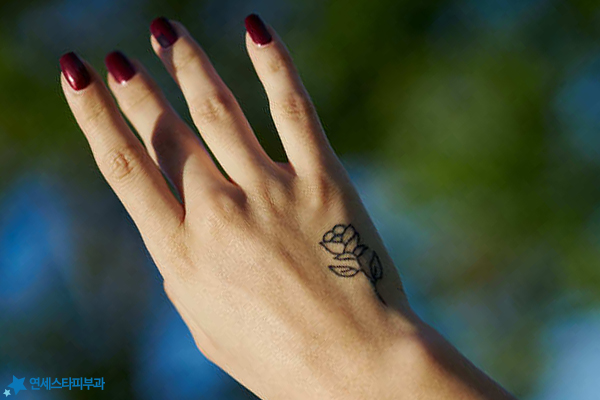
Ultimately, the real variables that determine the time required for finger mini tattoo removal are not size, but ink density, pigment depth, and the body's expulsion rate.
Why Are Fingers Particularly Painful?
The finger is a common area for mini tattoos, and it's also a part of the body where tattoo removal pain is felt more intensely than in other areas, even for the same size tattoo.
The first reason is that the skin layer is thin and directly contacts the bone. There is almost no subcutaneous fat, so laser energy is transmitted directly to the nerves and bone without cushioning.
The dense concentration of sensory nerves is also a cause. Hands and fingers are among the areas with the highest density of sensory nerves in the body, so even small stimuli are felt intensely.
Frequent movement also contributes to slower recovery. As an area used all day, it's difficult to completely avoid friction and irritation even after treatment.
Even if the tattoo itself is small, for pain-sensitive areas like fingers, the treatment method and choice of anesthesia become key variables in determining the perceived pain.
How to Reduce the Number of Sessions with R-Zero and PicoWay
When a general tattoo removal laser is fired, white bubbles form on the skin surface, obstructing subsequent shots. The R-Zero Technique is designed to quickly remove these bubbles with a special medication immediately after the shot, allowing the laser to be fired again within the same session for up to 4 continuous treatments. The actual number of applications will be determined by the medical staff after consulting on the skin and tattoo condition.
PicoWay Laser is a device that delivers energy in picosecond (one trillionth of a second) units, breaking down pigment much more finely than nanosecond lasers. The shorter the energy stays, the less heat spreads to surrounding tissues, which is particularly advantageous for areas with thin skin layers like fingers. Of course, the finer the pigment is broken down, the easier it is to expel. The ability to choose from 4 wavelengths is also a strength, allowing for combinations tailored to the color of the tattoo, from black and white to colored finger tattoos.
Using R-Zero Technique and PicoWay Laser together can reduce the overall number of sessions and duration for finger tattoo removal and mini tattoo removal, while also lowering the risk of side effects. As it is a highly painful area, combining pain management such as nitrous oxide anesthesia or cooling can further reduce discomfort during the procedure.

In Summary
While a mini tattoo on the finger might seem like it would be quickly removed based on its size, the combination of ink density, pigment depth, and the area's sensitivity to pain requires a planned approach. Rather than rushing, we recommend checking how many sessions are needed for your current condition.
Author · Chief Director Lee Sang-joo / Dermatologist As the Chief Director of Yonsei Star Dermatology Sinchon, he has long treated conditions from pigment and wrinkles to scars. He will serve as the President of the Korean Dermatological Association in 2026 and as an adjunct professor at the Department of Dermatology, Yonsei University College of Medicine. Detailed career information can be found in his Medical Staff Profile. · Last reviewed September 6, 2026
This article is intended to provide general medical information, and treatment methods and results may vary depending on the color and depth of the tattoo, as well as individual skin conditions. Please consult with a dermatologist for an accurate diagnosis and treatment plan.