
![Shoulder Keloid: Causes, Treatment, and Recommended Lasers | [Yonsei Star Dermatology Sinchon]](/_next/image?url=https%3A%2F%2Fagqdgbuateknhwpocrgu.supabase.co%2Fstorage%2Fv1%2Fobject%2Fpublic%2Fsources%2Fbbf3bebe-45b6-4415-bd04-bda18b2cac0f%2Fblog-images%2F224064569560_00_495b7511f3c6.jpg%3Ftype%3Dw966&w=3840&q=75)
Many people notice a firm, raised scar on their shoulder that doesn't disappear over time, but rather seems to grow larger. The first question that usually comes to mind is: Is this just a scar, or is it a keloid that requires treatment? To answer directly, if a scar is thicker and firmer than normal skin, raised, and spreads beyond the original wound boundary, you should consider the possibility of a keloid.
What is a Shoulder Keloid?
Keloids are a condition where, even after a wound has healed, skin regenerative cells proliferate excessively, causing a scar to rise thicker and firmer than normal skin. Unlike typical scars that remain within the wound area, keloids tend to spread beyond the original wound boundaries to the surrounding skin.
Shoulders, in particular, are areas of frequent movement and friction, meaning they experience significant tension (pulling). Therefore, even small injuries in this area are known to have a higher potential to develop into keloids compared to other body parts.
Why Do Shoulder Keloids Occur?
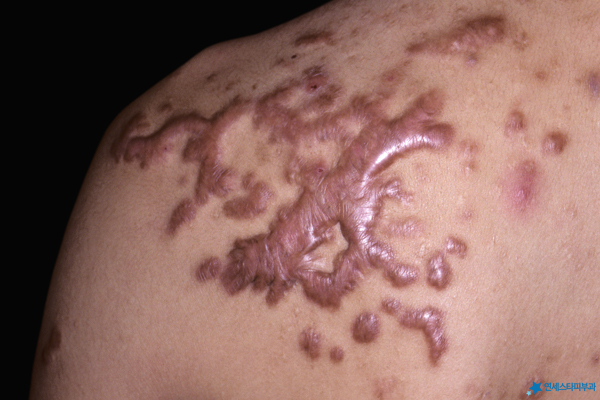
Shoulder keloids do not arise from a single cause. Often, multiple factors combine to cause the scar to grow abnormally.
- Repeated irritation to wounds, acne marks, or surgical sites
- Genetic factors if there is a family history of keloids
- Strong skin tension in areas prone to stretching, such as the shoulder, due to frequent movement
- Prolonged inflammation during the wound healing process
Among these, tension is particularly important for the shoulder area. Due to frequent movement, the skin experiences strong pulling forces, making wounds prone to reopening. During the healing process, this can increase the likelihood of a thick scar forming.
Reasons Why Prevention Is Difficult

Shoulder keloids are often difficult to prevent simply by managing wounds well. This is because, as mentioned earlier, tension makes wounds prone to reopening, and genetic and constitutional factors also play a role.
If your skin easily swells or leaves red marks even from minor scratches or irritations, you may have a higher chance of developing keloids. However, it is difficult to accurately determine if you have this constitution in advance, so minimizing wounds and irritation in daily life is paramount.
Over time, hormonal changes or the influence of medications like steroids can also occur. If the scar gradually increases in size, is accompanied by pain or itching, and does not subside, we recommend seeking a precise diagnosis from a dermatologist.
Keloids are active lesions that, if left untreated, grow slowly but steadily. Addressing them early is the most realistic way to keep the scar small.
If you are curious about treatment directions, you can first check Understanding Keloid Scars and Management. Similar concerns often include Cosmetic Surgery Scar or Surgical Scar.
Improving Shoulder Keloid Scars with Laser Treatment
Key to shoulder keloid treatment is reducing excessive vascular and inflammatory responses within the skin. The Vbeam Prima laser is a representative device used for this purpose.
The Vbeam Prima is reported to help reduce redness in the keloid area (i.e., dilated vascular response), calm skin inflammation, alleviate pain, and suppress abnormal fibroblast proliferation. Through this process, one can expect the color of the shoulder keloid to lighten and the raised area to gradually improve.
If you have any questions, feel free to ask using Inquire about Shoulder Keloid Laser Treatment via Chat Consultation.
Why Combine Laser and Injection Treatments

Keloid tissue is not just a simple scar; it is an active lesion where internal fibroblasts continue to proliferate. Therefore, treatment often involves a combination of two approaches.
Steroid injections are a common example. They play a role in reducing scar height in a relatively short period and do not require much time, making them a popular treatment method. However, a limitation is that injecting the medication through tough keloid tissue can cause significant pain, and the duration of effect may not be very long.
Research to reduce this burden is ongoing. By combining low-pain injection methods that reduce treatment discomfort with lasers that help maintain results longer by lowering the chance of recurrence, the color, thickness, and size of shoulder keloids can be addressed simultaneously.
| Treatment Method | Primary Role | Considerations |
|---|---|---|
| Injection Treatment | Reduces scar height and size | Pain and duration of effect are limitations |
| Laser Treatment | Reduces redness and chance of recurrence | Requires gradual, repeated sessions |
| Combination Treatment | Expects both effects | Individual differences may exist depending on scar condition |
When injections that reduce scar size and height are combined with lasers that help prevent recurrence, treatment can proceed more comfortably and with improved results. In clinical practice, patient satisfaction tends to be higher when these two approaches are combined according to the scar's condition, rather than using only one method.
Why Early Treatment Is Important
As explained earlier, keloids tend to increase in size and thickness and darken in color over time. Starting treatment early can address the fibroblast proliferation stage sooner, making it much easier to keep the scar small or alleviate it.
Since shoulder keloids are not easy to prevent, if you notice a red or firm raised scar, it is advisable not to delay consultation and start appropriate treatment. Depending on the size and location of the scar, severe cases can cause pain and discomfort, interfering with daily life.


Keloid scars are often thought to be uncommon, but they are a type of scar that many people live with discomfort. The overall treatment flow for keloid scars can also be reviewed in the Triamcinolone Scar Injection guide.
Signs to Check Before It's Too Late
If a scar remains unchanged in shape for a long time and occasionally causes pain, it's worth checking. If any of the following apply, we recommend not delaying consultation:
- The scar feels like it's spreading beyond the original wound area.
- It's getting darker and firmer over time.
- Itching or pain occurs repeatedly.
- It feels uncomfortable or irritated when touched by clothes or bag straps.
We hope that through combined Vbeam Prima laser and injection treatments, you can slow the progression of growing keloids and help restore smoother skin texture.
💬 Consult NowChief Director Lee Sang-Joo (MD, PhD, Yonsei University College of Medicine and Graduate School; Completed Dermatology Residency at Severance Hospital; President of the Korean Dermatological Association) Chief Director Lee Sang-Joo's Profile First Published 2025-11-04 / Last Reviewed 2026-06-16
This content is for general information purposes only. Treatment effects and outcomes may vary by individual, and accurate diagnosis and treatment direction must be determined through consultation with medical staff.