

Wounds can appear without warning. Falling and scraping a knee, getting burned by a hot pot, or cutting a hand with a knife are common occurrences in daily life. At such times, one question often comes to mind first: "What if this leaves a scar?"
To put it simply, whether a wound leaves a scar largely depends on how it's managed during the healing process. Seemingly minor choices, such as how to disinfect, when to apply ointment, whether to pop a blister, and when to change a hydrocolloid dressing, all contribute to the outcome.
First Steps When You Get a Wound
If the wound has foreign matter, remove it first with saline solution or clean water. If foreign matter remains and a bandage is applied immediately, secondary infection can occur, so the first step is to make the wound area clean.

After removing foreign matter, use a disinfectant such as hydrogen peroxide, alcohol, iodine, povidone-iodine, or chlorhexidine to eliminate any potential bacteria. However, there's a common oversight here.
If you continue to disinfect the wound area for more than 2-3 days, the growth of new skin cells may actually slow down. Disinfecting thoroughly once at the beginning, and then refraining from excessive disinfection, is more beneficial for recovery.
Ointment After Disinfection, Order Matters

After the disinfected area with alcohol is sufficiently dry, apply an antibiotic ointment (e.g., Fucidin). The ointment creates a moist environment for the wound, protecting the skin and inhibiting bacterial growth to prevent secondary infection.
It is generally recommended to frequently apply antibiotic ointment until the wound heals. In the clinic, we often observe quite different recovery patterns between those who consistently apply ointment and those who do not.
Here's a summary of the recommended steps for initial wound care:
- First, remove foreign matter with saline solution or clean water.
- Disinfect once with an antiseptic, but do not repeat for more than 2-3 days.
- After the disinfected area is sufficiently dry, apply antibiotic ointment.
- Maintain a moist environment by frequently reapplying ointment until the wound heals.
Should Blisters Be Popped?
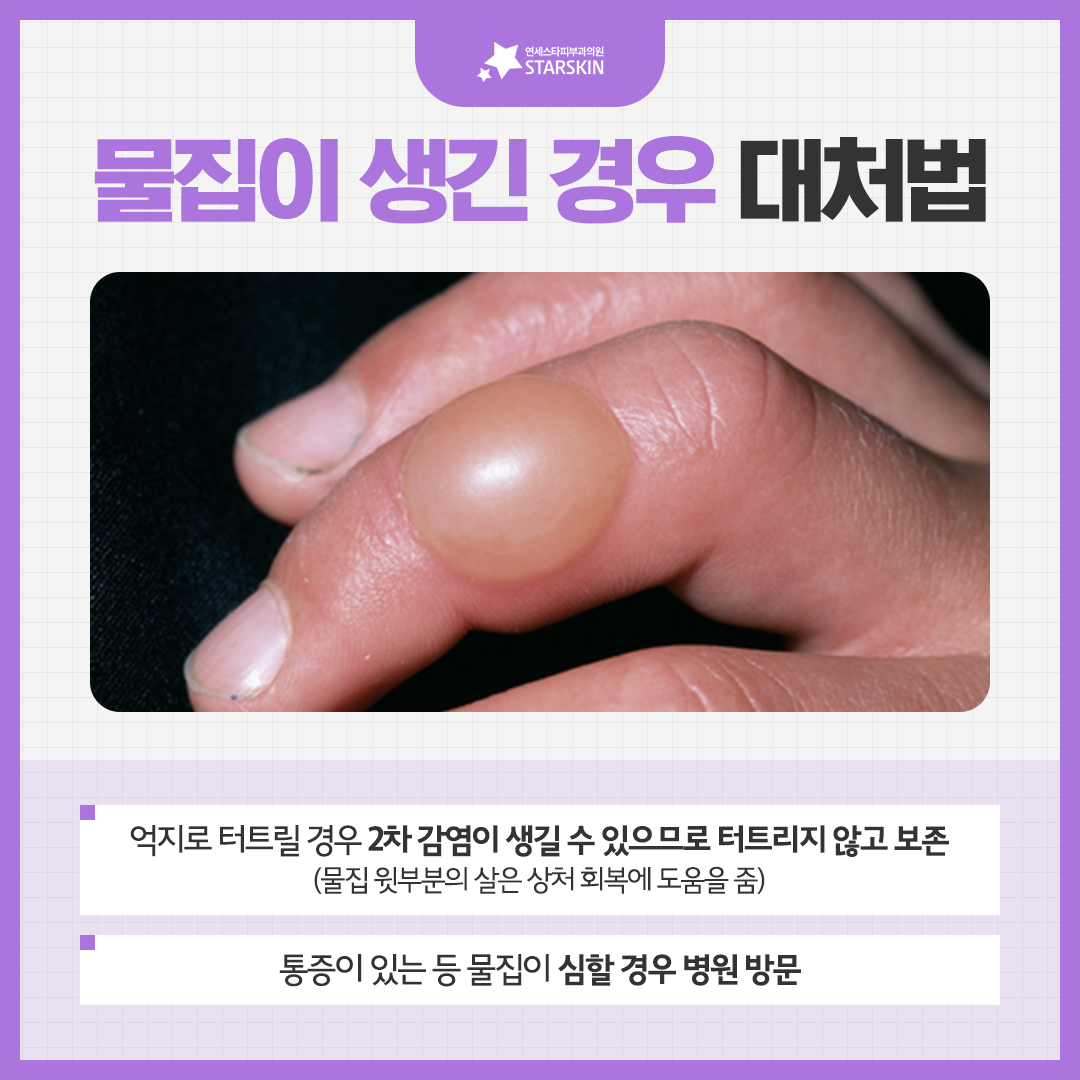
When blisters form, it can be uncomfortable, and you might want to pop them quickly. However, forcibly popping blisters can lead to a risk of secondary infection. The skin covering the top of a blister is excellent at promoting wound healing, so if the pain is not severe and the discomfort is not extreme, it is recommended to preserve and manage the blister without popping it.
However, if the pain is too severe or the blister is excessively large, it is safer to visit a hospital. In such cases, only the fluid inside the blister can be drained, helping the skin heal faster.
Here's a table summarizing common situations with blisters and recommended responses:
| Situation | Recommended Action |
|---|---|
| Small, less painful blisters | Preserve and manage without popping |
| Severe pain or large blisters | Visit a hospital, only remove fluid |
| Already popped blisters | Disinfect, apply ointment, keep the covering skin if possible |
Please feel free to leave any questions you have via chat consultation regarding wound and blister management.
Hydrocolloid Dressings: When to Apply and When to Remove

Hydrocolloid dressings are used after disinfecting a wound. This method is well-suited for those who find it difficult to frequently apply antibiotic ointment in daily life. Applying it over the wound before a scab forms helps protect the skin.
Points to note when using hydrocolloid dressings are as follows:
- Changing too frequently can cause newly formed skin cells to detach.
- Replace when the dressing swells and starts to peel off, or when it becomes contaminated.
- Prolonged use can weaken the skin due to the moist environment.
- Discontinue use once the skin has healed.
After the skin has healed, you may consider early scar prevention treatment to prevent scarring.
The Golden Time for Scar Prevention: PreScar Stage
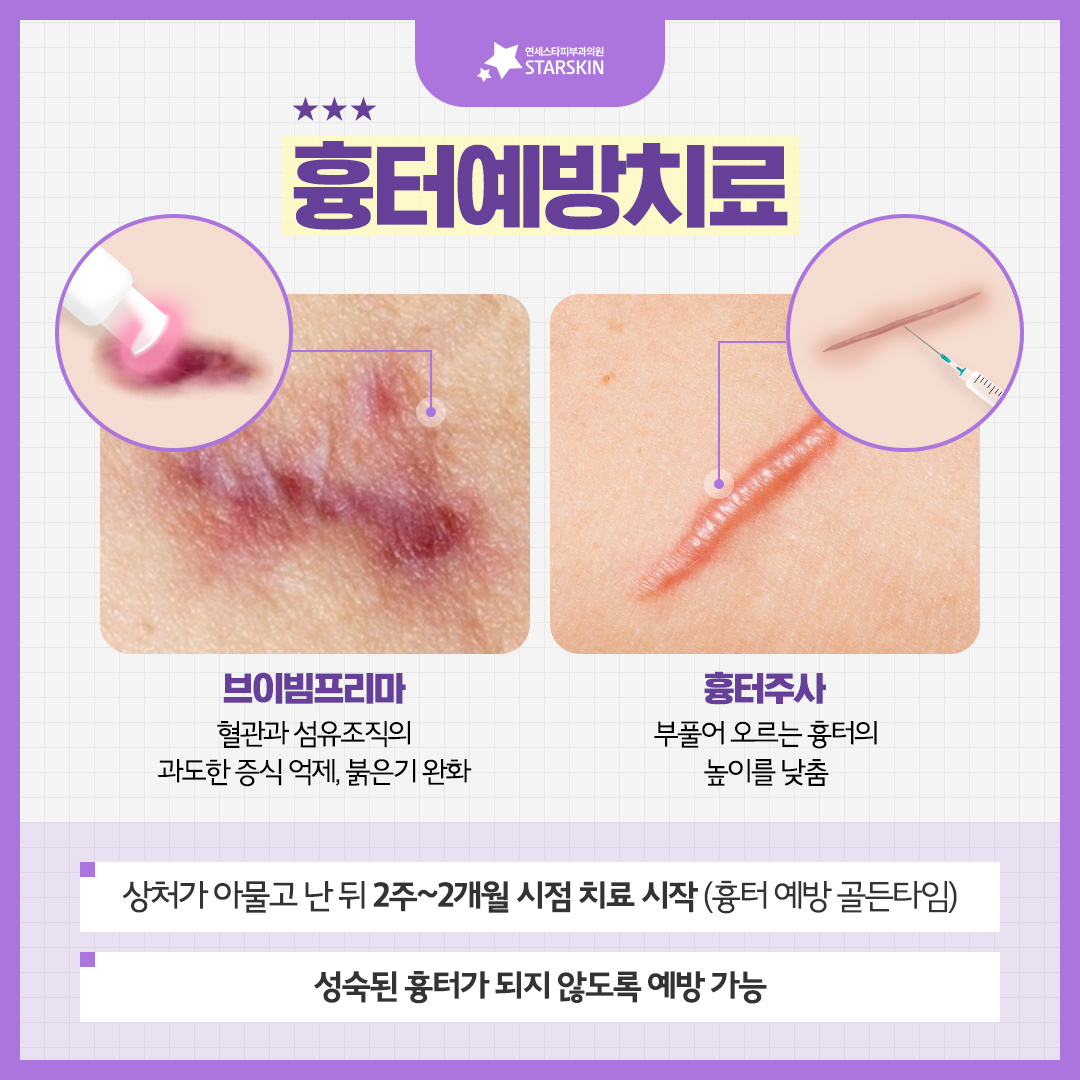
Scar prevention treatment can begin after the skin has healed. In dermatology, the period between 2 weeks and 2 months after a wound heals is called the PreScar stage, or early scar. This period is considered the golden time for preventing scars, so if you tend to develop prominent scars from wounds, it is advisable to start treatment during this time.
Red, raised scars indicate an excessive proliferation of blood vessels. In such cases, treatment aimed at reducing dilated blood vessels can alleviate redness. If you have similar concerns, you may find it helpful to refer to management of red acne scars or facial redness treatment information.
Raised Scars: Consider Your Constitution

Some individuals may develop hypertrophic scars or keloids that cause scars to swell during the healing process due to constitutional factors. If you have shown similar patterns when previously wounded, this tendency may reappear.
If you observe a scar swelling, Triamcinolone Scar Injection to reduce scar height may be combined. Depending on the type of scar that has already formed, the approach to treatment may vary, such as management of depressed acne scars or information on cosmetic surgery scars.
Since the treatment approach for scars varies depending on their type, depth, and individual constitution, it is safer to consult with medical staff to determine the timing rather than self-diagnosing.
💬 Chat with us nowIn Summary

The basics of wound care are surprisingly simple: clean thoroughly, disinfect once, apply ointment after drying, use a hydrocolloid dressing as appropriate, and remember the golden time between 2 weeks and 2 months after the skin heals. Small management habits can significantly influence whether a wound leaves a scar.

Chief Director Dr. Sang-Joo Lee (MD, PhD, Yonsei University College of Medicine and Graduate School; Completed Dermatology Residency at Severance Hospital; President of the Korean Dermatological Association) Chief Director Dr. Sang-Joo Lee's Profile First Published 2023-08-23 / Last Reviewed 2026-06-16
The appearance of wounds and scars can vary from person to person, so please consult with medical staff for an accurate diagnosis and treatment timing.