

As the dry season approaches, pigments like lentigo or seborrheic keratosis on the face can become particularly prominent. Many people first wonder, "Can this pigment be removed in one go with a laser?" The short answer is that pigment removal devices like RePott Laser can offer noticeable changes in a relatively short number of sessions, but post-procedure care is just as crucial as the procedure itself in determining the outcome.
Lentigo and Seborrheic Keratosis: Why They Occur and How They Differ
Lentigo (seborrheic keratosis) is a pigmentary disorder that appears as brown to dark brown spots due to localized accumulation of melanin pigment in the epidermal layer. It tends to darken more easily with prolonged sun exposure or when the skin barrier is weakened.
While often grouped with melasma, freckles, and blemishes, the depth and pattern of pigment differ slightly, so it's best to determine the treatment direction after an accurate diagnosis. Understanding the approach is easier when considering treatments for epidermal pigments like blemishes, seborrheic keratosis, and freckles.
Why RePott Laser Can Be Both Powerful and Precise
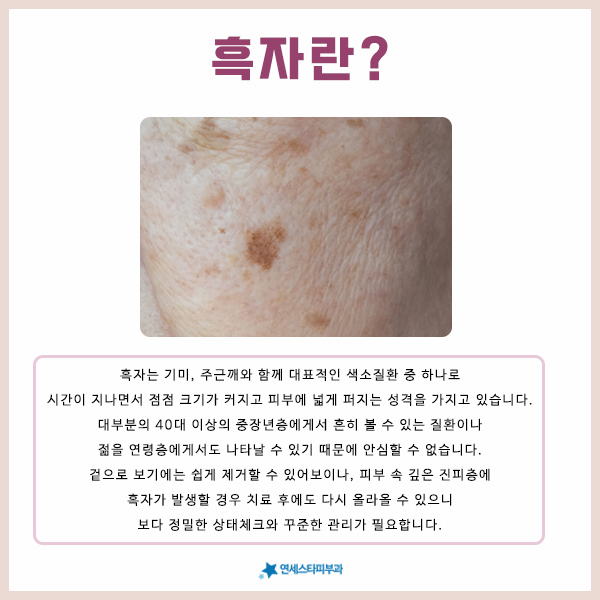
RePott Laser is a device that can quickly treat pigments like lentigo and seborrheic keratosis by delivering strong energy. Typically, pigment treatment is known to be performed with low intensity over a long period to reduce skin irritation, but RePott takes a different approach.

The key is to precisely target only the problematic lesions using AI technology. Precision is enhanced to avoid damage to healthy areas like capillaries, and the procedure is performed powerfully yet safely through VSLS technology, which temporarily constricts blood vessels. As a result, desired changes can be expected in a relatively short number of sessions, typically 1 to 2.
Pigments are generally easier to recover from if treated before they darken. Not missing the timing is the first step in management.
Why You Shouldn't Remove DuoDERM After Treatment, Even If It Feels Uncomfortable
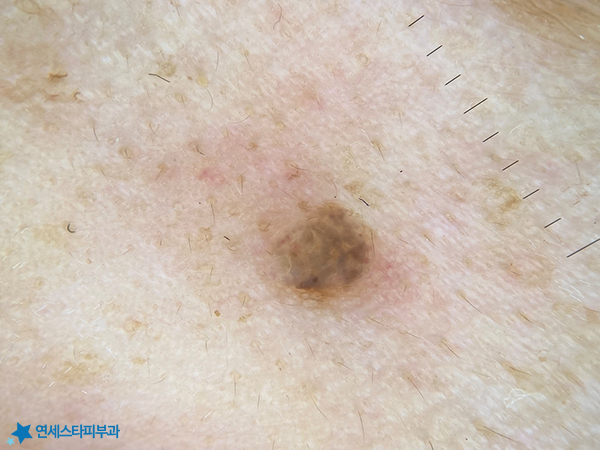
Here's an important point: the outcome of facial lentigo removal laser procedures varies depending on how you manage them afterward. The clinic will apply DuoDERM to the treated area, and it's crucial to keep it on for a certain period until the skin recovers, even if it feels a bit uncomfortable.
DuoDERM helps maintain skin moisture to prevent dryness and blocks external irritation, assisting the skin in its full recovery.
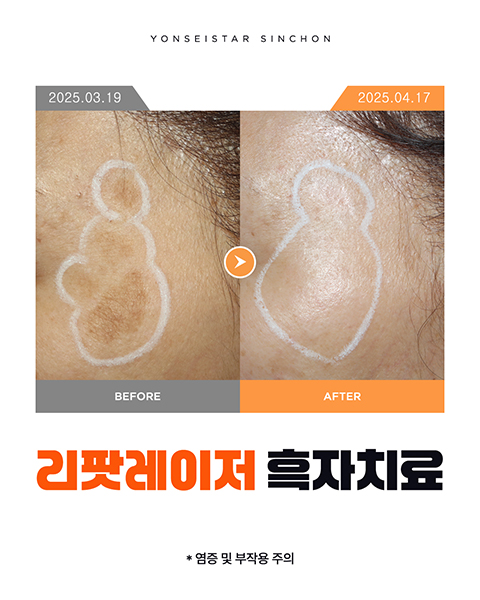
Typically, it's recommended to keep DuoDERM on for about 2 weeks after lentigo removal, but skin recovery speed varies from person to person, and it may take longer in some cases. In the consultation room, we often see patients who try to shorten the recovery period arbitrarily, leading to the area becoming sensitive again. It is more accurate to determine this period after checking the condition at the clinic where you received the procedure.
If the DuoDERM falls off during daily life, it's best not to remove it completely but to reapply a larger piece over it to maintain coverage.
DuoDERM Maintenance Period: How to Take Care
- Aim for about 2 weeks after the procedure, but be aware that it may be longer depending on recovery speed.
- If part of the DuoDERM comes off, do not remove it; apply a larger piece over it.
- The maintenance period should be determined after checking your condition at the clinic.
- Do not touch the area with your hands or forcibly remove it.
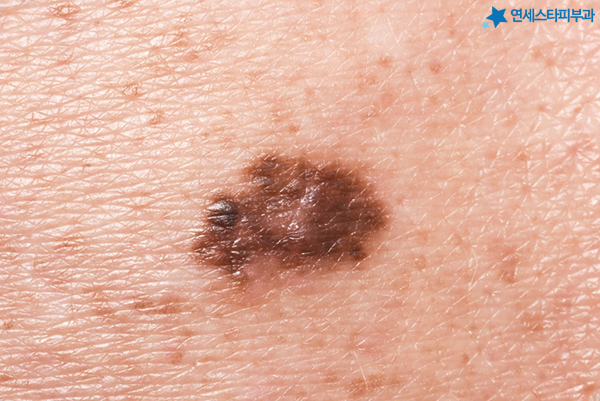
Careful RePott Laser management can lead to faster and longer-lasting results, so please be patient and follow the instructions.
If you have any questions, inquire via chat consultation about RePott Laser procedure and recovery care
Management Falters Without Hydration and UV Protection
When our skin starts to feel dry, it becomes an environment prone to various troubles. Therefore, in addition to DuoDERM, sufficient hydration also plays an important role in RePott Laser management.
Please also be careful not to touch the area with your hands as much as possible. The area has been stimulated with strong energy and requires sufficient recovery.
If Color Remains After Recovery

It is common for the area not to feel as clean as expected even after some recovery. This is because pigmentary disorders like melasma, freckles, and blemishes may appear in combination with lentigo, or pigmentation may have progressed due to UV exposure during recovery. This is why RePott Laser management is so important, but this aspect can also be sufficiently improved, so you don't need to worry too much.
After a thorough diagnosis at the clinic once the skin has recovered, pigment management with PicoWay Laser or other treatments can be combined to refine the results. If capillaries are also prominent along with pigment, vascular issues like facial redness may be addressed separately.
We've summarized RePott Laser and its post-procedure care to help you maintain bright skin even in the chilly autumn.
Here's a checklist summary:
- Do not arbitrarily remove DuoDERM during the recommended period.
- Drink plenty of water to maintain skin hydration.
- Do not touch the treated area with your hands.
- Pay attention to UV protection when going out.
- Consider additional management for remaining pigment after recovery, following diagnosis.
We hope today's topic is helpful for those considering pigment treatment.
If you have more questions, inquire about pigment and lentigo management via chat consultation.
Chief Director Lee Sang-joo (MD, PhD, Yonsei University College of Medicine and Graduate School; Completed Dermatology Residency at Severance Hospital; President of the Korean Dermatological Association) Chief Director Lee Sang-joo's Profile First Published 2025-10-16 / Last Reviewed 2026-06-16
Since the pattern of pigmentation and recovery speed vary by individual, we recommend confirming an accurate diagnosis and treatment plan through consultation with medical staff.