
We've summarized the R-Zero Technique for eyebrow tattoo removal.
Its procedure is slightly different from general laser tattoo removal. Let's look at where they differ.
Why the Traditional Method Required Waiting
In typical tattoo removal, after one laser irradiation, the procedure is repeated at intervals of approximately 6 to 8 weeks until the skin recovers.
The R-Zero method involves applying a special medication after the first laser irradiation to remove the white bubbles that occur during tattoo removal. Afterward, the laser can be irradiated up to 4 more times.
By clearing the bubbles that caused the wait, it is possible to proceed to the next irradiation within the same session.
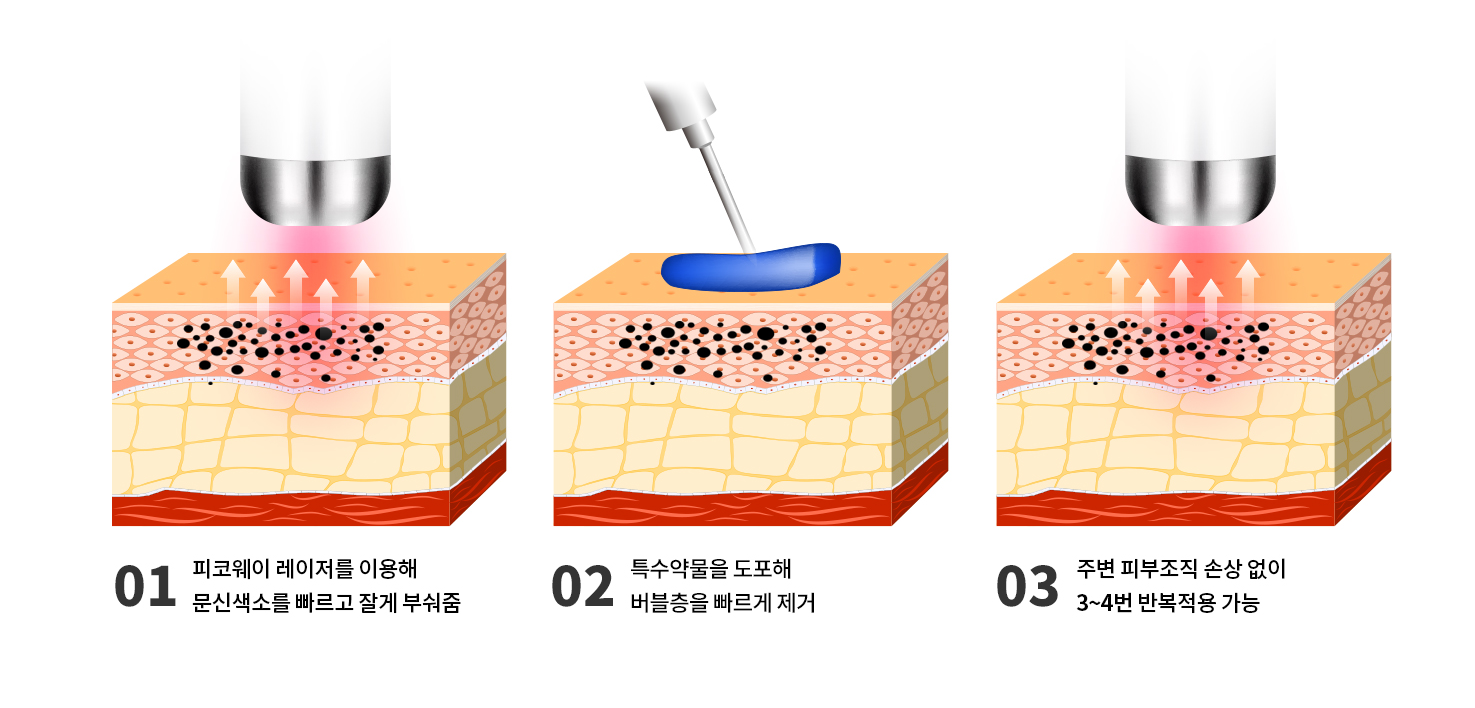
Comparison of Intervals Between the Two Methods
| Item | Traditional Method | R-Zero Method |
|---|---|---|
| Irradiations per session | 1 time | Up to 4 times |
| Re-treatment interval | Approx. 6 to 8 weeks | Repeated irradiation within one session |
What Changes
- Repeated irradiation at short intervals can efficiently clear remaining pigment.
- Increased pigment removal effectiveness may also reduce the time required for complete removal.
The equipment configuration and procedure are summarized in the R-Zero Pico-Frectat Tattoo Removal guide.

Why Diagnosis Comes First
There are points to note. The R-Zero Technique should preferably be performed with an appropriate method after an accurate diagnosis, considering the individual's skin condition, pigment depth, and the specialist's treatment history.
If you have any questions, you can ask them via Chat Now.

It's Not Just About Removing Color
Eyebrow tattoo removal is not just about removing color. It's important to achieve the desired results while minimizing skin damage.
When considering scars, you can refer to the Pinhole for Burn & Surgical Scar procedure guide.
In Conclusion
If you are considering the R-Zero method, we recommend planning with a dermatologist experienced in eyebrow tattoo removal.
The overall procedure flow can be found in the Tattoo Removal Treatment Guide. Individual results may vary.

Authored and Medically Reviewed by Dr. Jinmoon Kang, Chief Director (Dermatologist) Graduated from Yonsei University College of Medicine · Completed Dermatology Residency at Severance Hospital · Former Professor at Bundang CHA Hospital Member of the Korean Dermatological Association · Member of the Korean Society for Laser Medicine and Surgery View Medical Staff Profile
First Published 2025-07-28 · Last Reviewed 2026-07-29
This article contains general medical information and does not substitute for individual diagnosis and treatment. Results and recovery progress may vary individually.