
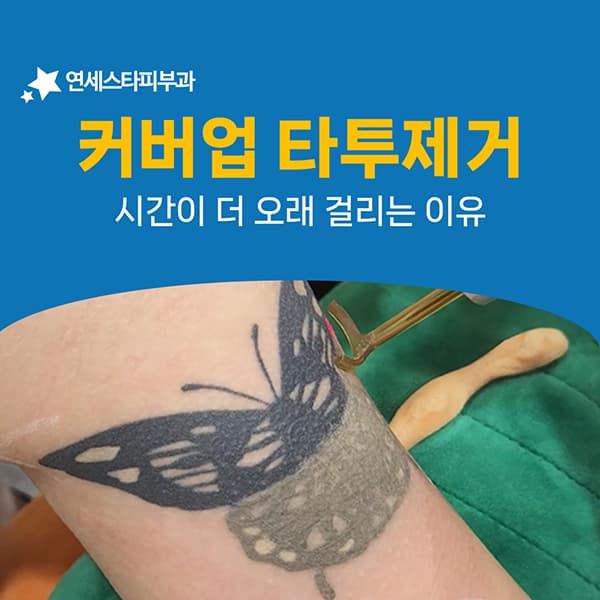
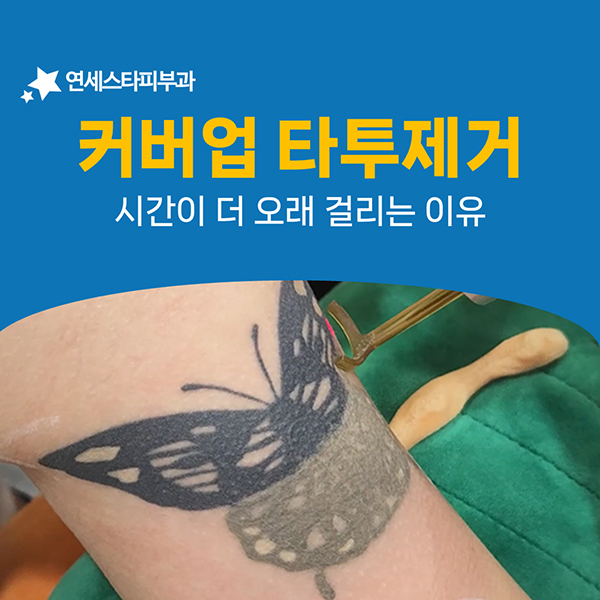
Looking at social media, you might be surprised by methods that can naturally cover up such marks. For stubborn blemishes, stretch marks, dark circles, or even unwanted tattoos and scars, you might feel the desire to get a cover-up tattoo instead of treatment.
What the Choice to Cover Leaves Behind
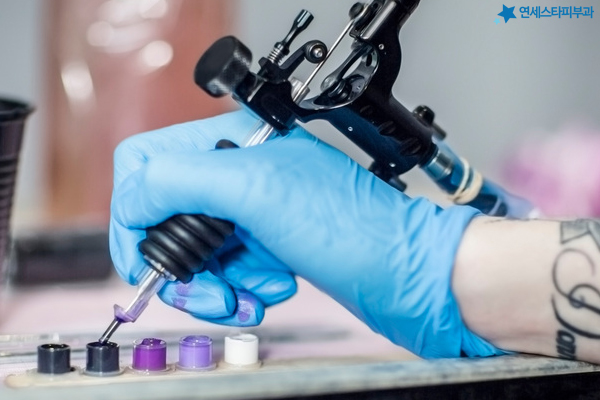
Cover-up tattoos also have their drawbacks. Often, various inks are mixed to achieve a color as similar as possible to the skin tone.
Even if it looks natural and unnoticeable during the procedure, it's not uncommon for it to subtly mismatch the skin tone later, becoming noticeable.
Why Removal Becomes a Double Task
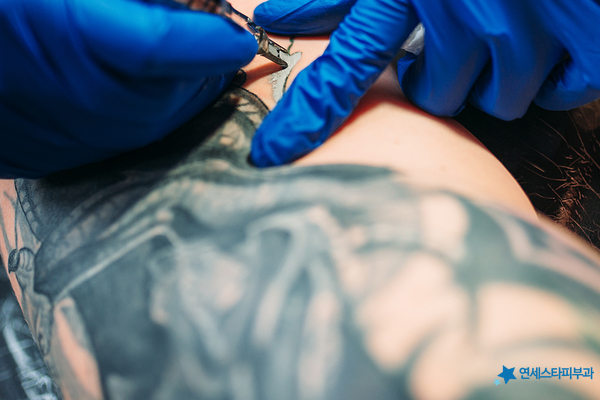
In the case of tattoos, covering them with another tattoo can result in mixed colors and blotches. And later, when attempting to completely remove the tattoo, there's the inconvenience of a double task, as the cover-up tattoo also needs to be addressed.
| Situations That May Arise After Cover-Up | Background |
|---|---|
| Mismatch with skin tone over time | Various inks mixed to match skin color |
| Blotches from mixed shapes or colors | Covered over an existing tattoo |
| Double work during removal | Cover-up portion must also be removed |
| Additional skin treatment needed | If allergy-inducing substances are included |
Another Problem Caused by Mixed Pigments
Since a tone similar to the skin color is created, various pigments are usually mixed. If these include substances that can cause skin allergies, you might need to consider skin treatment in addition to simply removing the tattoo.
Focusing only on methods that aren't visible on the surface might lead to more issues to address later. Therefore, if you have already received a cover-up tattoo, we recommend choosing a more meticulous and safe method for its removal.
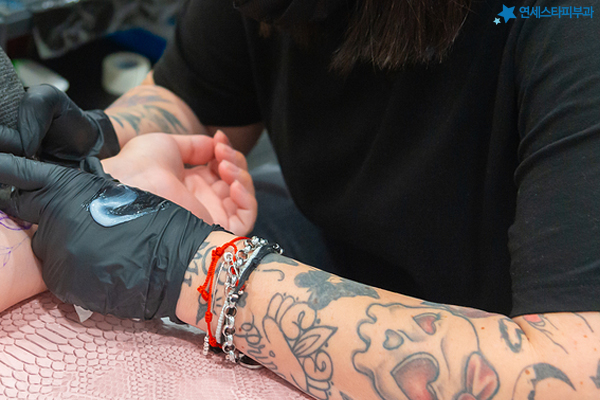
What Couldn't Be Done at Once Due to Bubbles
When considering laser tattoo removal, one factor that often leads to much thought is time. Previously, white bubbles would appear on the tattooed area, hindering further removal, which meant that a large amount could not be treated at once.
R-Zero treatment involves applying a special medication to the treated area to quickly dissipate the bubbles, allowing for continuous laser removal. This feature enables up to four repeated treatments, making it possible to remove cover-up tattoos more quickly. The method is summarized in R-Zero Pico-Frectat Tattoo Removal Guide.
Why the Pinhole Technique is Used Together
When the Pinhole Technique, well-known for scar treatment, is used in conjunction with laser tattoo removal, it can help reduce the burden of scarring even when the laser is applied multiple times at once. More details can be found in the Pinhole for Burn & Surgical Scar Treatment Guide.
- R-Zero, which removes bubbles to enable continuous irradiation
- Pinhole Technique, which aids ink expulsion and prevents scars
- A specialist who accurately understands the skin and has extensive treatment experience
We hope you remember that when these three factors align, you can return to your original state more cleanly.
A Step Beyond Just Erasing
Rather than focusing solely on simply erasing a tattoo, we hope you consider an efficient method that can remove it safely and cleanly to achieve good results. Results and recovery progress may vary individually.
The overall treatment flow can be seen in the Tattoo Removal Treatment Guide, and if you are curious about the condition of your cover-up area, please inquire via chat now.
Authored · Medically Reviewed by Dr. Lee Sang-Joo, Chief Director (Dermatologist) Dermatologist · Ph.D. in Medicine, Yonsei University College of Medicine Graduate School · Resident in Dermatology, Severance Hospital Currently, Adjunct Professor, Department of Dermatology, Yonsei University College of Medicine · Author of "Skin Barrier" View Medical Staff Profile
First Published 2026-01-30 · Last Reviewed 2026-07-29
This article contains general medical information and does not substitute for individual diagnosis and treatment. Results and recovery progress may vary individually.