

Many people consider tattoos to cover scars caused by burns. We frequently receive questions in the consultation room like, “Won’t a tattoo over the scar make it invisible?” To answer directly, tattoos on frequently exposed burn scar areas like hands or arms may not provide a lasting covering effect and can lead to more complex problems later.
Why is the idea of covering scars with tattoos becoming more common?
Burn scars are often visibly prominent due to their uneven surface and inconsistent color. Hands, in particular, are highly exposed areas, making individuals conscious of others' gazes in daily life. Consequently, there's a growing trend of considering tattoos to make burn scars on hands or arms less noticeable.
Covering the scar with skin-colored ink or a design might temporarily make the mark less visible. However, this is merely a surface-level covering and not a fundamental solution that changes the scar tissue itself.
Why is tattooing on damaged skin challenging?
Unlike normal skin, skin damaged by burns has reduced elasticity and irregularly healed tissue. Therefore, even if a tattoo is applied, the pigment may not be evenly deposited, or the uneven surface can prevent the color from spreading uniformly, easily distorting the design.

Areas with frequent movement, like the hands, can also discolor surprisingly quickly. The tattooing process itself is not easy; burn-affected areas often have thin skin or abnormally developed blood vessels, which can intensify the already significant pain of tattooing and increase the risk of inflammation or side effects.
Here are some points to consider before getting a tattoo:
- Damaged skin may not absorb pigment evenly, potentially distorting the design.
- Areas with frequent movement can experience rapid discoloration and blurring.
- Thin skin and vascular changes can increase pain and inflammation risk.
- The covering effect is temporary, and the scar tissue itself remains unchanged.
When you want to remove what you covered
Initially, people choose tattoos to cover scars, but over time, if they dislike the design or if the color blurs, they often wish to remove them. The problem is that the tattoo removal process can further stimulate the existing scar tissue, making the treatment much more difficult.
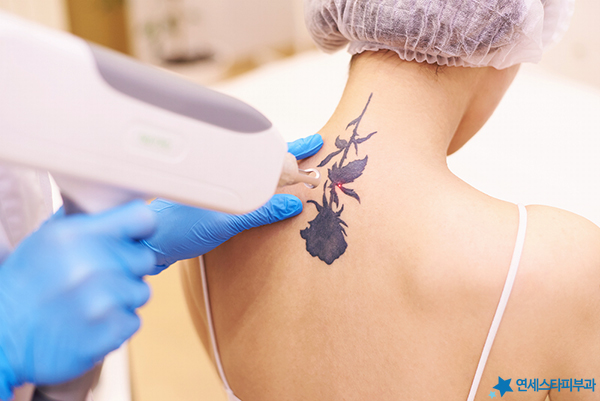
During removal, if the skin is re-stimulated, problems like redness or pigmentation can easily occur. Depending on the individual's constitution, keloid changes might even make the scar more prominent. Ultimately, this can lead to the dual burden of burn scars and tattoo removal scars.
If you have questions, please contact us via chat for burn scar and tattoo removal consultation
What's the difference between covering with a tattoo and laser treatment?
Here's a quick comparison of the two approaches:
| Category | Covering with a Tattoo | Laser Treatment |
|---|---|---|
| Approach | Visually conceals by covering the surface | Improves scar color and texture by lightening them |
| Durability | Difficult to maintain due to discoloration and blurring | Gradual improvement reported with consistent treatment |
| Future Burden | Can lead to further scar damage during removal | Relatively less burden of additional scarring |
| Impact on Skin Condition | Damaged tissue remains as is | Approaches tissue recovery |
Covering with a tattoo is, strictly speaking, a temporary measure, and in the long term, it can lead to a greater problem of burn scars compounded by tattoos.
What changes with consistent early management
In the past, there was a strong perception that burn scars had to be lived with for life. However, recent reports indicate that consistent laser treatment from an early stage can improve the color and texture, making the scars less noticeable.
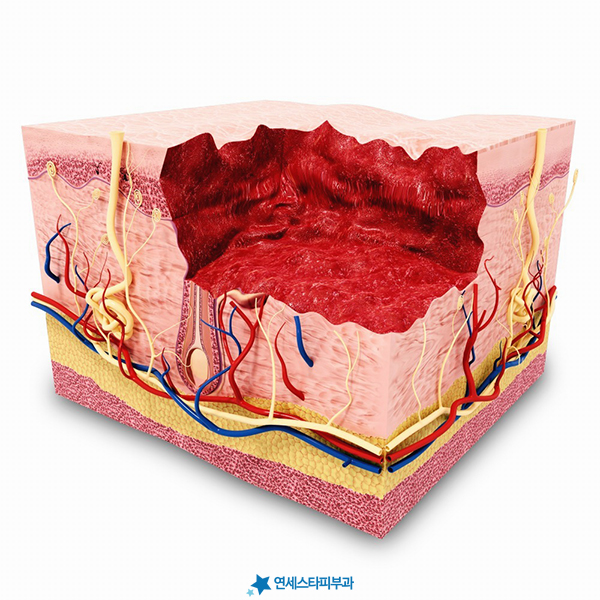
The color, shape, and texture vary depending on when and how the damage occurred. Therefore, it is important to receive treatment with equipment suitable for your condition after consulting with a specialist. Depending on the depth or type of scar, methods such as Surgical Scar Revision may also be considered. By lightening the scar itself, the skin can naturally recover without the need for tattoos.
Points to check before making a decision
Tattoos over burn scars can temporarily conceal the mark, but in the long term, they can complicate the problem. Especially in areas with frequent movement like the hands, maintaining a tattoo can be difficult, often leading to a desire for removal, and the removal process can result in larger scars.

Covering scars is merely a temporary measure, and satisfaction often does not last long. Scar improvement is a topic connected to quality of life beyond just aesthetic purposes, so checking your current skin condition before rushing into a decision can be helpful.
If you're wondering which direction is right for your current condition, please contact us via chat for burn scar condition check and treatment direction consultation

Dr. Sang-Joo Lee, Chief Director (MD, PhD, Yonsei University College of Medicine and Graduate School, Completed Dermatology Residency at Severance Hospital, President of the Korean Dermatological Association) Dr. Sang-Joo Lee's Profile First Published 2025-08-29 / Last Reviewed 2026-06-16
Treatment response and recovery degree may vary by individual. Please consult with medical staff for an accurate diagnosis and treatment plan.