
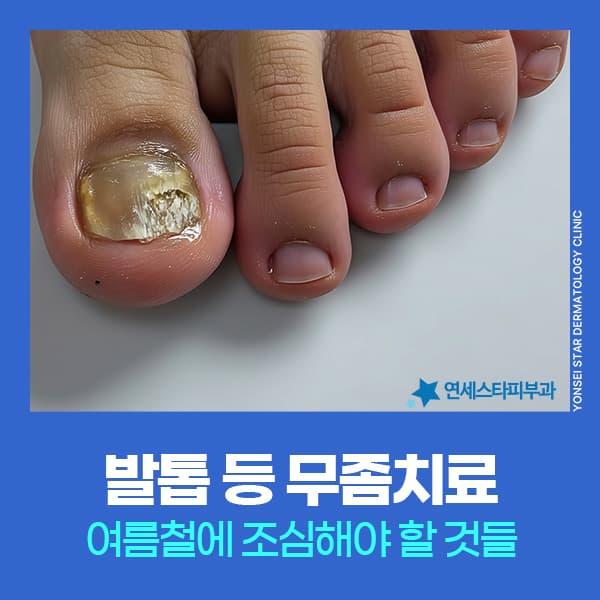
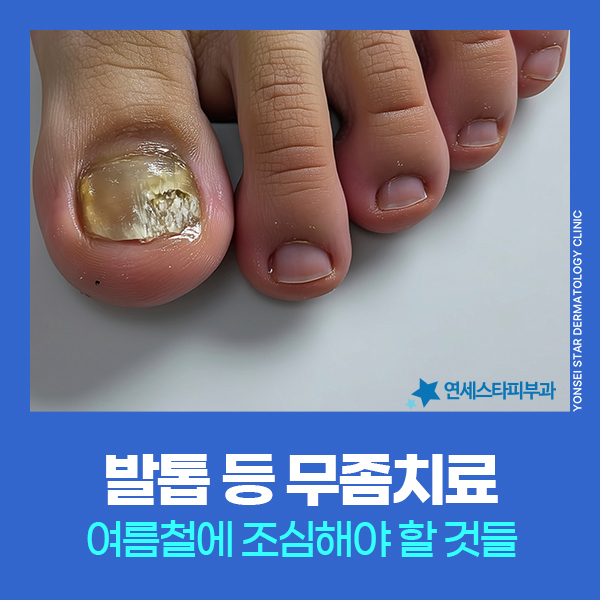

As the season for wearing slippers and sandals approaches, many people start to become concerned about the condition of their toenails. The fungi (dermatophytes) that cause athlete's foot thrive in hot and humid environments, leading to an increase in cases during the summer when feet sweat a lot or humidity is high. This is because the sweltering weather exceeding 30 degrees Celsius and the humid environment during the rainy season create ideal conditions for fungal growth.


How it progresses
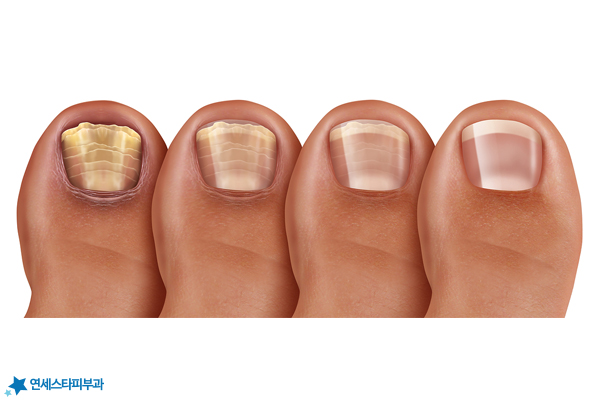
When nail fungus develops, it initially appears as a slight cloudiness or yellowish discoloration of the nail. As the condition progresses, the nail gradually thickens, and in severe cases, it may crack or crumble. Caution is needed as the powdery, crumbled keratin can spread to others, causing new infections.
Problems that arise if left untreated
Most patients with nail fungus miss the appropriate treatment time, allowing the condition to worsen. If left untreated, there is a high risk of it spreading to surrounding areas, and its highly contagious nature means that if one family member contracts it, it can spread to the entire family. Furthermore, the longer it is left untreated, the more the nail plate can crumble or thicken, potentially leading to a longer treatment period.


Fungal infections are highly contagious, and immunity is not formed after one infection, so there is a limitation that reinfection can easily occur whenever the fungus invades. Starting treatment early, before the fungus spreads from the foot to the nail, is a way to reduce recurrence.
Improving lifestyle habits alongside treatment can help reduce the recurrence of fungal infections.
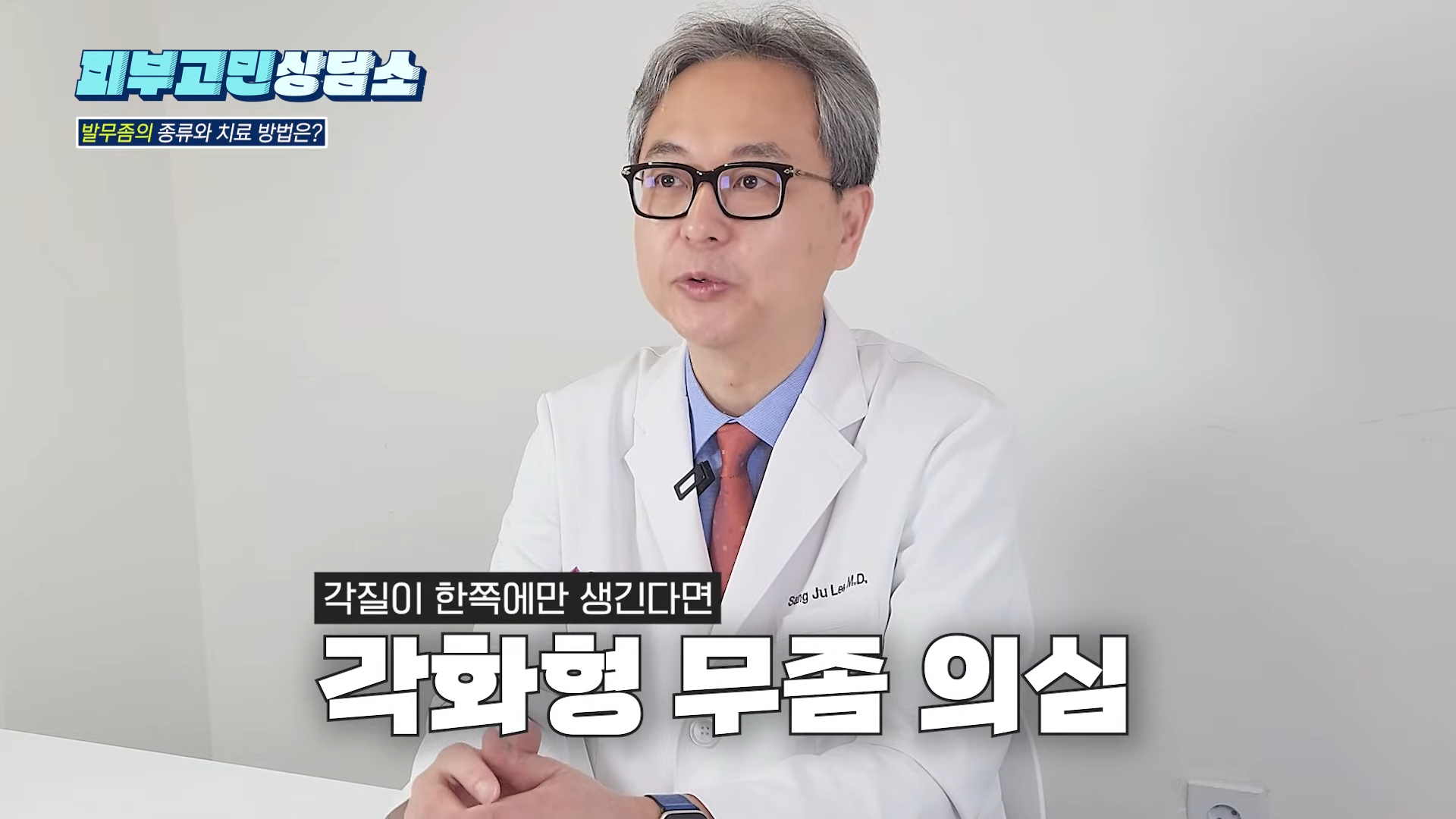
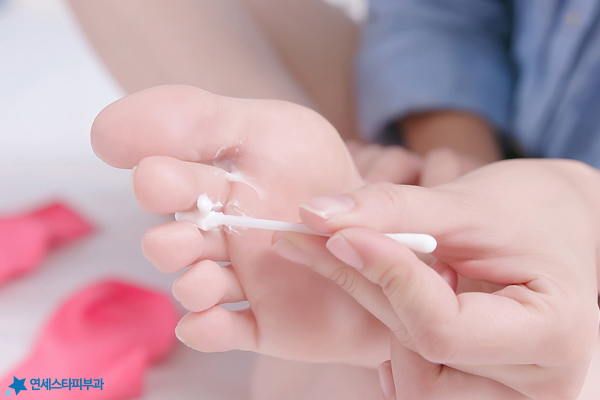
Three Treatment Methods
Nail fungus treatment methods are broadly divided into three categories: topical medication, oral medication, and laser treatment. Topical medication treatment Topical antifungal agents work by inhibiting the formation of fungal cell membranes under the nail. In this case, drug penetration is key, and drugs with excellent penetration are used to alleviate nail fungus. However, if the nail is thick or the infection is deep, the standalone effect may be limited.
Oral medication treatment (oral antifungal agents) Oral antifungal agents are effective, but long-term use can affect liver function, so it is standard practice to proceed with regular blood tests. If you are pregnant or have liver disease, taking the medication may be difficult, so you should consult sufficiently with a specialist before deciding.
Laser Treatment
Nail Fungus Laser Treatment Laser treatment can be applied to those who have difficulty taking medication, and when combined with medication, a synergistic effect can be expected, so it is widely used. Nail fungus lasers are broadly divided into two types:
PinPointe Laser This method selectively raises the temperature of the nail to 60-70℃ to kill the fungus. It precisely irradiates energy only to the affected area of the nail with a thin laser beam, minimizing damage to surrounding healthy tissue. It is effective for severely advanced nail fungus, and the treatment cycle is generally about once a month, which is less burdensome.
OnychoLaser This method induces reactive oxygen species with low output to suppress the fungus. It causes less pain and can treat both feet simultaneously, making it suitable for early or relatively mild conditions. However, it generally requires more treatment sessions than the PinPointe Laser.
Comparison of Nail Fungus Treatment Methods Before summer officially begins, we recommend checking the condition of your toenails. If you start to see symptoms such as discoloration or thickening of the nails, rather than neglecting it, approaching it quickly through a nail fungus treatment hospital is a way to reduce future treatment duration and burden. By appropriately combining medication and OnychoLaser according to your individual condition, more effective management is possible.
In Summary
If you notice symptoms such as discoloration or thickening of your toenails, please check your condition through consultation first.
Author · Chief Director Lee Sang-joo (Dermatologist) As the chief director of Yonsei Star Dermatology Sinchon, he has long treated pigment and scar conditions. He will serve as the president of the Korean Dermatological Association in 2026 and as an adjunct professor at the Department of Dermatology, Yonsei University College of Medicine. His medical history can be found in his profile. · Last reviewed August 6, 2026
This article provides general medical information, and treatment methods and results may vary depending on the condition of nail fungus and individual skin characteristics. Please confirm an accurate diagnosis and treatment plan through a consultation with a dermatologist.