


Many people are concerned that when they apply light makeup, their cheek pores are still visible, and when they apply more, their skin texture looks uneven. If areas that you didn't used to notice are now catching your eye every time you look closely in the mirror, it's highly likely you've searched for Re:2O and Juvelook among skin boosters. These two treatments are often mentioned together, but their ingredients and mechanisms of action are different. In this article, we will highlight the effects of Re:2O and the differences with Juvelook, and summarize who might consider Re:2O.
What is Re:2O?
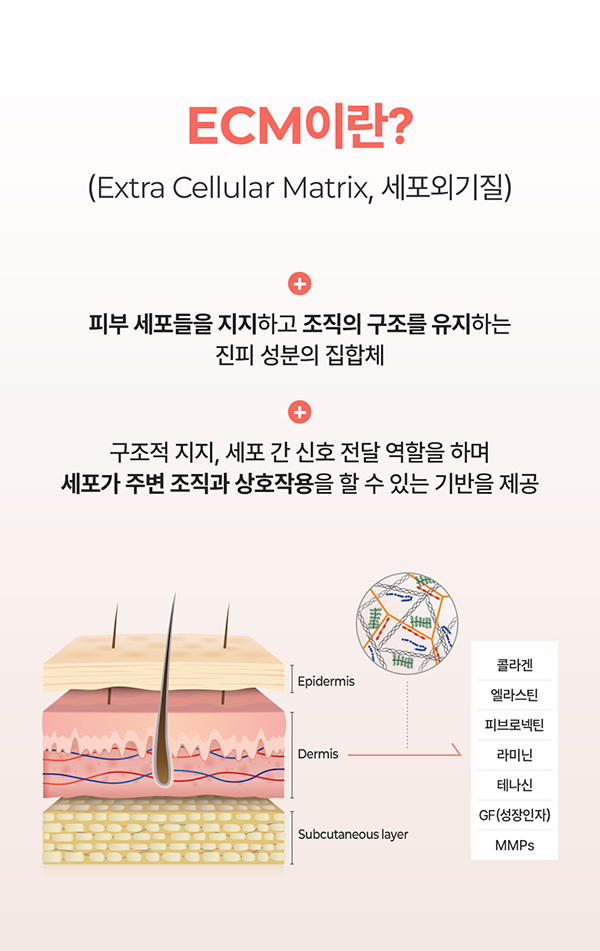
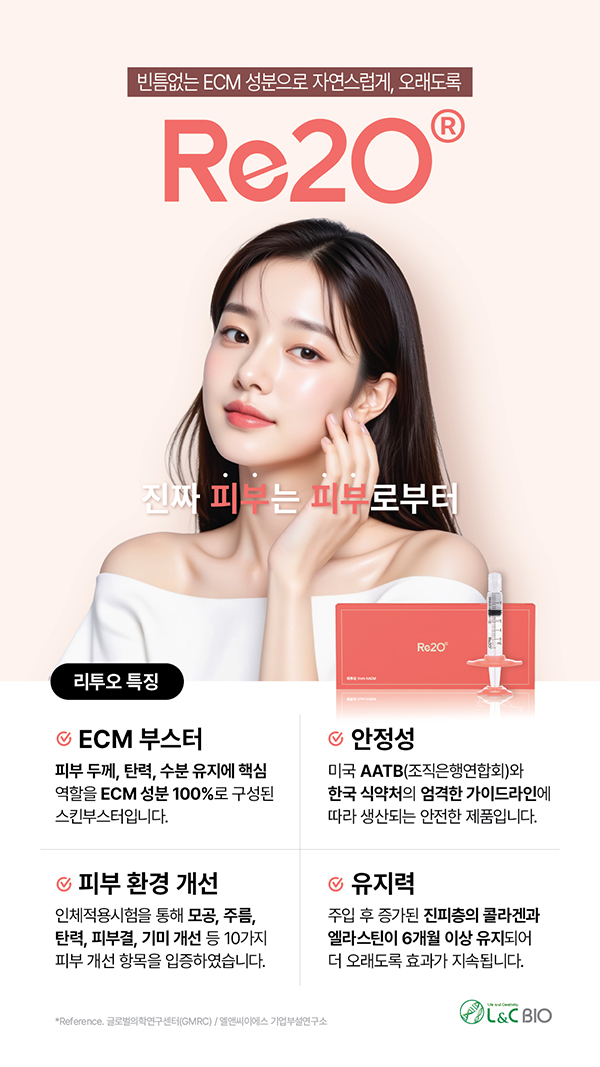
Re:2O is a product made by processing human acellular dermal matrix (hADM), which is donated human dermal tissue with immune-response-inducing cellular components removed, into very small particles. The key concept to understanding this is ECM, or extracellular matrix.
ECM can be thought of as the structural environment outside cells that shapes and supports tissues. The dermis contains not only collagen but also various components including elastin. Re:2O is distinguished from other skin boosters by utilizing this human-derived ECM itself. Therefore, regarding the effects of Re:2O, it is more accurate to view it from the perspective of addressing the structure and environment of the dermis rather than simply smoothing the surface.
How does it work on pores and skin texture?
Re:2O should be understood as working to firm the density, elasticity, and texture of the skin surrounding the pores, rather than directly shrinking the pores themselves. This is because it is closer to the concept of supplementing the structural foundation that constitutes the dermis within the skin, rather than focusing on stimulating new collagen production. If you feel your pores look enlarged or your skin texture feels rough, you will likely understand the significance of this approach.
Juvelook Differences
Juvelook uses a synthetic polymer called PDLLA (poly-DL-lactic acid). This ingredient is known to cause a reaction within the skin, stimulating collagen production in the process. Re:2O, on the other hand, works by supplementing the human-derived ECM structure with microparticles, so their starting points are different.
In summary, the main ingredient of Re:2O is human acellular dermal matrix microparticles, while Juvelook uses PDLLA synthetic polymer. The mechanism of action for Re:2O is direct supplementation of the dermal ECM structure, whereas Juvelook induces an in-vivo reaction to stimulate collagen production. The patterns of change also differ: Re:2O tends to integrate relatively naturally after structural supplementation, while Juvelook appears gradually over time as collagen is produced. The primary concerns addressed by Re:2O are pores, skin texture, elasticity, and density reduction, while Juvelook focuses on volume loss, hollowness, and elasticity improvement. Due to its treatment characteristics, Re:2O is closer to relatively immediate structural supplementation, while Juvelook often involves planning multiple repeated treatments.

Since the ingredients and principles are so different, it's difficult to definitively say which is superior. The criterion lies in what your skin concerns are. If you want to fill in sunken areas and also improve elasticity, a method that induces collagen production like Juvelook might be an option. If you are concerned about the supportive strength of your dermis, such as with pores and skin texture, Re:2O could be a choice.

Not all skin boosters work on the same principle
Hyaluronic acid-based products primarily focus on hydration, while PN-based products like Rejuran focus on inducing the skin's recovery response. Although they are grouped under the name 'skin boosters,' their mechanisms of action are all different. The product you choose should vary depending on whether the problem is inner dryness, loss of volume, or thinning skin and reduced elasticity.
Re:2O Recommendations and Considerations
Re:2O is recommended for those who feel their cheek pores look enlarged, their skin texture has become rough, and their skin density and elasticity have decreased. Conversely, if the goal is to significantly fill in deeply sunken areas, it is advisable to compare with other methods such as fillers. For concerns with clear causes like melasma, blemishes, vascular redness, or acne scars, it is better to combine Re:2O with lasers or treatments appropriate for each cause, rather than approaching it with Re:2O alone.
It is important to consult with medical staff to determine the necessary amount and number of sessions, as this varies depending on pore condition, skin thickness, and elasticity. It is also good to know in advance that reactions may differ and changes may appear gradually depending on skin condition, degree of aging, treatment area, and injection volume.

In summary
Re:2O is a treatment that supplements the human-derived ECM structure with microparticles, while Juvelook is a treatment that induces collagen production reactions using synthetic ingredients. The difference between Re:2O effects and Juvelook is not a matter of superiority, but a question of whether your skin needs structural supplementation or collagen production stimulation. We recommend that you consult with a dermatologist to determine which is right for you, considering the entire dermal structure, including pores, skin texture, elasticity, density, and fine lines. If you have any questions, you can check through chat inquiry.
Author · Dr. Lee Sang-joo / Dermatologist As the chief director of Yonsei Star Dermatology Sinchon, he provides comprehensive dermatological treatments including skin boosters, scars, and pores. Detailed credentials can be found in his medical staff profile. · Last reviewed September 14, 2026
This article is intended to provide general medical information, and treatment effects and downtime may vary depending on individual skin conditions. Please consult with a dermatologist for an accurate diagnosis and treatment plan.