

When people think of scars, they usually imagine skin that is deeply indented or leaves dark marks. However, there are also scars that bulge above the skin. These protruding scars are not only noticeable but can also be accompanied by itching or throbbing pain, leading to daily discomfort. The first question people ask when they discover such scars is, "Will this subside on its own, or do I need treatment?"
To put it simply, the prognosis for protruding scars varies greatly depending on their type. Distinguishing between scar types is the starting point for treatment.
Raised Scars are Divided into Hypertrophic Scars and Keloids

Scars that protrude above the skin are broadly classified into two types: hypertrophic scars and keloid scars. Both appear similar due to their raised shape, but there are clear differences in their growth range and prognosis.
| Classification | Hypertrophic Scar | Keloid Scar |
|---|---|---|
| Growth Range | Stays within the original wound area | Extends beyond the wound boundaries to a wider area |
| Time Course | Tends to gradually subside over time | Difficult to subside on its own and persists |
| Recurrence | Relatively low | Frequent recurrence, difficult to treat |
Hypertrophic scars are often confined to the site of the original injury and tend to gradually soften over time. In contrast, keloids grow larger than the original wound size and frequently recur even after treatment, classifying them as challenging scars. More detailed information on the characteristics and common sites of keloids can be found in Causes and Characteristics of Keloid Scars.
How to Treat Protruding Scars

Raised scars are difficult to improve with topical ointments or external medications alone. Because the scar tissue has already become thick, dermatologists combine various treatments as appropriate for the situation.
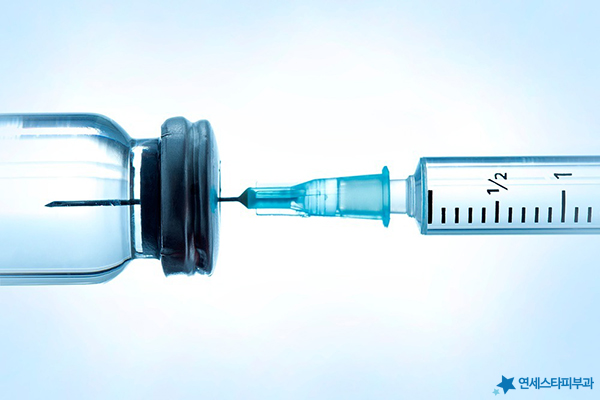
Typical treatment approaches include:
- Steroid injections: These reduce inflammation and inhibit the proliferation of fibrous cells, making the scar tissue softer. They are used for both hypertrophic scars and keloids, and are a key method in Triamcinolone Scar Injection treatment.
- Fractional laser: Lasers such as CO2 laser and Ultrapulse Encore are used to refine the scar surface and induce tissue regeneration. It is reported that the effect improves when combined with injection therapy.
- Redness treatment: Vbeam Prima laser and similar devices help to alleviate the color of red scars and reduce blood vessels within the scar.
- Silicone gel sheets: These are auxiliary means to gently manage scars without irritation, and consistent long-term use is necessary to expect changes.
Methods such as RePott Laser, which directly refines scar tissue and smooths the surface, or Surgical Scar Revision, which involves excising the scar and re-suturing, are also considered depending on the nature and location of the scar.
If you have any questions, please feel free to ask via chat consultation regarding protruding scar treatment.
Why Keloid Scars are Difficult to Treat

Keloids are problematic not only because the scar grows larger. The biggest challenge is that they can easily recur even after treatment. If a person has a constitution sensitive to skin irritation, keloids may frequently occur in areas such as the ears, shoulders, and center of the chest. Excessive laser or physical stimulation in these areas could potentially lead to even larger keloids.

Keloids are scars that are managed slowly, step by step, rather than being eliminated all at once. For this reason, a gradual treatment plan and diagnosis and prescription by an experienced dermatologist are important.
In clinical practice, a cautious approach that minimizes irritation ultimately forms the strongest foundation for reducing the risk of recurrence.
Precautions for Keloid Scar Treatment

It is difficult to achieve the desired change in keloids with laser treatment alone. Better results are often seen when steroid injections and laser treatment are performed together. This is because the two treatments have different mechanisms of action.
- Injection therapy suppresses the proliferation of fibrous tissue.
- Laser treatment improves the skin surface and pigmentation.
- A synergistic effect can be expected when used in combination rather than separately.
- Thorough UV protection helps reduce pigmentation.

During the treatment period, managing the scar area with compression and using silicone gel sheets when necessary can create synergy with laser treatment. Small daily managements thus assist the treatment effect.

Scars: A Concern Beyond Aesthetics

Protruding scars can bring not only cosmetic concerns but also discomforts such as recurrence, pain, and sensory abnormalities. Especially since keloid scars require a different approach than general scars, accurate diagnosis and systematic treatment by a specialist are important. If surgical scars remain thick, it may also be helpful to review Recovery Direction for Cosmetic Surgery Scars.

The longer scars are left untreated, the more challenging they become to manage. If you notice a change, not delaying and establishing a treatment plan early for consistent management is the most reliable choice.
If you are hesitant about whether your scar is a hypertrophic scar or a keloid, or when to start which treatment, please do not worry alone.
💬 Consult NowChief Director Lee Sang-joo (MD, PhD, Yonsei University College of Medicine and Graduate School, completed dermatology residency at Severance Hospital, President of the Korean Dermatological Association) Chief Director Lee Sang-joo's Profile First Published 2025-06-25 / Last Reviewed 2026-06-16
The type and course of scars may vary depending on individual constitution and body area, so please consult with medical staff to determine an accurate diagnosis and treatment plan.