
![Properly Check Keloid Symptoms and Approach Treatment | [Yonsei Star Dermatology Sinchon]](/_next/image?url=https%3A%2F%2Fagqdgbuateknhwpocrgu.supabase.co%2Fstorage%2Fv1%2Fobject%2Fpublic%2Fsources%2Fbbf3bebe-45b6-4415-bd04-bda18b2cac0f%2Fblog-images%2F223903699179_00_f8f3139ef6a4.jpg%3Ftype%3Dw966&w=3840&q=75)
Scars often fade naturally over time, but some may gradually enlarge, harden, and even be accompanied by pain or itching. Such abnormal scars that grow beyond the original wound area are called keloids. The most common question in the consultation room is, "How can I tell if this is just a scar or a keloid?" To put it simply, keloids can be distinguished from ordinary scars by their shape, growth pattern, and accompanying symptoms, and the earlier they are identified, the easier they are to manage.
How Keloids Differ from Ordinary Scars
Keloids are not merely unsightly scars but tissues formed by the excessive proliferation of skin fibroblasts and collagen. While typical scars or hypertrophic scars remain within the wound area, the biggest difference with keloids is that they grow beyond these boundaries, invading the surrounding healthy skin.

They appear as raised protrusions on the skin, usually red or purplish in color. Over time, the color may deepen, and the surface may appear shiny and glossy. This is a different texture from scars that merely show simple pigment changes.
Suspect Keloids if You See These Symptoms
The typical characteristics of keloids that can help with self-assessment are as follows:
- After a wound heals, the scar continues to grow beyond its original boundaries.
- It is red or purplish and firmly raised above the skin.
- The surface is smooth, shiny, and glossy.
- It is accompanied by itching or stinging, and in severe cases, pain.
- It does not fade over time but rather thickens.

Especially itching and pain often lead to daily discomfort beyond just an aesthetic issue. If they occur in areas where clothing or belts rub, or on the shoulders or chest where there is a lot of movement, they can be even more bothersome.
Why They Don't Improve on Their Own
Ordinary scars tend to subside in redness and flatten over time. However, keloids are different. They have a tendency for continuous fibroblast proliferation, and if left untreated, they are reported to grow larger or thicker rather than improve.

It is not uncommon for them to expand while people postpone treatment, thinking, "It's small, so it will disappear if I leave it." If the scar's growth pattern and accompanying symptoms match the characteristics above, we recommend having it checked rather than assuming it's a simple scar. It is also necessary to distinguish it from Surgical Scar Revision or Cosmetic Surgery Scar, which can be similarly confusing.

If you have any questions, you can easily ask them through Keloid Scar Chat Consultation.
Why Injection and Laser Treatments Are Combined
Keloids are not just a problem of the skin surface. Since fibroblasts have excessively proliferated deep within the skin, there are limitations to approaching it with only one method. This is why it is necessary to consider the color and texture of the surface, as well as the proliferation of the underlying tissue, together.

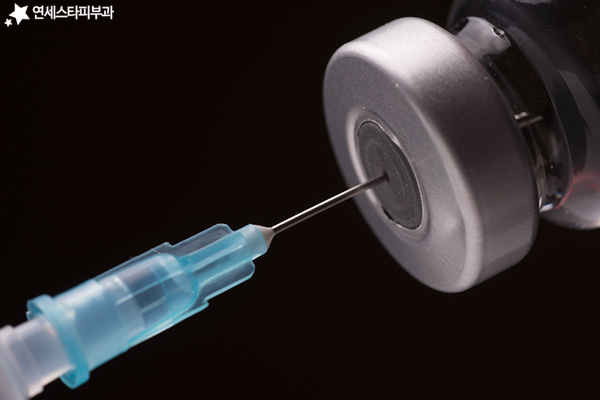
Steroid injection treatment focuses on suppressing the abnormal proliferation of collagen and fibroblasts to inhibit keloid growth. It works to reduce inflammation and swelling, decrease scar size and hardness, and alleviate itching and pain. However, injections alone may not be sufficient to adequately address already thickened tissue or surface pigmentation. Detailed approaches can be found in the Triamcinolone Scar Injection section.
Laser treatment plays a role in filling this gap. Vascular lasers or fractional lasers can be used to refine abnormally grown tissue and reduce redness. They help to smooth the surface texture, alleviate redness through vascular constriction, and reduce recurrence after treatment. In other words, injections suppress internal proliferation, and lasers refine the surface, so the roles of the two methods are different.

| Category | Injection Treatment | Laser Treatment |
|---|---|---|
| Main Goal | Suppress fibroblast proliferation | Refine surface tissue, alleviate redness |
| Area of Action | Deep skin layers | Skin surface |
| Expected Changes | Reduced size and hardness, alleviated itching and pain | Improved skin texture, vascular constriction |
Earlier Assessment Leads to Easier Management
Keloids are reported to have a more stable course and reduced recurrence when approached early. While individual results may vary, examining small scars early on can help reduce the burden.

Keloids do not disappear on their own over time and can even grow larger. The first step is to identify whether it is growing and what accompanying symptoms it has, rather than dismissing it as a simple scar.
Simply observing changes in the scar without neglecting it can alter the direction of treatment. Scars where tissue thickens, such as Burn Scar, can also be viewed from a similar perspective.

Things to Remember When Checking Scars
If you suspect a keloid, we recommend considering the following:
- Observe if the scar grows beyond the original wound area.
- Look for accompanying symptoms such as redness, hardness, itching, and pain.
- Observe the progress to see if it fades or thickens over time.
- A plan that considers both surface refinement and suppression of underlying tissue is necessary.

If your symptoms overlap with the characteristics above, it is better to develop a plan tailored to the scar's condition with a professional rather than making a self-diagnosis. Reviewing Keloid Scar Causes and Management first can help with understanding.
💬 Consult Now
Chief Director Lee Sang-ju (MD, PhD, Yonsei University College of Medicine and Graduate School, completed dermatology residency at Severance Hospital, President of the Korean Dermatological Association) Chief Director Lee Sang-ju's Profile First published 2025-06-18 / Last reviewed 2026-06-16
Since scar patterns and treatment outcomes can vary individually, please confirm an accurate diagnosis and treatment direction through consultation with medical staff.