

Melasma, blemishes, and hyperpigmentation are skin concerns that, once noticed, become visible every time you look in the mirror. When researching pigment treatments, the first question that often arises is: What is the difference between Pico Toning and Laser Toning, and which method is right for my skin?
Both treatments are laser therapies aimed at improving melanin pigment. However, they differ in how the laser works and the characteristics of the equipment, so the more suitable choice may vary depending on the type and depth of the pigment.
How Does Laser Toning Address Pigment?
General laser toning involves repeatedly irradiating the skin with a relatively low-intensity laser. Rather than delivering strong energy all at once, it focuses on reducing skin irritation by lowering the intensity and gradually breaking down melanin pigment over multiple sessions.
This method prioritizes minimizing the burden on the skin. However, it can lead to a longer treatment duration and slower perceived changes, sometimes causing patients to discontinue treatment midway.
If pigment treatment is interrupted, dormant pigment issues may resurface. Therefore, it is crucial to establish a treatment plan tailored to your skin condition from the outset.
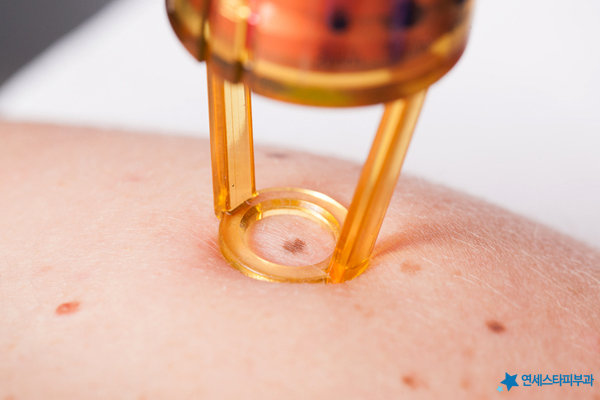
What Makes Pico Toning Different?
Pico laser is a device that uses laser pulses in picosecond units, which are shorter than traditional lasers. It is characterized by delivering high energy in a very short time, breaking down pigment particles into finer units.
The characteristics of Pico Toning are summarized as follows:
- Uses very short laser pulses in picosecond units
- Breaks down pigment particles into fine units
- Can be used to treat various pigmentary disorders
- Allows for depth-specific treatment based on wavelength selection
Due to these characteristics, there is a difference in how the laser works compared to traditional laser toning.
What Are the Key Differences Between the Two Treatments?
The biggest difference between the two treatments lies in the time unit of laser action and the method of pigment breakdown. The table below provides a clear comparison of the differences.
| Category | Laser Toning | Pico Toning |
|---|---|---|
| Pulse Time Unit | Relatively long unit | Short pulses in picosecond units |
| Pigment Breakdown Method | Gradual breakdown | Breakdown into fine units |
| Scope of Use | Primarily pigment improvement | Used for various pigmentary disorders |
Due to these differences, the appropriate treatment method may vary depending on the type or depth of the pigment. It's not about which method is better, but rather which choice aligns with the nature of your skin's pigment.
If you find it difficult to determine the exact type of your pigment concern, you may want to inquire via chat consultation if you have questions about pigment treatment direction to assess your condition first.
Why Are Devices Like PicoWay Mentioned?
Recently, PicoWay Laser Toning is increasingly being considered for pigment treatment. The PicoWay device, in particular, can utilize multiple wavelengths, allowing for a tailored treatment approach based on the specific pigment issue, which is noteworthy.

However, the fast speed and fine breakdown characteristics of the device do not apply identically to all pigments. It is important to remember that the appropriate treatment method can vary in detail depending on the skin condition and pigment type. Approaches such as Epidermal Pigment Removal for melasma and blemishes or Customized Whitening Solution may also be considered depending on the nature of the pigment.
Pigments That Seem Similar But Have Different Causes
Melasma, blemishes, freckles, and hyperpigmentation often appear similar on the surface but frequently differ in pigment depth and underlying causes.
- Melasma requires a treatment approach that considers the possibility of recurrence.
- The treatment method for blemishes and freckles may vary depending on the depth of the pigment.
- For hyperpigmentation, the management direction is determined by examining the cause of its occurrence.
- Even in the same area, pigment layers can sometimes be mixed.
In clinical practice, it is common to see that even what appears to be the same dark spot can vary greatly in depth and nature from person to person. Therefore, rather than choosing based solely on the equipment, the process of determining the appropriate treatment method according to the skin condition is more important. If you also have bothersome redness, it may be helpful to examine the condition of facial redness together.

So, How Should You Choose?
Pico laser and general laser toning are both lasers used for pigment treatment, but they differ in pulse duration and pigment breakdown methods. The frequent mention of Pico Toning, such as PicoWay, is due to these characteristics.
However, which treatment is more suitable ultimately depends on the skin condition and pigment type, and there may be individual differences in effectiveness or response. If you are concerned about pigmentary disorders, we recommend consulting with medical staff to establish a treatment plan after thoroughly checking your skin condition.
If you are curious about pigment types and treatment directions, you can easily ask below.
💬 Consult Now

Chief Director Lee Sang-joo (MD, PhD, Yonsei University College of Medicine and Graduate School, completed dermatology residency at Severance Hospital, President of the Korean Dermatological Association) Chief Director Lee Sang-joo's Profile First published 2026-03-06 / Last reviewed 2026-06-16
The progress and response to pigment treatment can vary from person to person, so please confirm an accurate diagnosis and treatment direction through consultation with medical staff.