

Living with pets, you might unexpectedly get bitten or scratched. Sometimes it ends with a minor scratch, but deep wounds can leave marks during the healing process. The first question that usually comes to mind is this: What should I do before a bite mark hardens into a scar? The core idea is simple: starting clean management and appropriate treatment in the early stages, while the wound is still red, significantly influences the direction of recovery.
The Link Between Increased Single-Person Households and Pet Injuries
The proportion of single-person households is rapidly increasing. It has risen year after year, accounting for approximately 36% of all households as of 2024. For those living alone, pets often become another family member.

Naturally, the number of households raising cats or dogs is also increasing, and living together often results in bite marks on the body or face. The claws and teeth of dogs and cats have stronger force than we might imagine, so scratches or bites can create quite deep wounds.
Why Bite Wounds Become Scars
Even with quick action, the possibility of the wound scarring during the healing process must be considered. It is known that once a scar forms, the probability of it naturally returning to its original skin is very low. Therefore, it is advantageous to start treatment quickly before the mark solidifies.
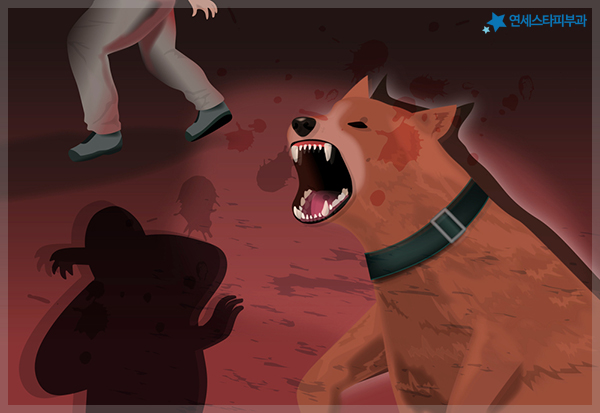
If bleeding continues immediately after a bite, it is important to maintain clean initial wound care until the bleeding stops and the area stabilizes to some extent. Even for wounds of the same depth, the subsequent course may vary depending on initial care, so there may be individual differences.
Initial Wound Care You Can Do at Home
Basic care you can take at home immediately after a wound occurs includes:
- Clean and disinfect the wound area to prevent bacteria or foreign matter from entering.
- Wrap with gauze or similar to quickly stop bleeding and reduce contact with the outside.
- Do not forcibly remove scabs or touch them with your hands.
- If redness persists or the area gradually enlarges, stop self-treatment and consult medical staff.

If bleeding has stopped but redness remains in the bitten area, this is reported as an early scar stage where treatment effects appear relatively quickly. This period is referred to as the 'golden time,' and it is important not to miss it.
Management started in the early red stage can change the direction of scar progression. Rather than giving up because it's late, accurately assessing the current condition is the first step.
If you are unsure about the stage of your wound, you can check your current condition by inquiring about the timing of early scar treatment via chat consultation.
The Principle Behind Redness
The reason a problematic area appears red is due to changes in blood vessels. When damage occurs, our body speeds up regeneration to quickly repair it.

In this process, the size of blood vessels supplying blood and nutrients may increase or their number may grow beyond what is necessary, causing the skin to appear red. Similar approaches are used for symptoms where vascular changes are prominent, such as facial redness, based on the same principle.
Laser Treatment Directions Vary by Stage
In the redness stage, vascular lasers can help alleviate symptoms and restore the area closer to its original state. Addressing vascular changes early is reported to reduce the progression to scarring, playing a role in the bitten area recovering closer to its previous condition.

In the clinic, even for the same 'bite scar,' the approach differs depending on its color and shape. The table below summarizes commonly considered directions based on the scar's condition.
| Scar Condition | Characteristics | Frequently Considered Direction |
|---|---|---|
| Redness Stage | Area appears red due to vascular changes | Vascular laser-focused management |
| Whitened Stage | Pigment is lost, and the surface is atrophied | Lasers that boost skin regeneration |
| Raised Stage | Appears elevated and growing in size | Combined laser and scar injection |

The sharp teeth and claws of pets can cause deep skin damage, sometimes leading to noticeable scars even when initially dismissed as minor. Many people, due to busy daily lives, miss the treatment window and live with these marks.
Even for Older Scars, There Are Still Methods
The good news is that the old perception of having to live with marks for life if the timing is missed has changed. With an increased variety of lasers available, it is reported that even for scars that have been present for some time, improvement can be expected with equipment and methods tailored to the condition. However, the effectiveness and recovery speed may vary individually.

If the color has turned white, lasers that boost skin regeneration, such as Ultrapulse Encore, may be considered. If the scar is raised and feels like it's growing, like a keloid, a combination of laser and Triamcinolone Scar Injection may be applied to reduce its size and prevent recurrence. Such raised scars, intertwined with the characteristics of keloid scars, require management while observing their progression. Deeply depressed surgical scars, like those from surgery, also require different approaches depending on their stage and depth.
While pets are endlessly lovable, there are many aspects to be careful about when living with them. To prevent a momentary bite wound from becoming a difficult-to-remove scar, it is advisable to pay attention from the early stages. If the condition feels ambiguous, we recommend checking the current stage through chat consultation for pet bite scar treatment.

Representative Director Lee Sang-joo (MD, PhD, Yonsei University College of Medicine and Graduate School, completed dermatology residency at Severance Hospital, President of the Korean Dermatological Association)
Representative Director Lee Sang-joo's Profile
First published 2025-08-14 / Last reviewed 2026-06-16
This article is for general information purposes only, and as scar conditions and recovery progress can vary from person to person, please consult with medical staff for an accurate diagnosis and treatment plan.