
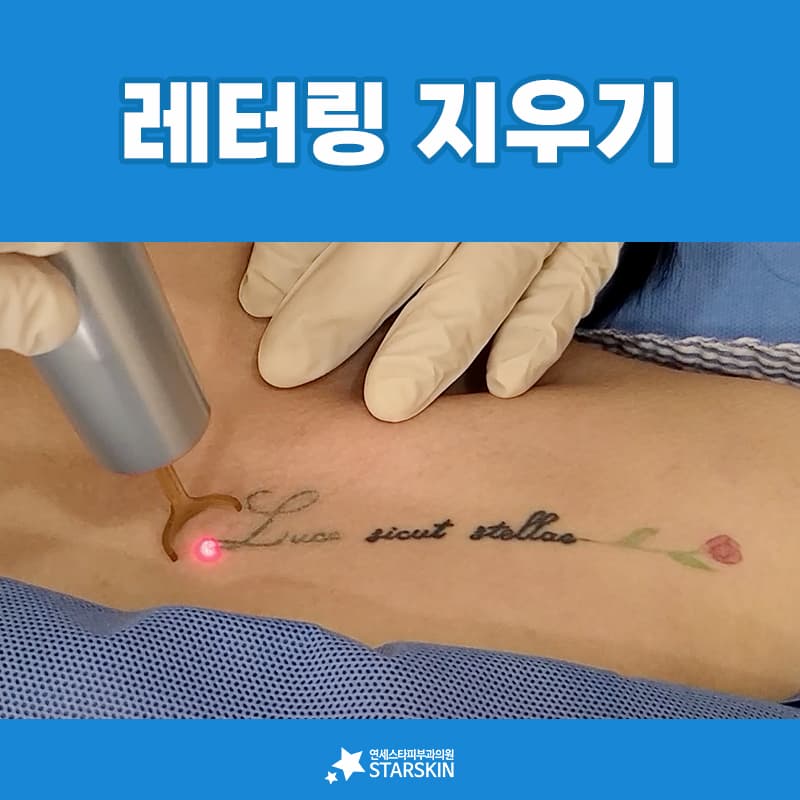
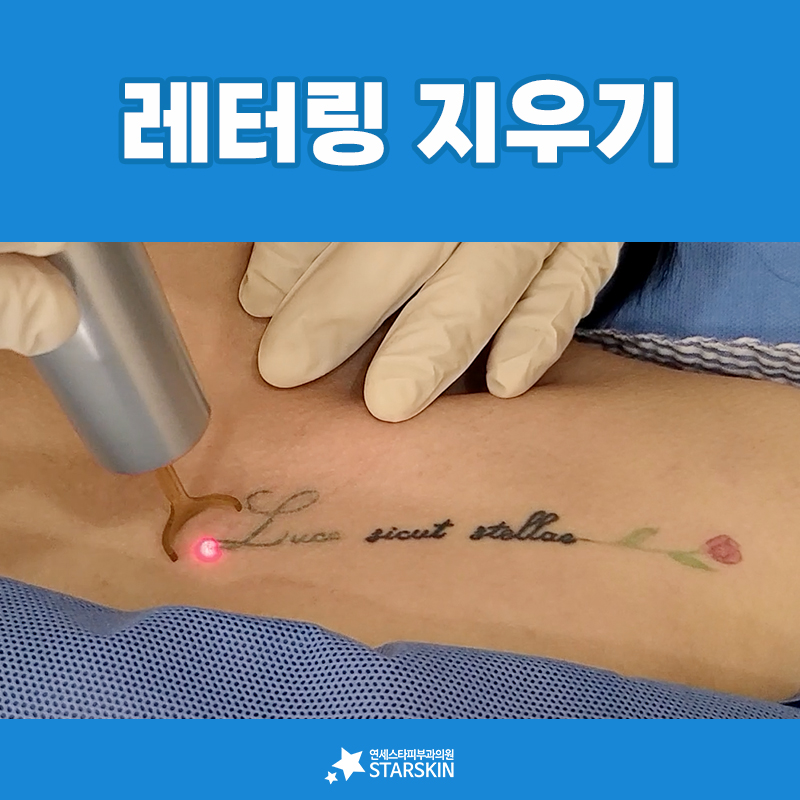
As fashion tattoos have become more common, many people now have one or two mini tattoos. Among these, lettering tattoos are the most common form.
Many people inquire about removal when they dislike the phrase or got the tattoo without much thought. However, a common question we hear during consultations is, "Since the letters are thin, won't it disappear quickly?"
Lettering is not an easy tattoo to remove
One might assume that thinner letters mean less ink. However, when it comes to removal, lettering is one of the more challenging tattoos to erase.
This is because a large amount of pigment is injected deep into the skin within a small area. The visible surface area does not match the actual volume of pigment. Therefore, multiple treatment sessions are often required.
The same applies to pictorial tattoos consisting only of sketch lines; the situation is no different.
How lasers disperse pigment
While surgical tattoo removal is an option, surgery can leave scars, so laser treatment is generally preferred. At Yonsei Star Dermatology Sinchon, we use the PicoWay Laser.
When the laser is applied to the tattooed area, the pigment is fragmented into tiny particles. Because the laser is pulsed in units of one trillionth of a second, the pigment breaks down into microscopic particles.
The smaller pigment particles are gradually consumed and transported away by macrophages in our body. Through this process, the tattoo color gradually fades. The equipment and procedure are detailed in the R-Zero Pico-Frectat Tattoo Removal guide.
Specific conditions that increase the number of sessions
| Condition | Impact on Removal |
|---|---|
| Pigment concentrated in a small area | More pigment than visible, increasing sessions |
| Deeply located pigment | Requires laser to reach greater depths |
| Darker colors | Increases the absolute amount of pigment to be broken down |
| Larger size | Widens the area to be treated, increasing sessions |
For tattoo removal, you can generally expect to see changes after at least ten laser sessions. Individual results may vary.
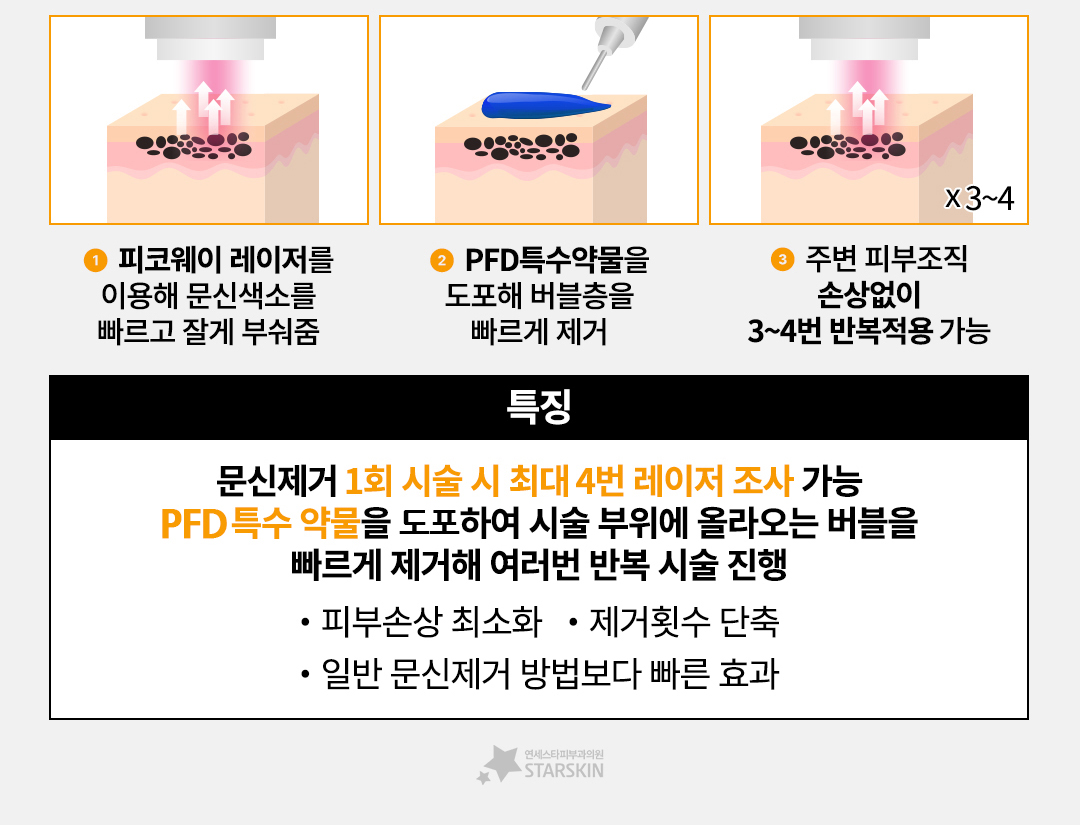
A method that allows up to four passes in one session
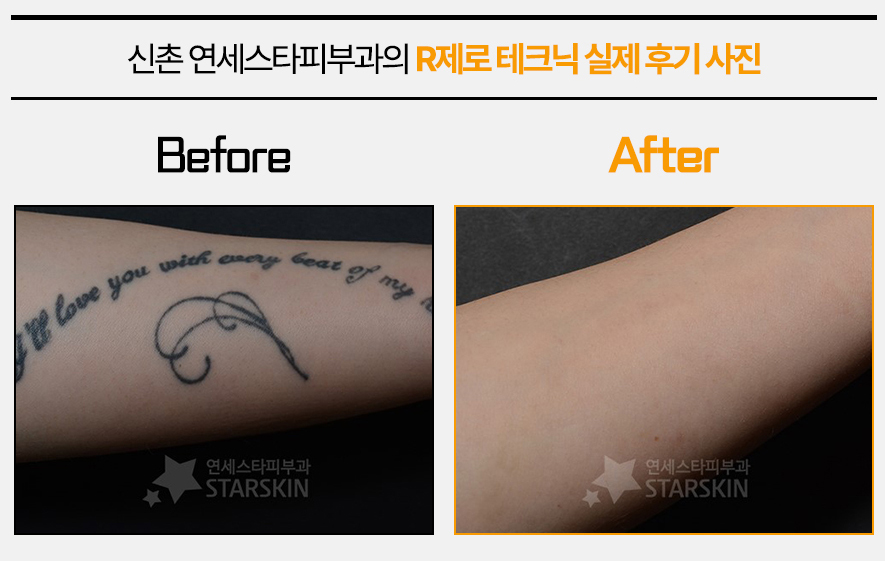
Since this treatment requires multiple sessions, it's crucial to proceed without leaving scars. Yonsei Star Dermatology has accumulated clinical cases in scar-free tattoo removal, and our method is the R-Zero Pinhole Technique.
Using Perfluorodecalin (PFD) special medication allows for up to four repeated laser passes in a single session.
Finally, the Pinhole Technique is used to create channels for blisters to drain quickly. This method is also used in scar treatment, and more details can be found in the Pinhole for Burn & Surgical Scar treatment guide.
All treatments are performed directly by a board-certified dermatologist. The laser power and number of passes are adjusted to minimize strain on the skin.
Why does pain occur?
Pain occurs when tattoo pigment reacts to the laser and breaks apart. If the tattoo is in an area with concentrated nerves and blood vessels, the pain may feel more intense.
Some people stop treatment midway due to the discomfort of repeated sessions, and many inquire about the possibility of sleep anesthesia.
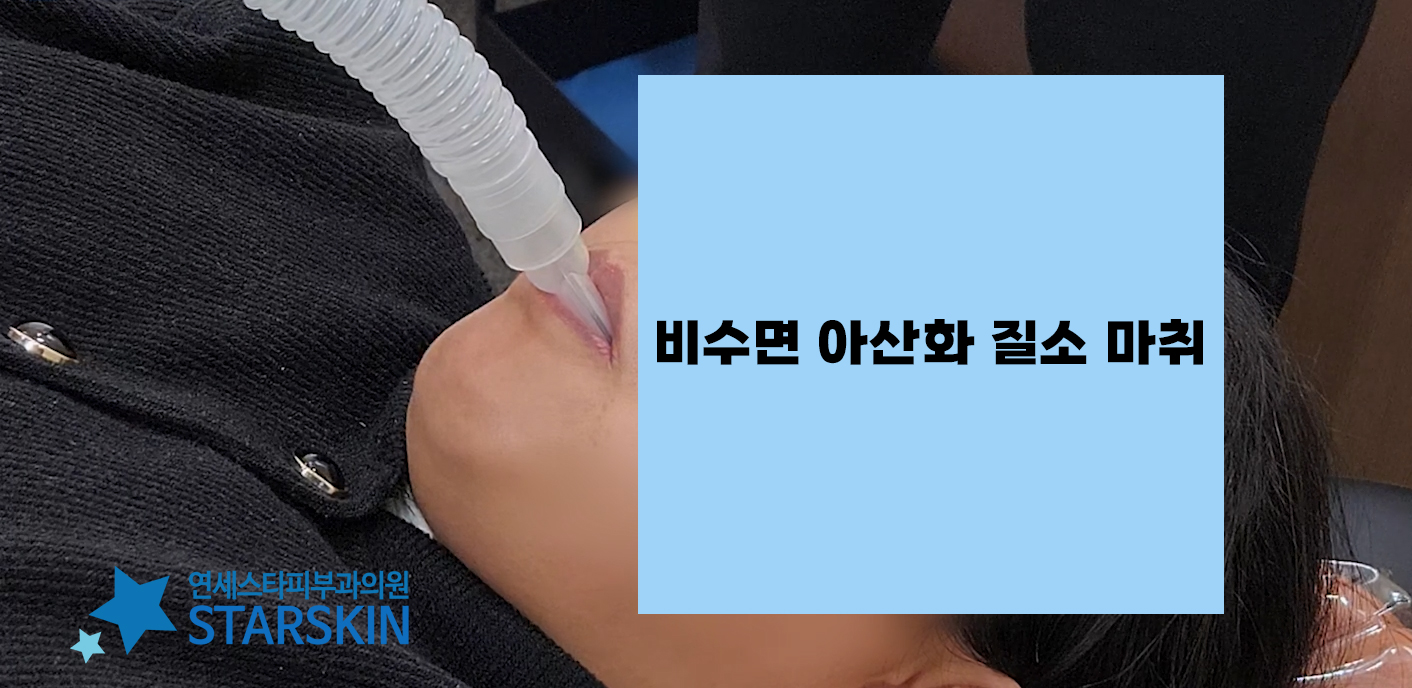
The option of non-sleep nitrous oxide anesthesia
Therefore, Yonsei Star Dermatology Sinchon offers non-sleep nitrous oxide anesthesia. This anesthesia method is FDA-approved and widely used in dental procedures and simple treatments.
- It is gentle enough to maintain vital functions like breathing and blood pressure normally.
- As it is non-sleep, you can communicate fully with the medical staff during the procedure.
- It does not require a long recovery time, allowing for a comfortable experience.
Individual differences in pain perception and suitability for anesthesia may exist. The overall treatment flow can be seen in the Tattoo Removal Treatment Guide.

If you have any questions regarding lettering removal, please feel free to inquire via chat now.
Authored and Medically Reviewed by Representative Director Dr. Jinmun Kang (Board-Certified Dermatologist) Graduated from Yonsei University College of Medicine · Completed Dermatology Residency at Severance Hospital · Former Professor at Bundang CHA Hospital Member of the Korean Dermatological Association · Member of the Korean Society for Aesthetic and Dermatologic Surgery View Medical Staff Profile
First Published 2024-01-05 · Last Reviewed 2026-07-29
This article contains general medical information and does not substitute for individual diagnosis and treatment. Results and recovery may vary by individual.