

If you have marks on your legs or arms after laser hair removal, you might worry that these traces will remain forever. To get straight to the point, the treatment direction varies depending on the depth and type of the mark, and it is reported that early and appropriate management increases the likelihood of fading the marks.
As the weather warms and clothing becomes lighter, more people receive Laser Lesion Removal on their legs or arms. It offers a cleaner finish than shaving and, with consistent treatment, provides longer-lasting results, making it a highly preferred method.
Why Do Marks Remain After Hair Removal, Which Was Done for Cleanliness?
Although it is now a common procedure available at many dermatology clinics, if the laser is applied too strongly without sufficient consideration of skin condition, equipment settings, and intensity, it can lead to burns. It is important to remember that this is a procedure that must be applied safely.
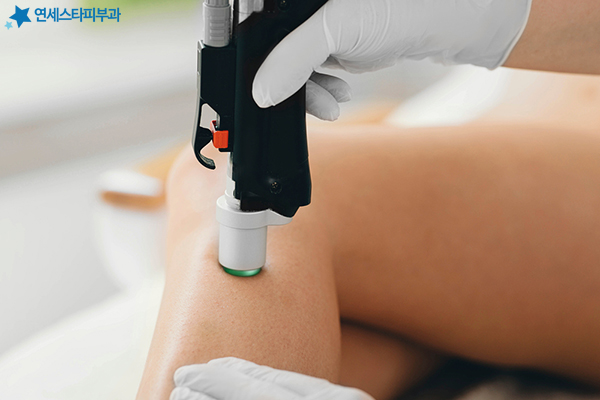
Surprisingly, a considerable number of people are concerned about leg scars or pigmentation after hair removal. While at-home hair removal devices are available, improper use can leave marks, and even treatments received at a clinic can leave traces if the intensity is not appropriate.
The best approach is to receive safe hair removal from the start. However, if marks have already appeared, you should move on to managing them with appropriate treatment to prevent further progression.
What to Check First When Marks Remain
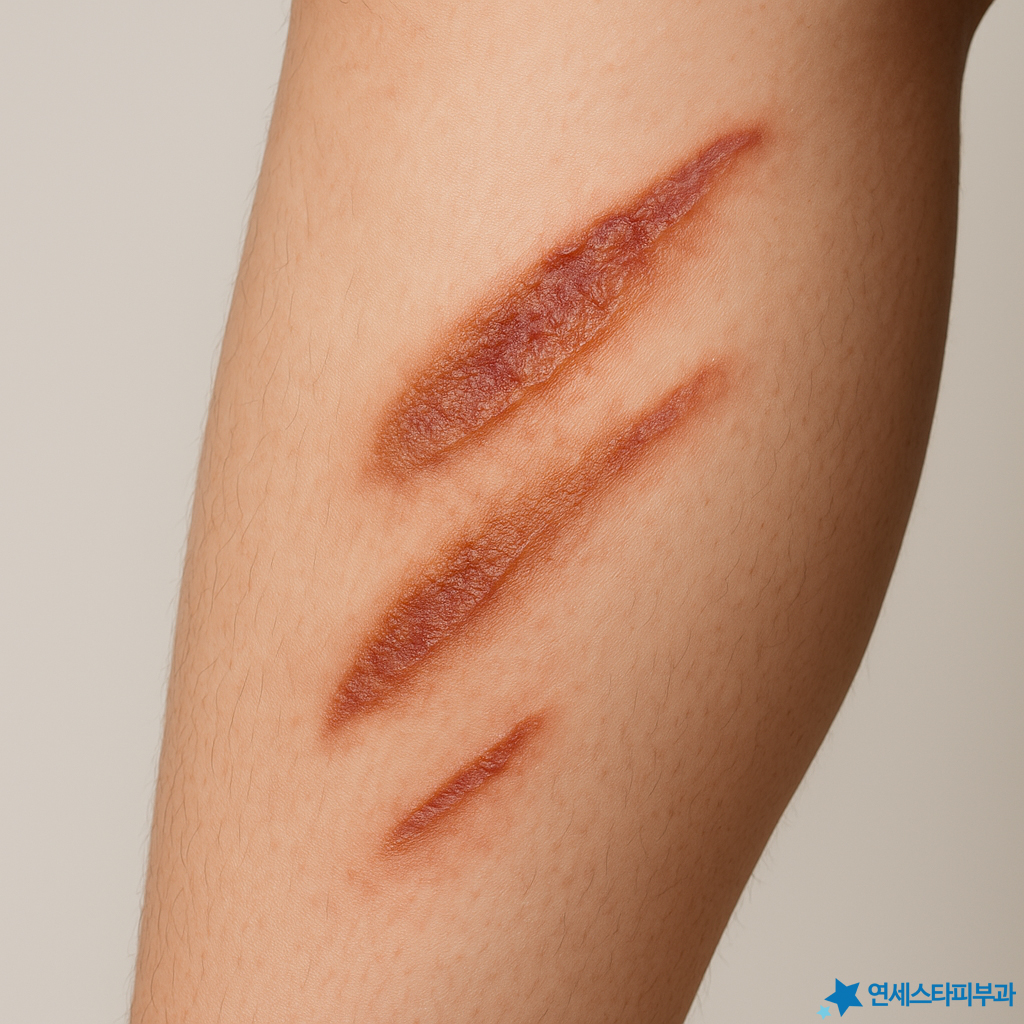
If the damage extends deeper than the dermal layer of the skin, natural recovery alone has limitations. As there is a risk of permanent marks, it is reported that starting treatment as early as possible is advantageous for fading the marks.
The pattern of marks varies from person to person, so accurately assessing the condition, rather than self-diagnosing at home, is the first step. In the examination room, even in the same area, cases where redness is dominant and cases where dull pigmentation is dominant are distinguished, and the approach changes accordingly.
Here's what you should take care of initially:
- If blisters appear, do not intentionally burst them; first, check their condition.
- Avoid strong friction or exposure to hot water, which can be irritating.
- When going out, manage sun exposure with sunscreen to prevent pigmentation from darkening.
- If redness or pigmentation persists without subsiding, get it checked at a clinic.
Traces of damage extending to the dermis are difficult to disappear on their own over time, so early management becomes a turning point that determines the direction of recovery.
If you have received laser hair removal and red marks do not subside or dull pigmentation remains, these are different issues, so it is important to approach them separately.
When Red Marks Are Predominant
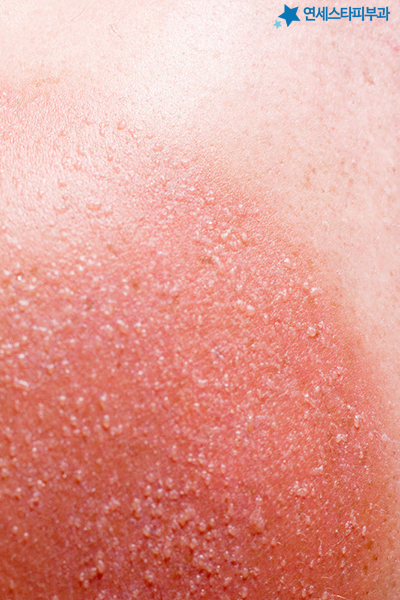
In the early stages, redness can be severe. Starting laser treatment promptly at this time can help prevent the condition from progressing further while also managing the marks in two directions.
For improving red marks, Vbeam series vascular lasers can be considered. They help alleviate vascular dilation, which is the cause of skin redness, and restore the skin to a color similar to the surrounding skin. The Vbeam Prima device is a superior laser among them, allowing for relatively fast and safe treatment.
The time commitment is not significant, making it less burdensome to return to daily life after treatment, and it becomes one of the suitable options given the nature of leg scar treatment, which requires consistent sessions. If the marks are closer to burn scars, a separate evaluation may be necessary.
When Dull Pigmentation Is Predominant

It is not uncommon for uneven pigmentation to remain after hair removal, which was done for a clean appearance. To restore a bright condition, the help of Pico series devices can be utilized.
Pico refers to a unit of one trillionth of a second. Compared to the existing nanosecond, it instantaneously irradiates energy for about 1000 times shorter, which has the advantage of managing the pigmented area while minimizing damage to the surrounding skin.
If you have any questions, you can easily check them through chat consultation regarding marks after hair removal.
Difference in Approach Between Redness and Pigmentation

Even for the same leg scar, the choice of equipment varies depending on the predominant pattern. Distinguishing what kind of mark it is is the starting point of treatment.
| Predominant Pattern | Commonly Considered Approach | Key Point |
|---|---|---|
| Red marks | Vascular laser (Vbeam series) | Alleviates dilated blood vessels |
| Dull pigmentation | Pico series laser | Manages pigmented areas |
| Deep damage/blisters | Step-by-step approach after condition check | No self-treatment |
If pigmentation is widespread, Epidermal Pigment Removal may also be considered, and if the patterns are complex, a combined plan is formulated.
To Return to a Clean State

As interest in hair removal increases, many people want to receive it safely and cleanly. When deciding on a procedure, it is necessary to consider various conditions such as your skin condition, area, and intensity.
If leg scars are noticeable after laser hair removal or if elements that hinder clear skin, such as pigmentation, have appeared, do not let them get duller; seek appropriate treatment to return to a satisfactory state.

The choice of laser, intensity, and number of sessions for leg scars varies from person to person depending on the pattern. We hope that after a thorough check at the clinic, you can receive appropriate measures and return to a clean state.
If you need to check your condition or have additional questions, you can get immediate help below.
💬 Consult Now
Chief Director Lee Sang-joo (MD, PhD, Yonsei University College of Medicine and Graduate School, completed dermatology residency at Severance Hospital, President of the Korean Dermatological Association) Chief Director Lee Sang-joo's Profile First published 2025-06-02 / Last reviewed 2026-06-16
This content is for general information purposes only, and treatment effects and recovery patterns may vary individually. Accurate diagnosis and treatment plans should be determined through consultation with medical staff.