

Have you ever experienced a red mark that lingered for a long time, an indentation, or a white discoloration after removing even a small mole? Scars formed after mole removal are not guaranteed to disappear on their own simply with time. The most common question patients ask is similar: "Will this go away if I just leave it?" If a scar has already formed, natural recovery alone may have limitations, and the approach varies depending on the shape and timing of the mark.
Why You Shouldn't Leave Mole Removal Scars Untreated
It's not uncommon for mole removal scars to solidify in form while being neglected with the thought, 'It will eventually disappear.' In the clinic, we often see patients who wait several months until an atrophic scar develops, even though the issue could have been approached relatively simply if they had come when only redness remained.
If a scar has already settled, it's crucial to first identify the type and timing of the mark and then choose the appropriate laser treatment. In this article, we will summarize the characteristics of each type of mole removal scar and the laser equipment suitable for each type. Similar concerns are frequently addressed in the Acne Scar Triple Repair area.

Mole Removal Scars: Three Main Types
Mole removal scars typically appear in three types. Since the treatment approach varies by type, the first step is to identify the current state of your scar.
- Erythematous scar, an initial state with a red mark remaining
- Atrophic scar, a state where the skin is deeply indented
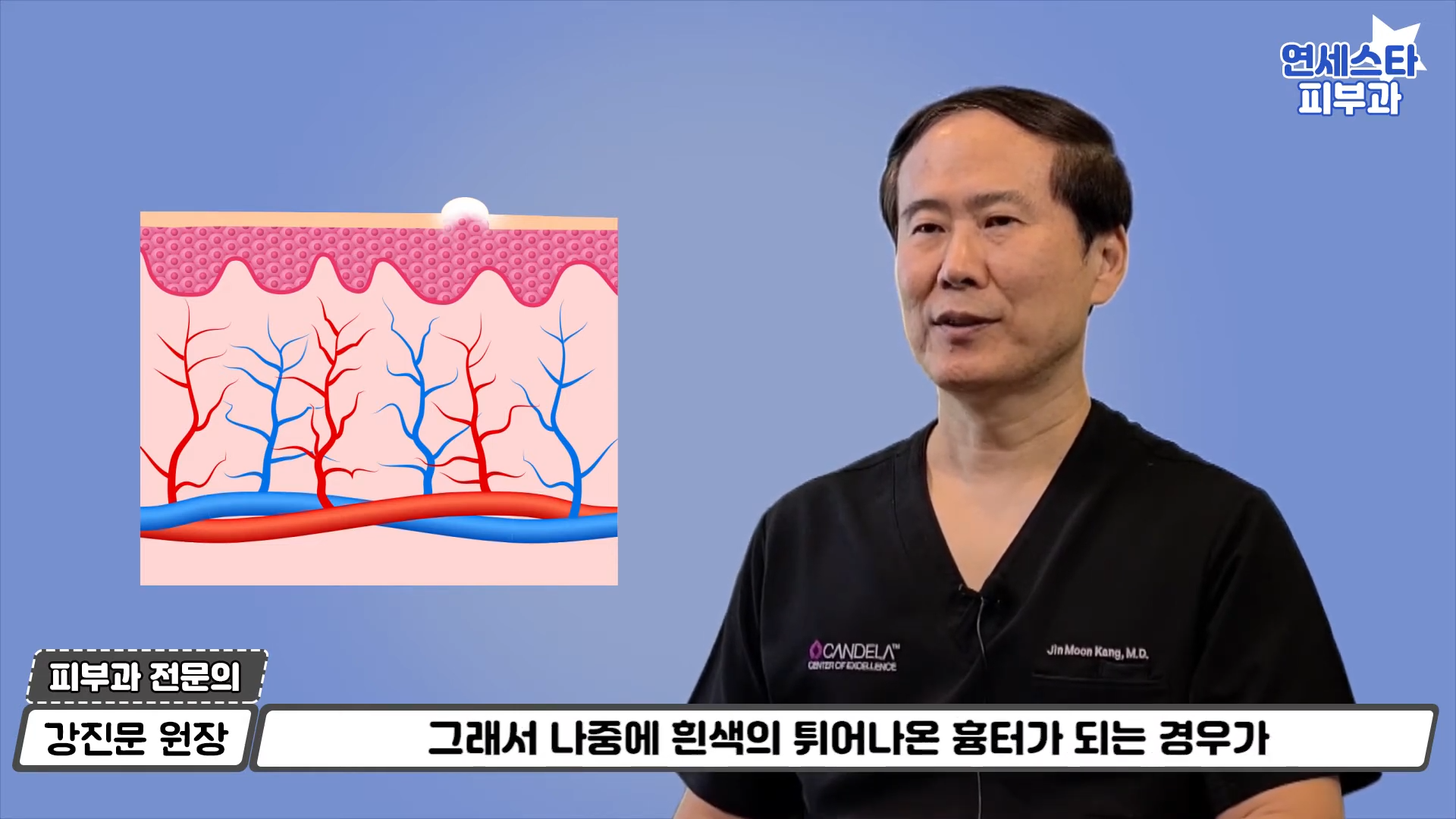
- Hypopigmented scar, a state where the color has turned white
- A complex type, where the above types are mixed, may also occur


| Type | Condition | Approach |
|---|---|---|
| Erythematous | Red mark remains | Early management with vascular laser |
| Atrophic | Indented | Induce texture recovery with regenerative laser |
| Hypopigmented | Discolored white | Customized approach based on scar depth |


If a Red Mark Remains, Vascular Laser Approach
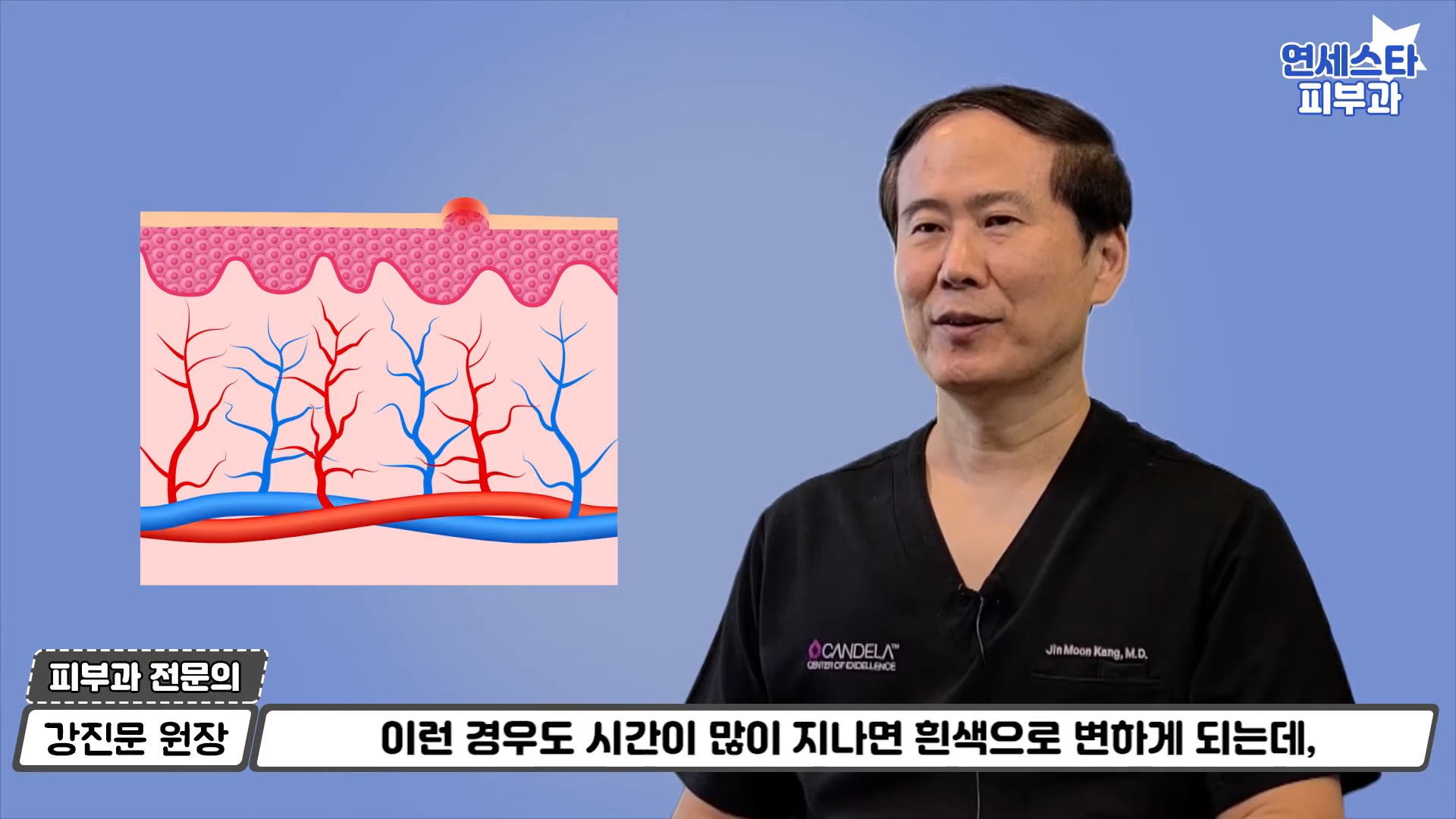
For mole removal scars with red marks, such as erythematous scars, the Vbeam Prima vascular laser is utilized. Vbeam Prima is a 595nm pulsed dye laser (PDL) that uses the principle of hemoglobin in blood vessels selectively absorbing this wavelength.
This method minimizes impact on surrounding healthy skin tissue while concentrating energy on abnormal capillaries and erythematous areas that cause red marks, making it useful for early erythema management of mole removal scars. Approaching in the early stage when redness remains may help prevent progression to atrophic or hypopigmented scars.
The early stage with residual redness is reported to be the easiest to manage. Not missing this timing is the starting point to prevent scars from deepening.
The same 595nm vascular laser principle is widely applied in V-beam Facial Redness Treatment.


For inquiries, please contact us via chat for mole removal scar status

If Indented or Whitened, Regenerative Laser Approach
If the scar has formed a long time ago and has turned white, or if it is an atrophic scar where the skin is deeply indented, a regenerative laser approach is necessary. The Ultrapulse Alpha device can be used for this. The principle of managing indented scars is also connected to Acne Scar Triple Repair.
How Ultrapulse Alpha Works
Ultrapulse Alpha uses a 10,600nm wavelength laser that is absorbed by water in the skin, precisely delivering energy to the dermal layer. This process stimulates damaged scar tissue and induces collagen production, helping to gradually fill in indented areas and restore an even skin texture.
Notably, it features a new CoolScan mode that reduces thermal damage and discomfort during treatment while delivering high energy. Additionally, the wide range of treatment density adjustment allows for a customized approach based on individual skin condition and scar depth. However, recovery responses may vary among individuals.
If the scar type is complex, a sequential combination of two lasers may also be applied at the discretion of the specialist. For deeper and larger scars, a Surgical Scar Revision approach may also be considered.

Things to Check Before Treatment
Here are some helpful points to consider when thinking about mole removal scar treatment:
- When the mole was removed, and how long the mark has remained
- The current state of the mark: is it red, indented, or has it turned white?
- Any feeling of incomplete regeneration or changes in the same area
- Lifestyle factors that could affect the scar, such as sun exposure or pigmentation


The Key is Choosing Based on Type and Timing
In summary, the key is to choose treatment according to the type and timing of the mole removal scar: approaching with Vbeam Prima if a red mark remains in the early stage, and with Ultrapulse Alpha if it has already turned white or is indented. Even if scars appear similar, the approach may differ depending on their condition.
Rather than worrying alone and hoping it will disappear, we recommend starting by identifying the current stage of your mark. If you're curious about a broader classification of scars, you can also refer to Scar Types.

Instead of worrying alone, we recommend consulting with a dermatologist to create a treatment plan tailored to your mole removal scar condition.
💬 Chat with us nowDr. Lee Sang-Joo, Chief Director (MD, PhD from Yonsei University College of Medicine and Graduate School, completed dermatology residency at Severance Hospital, President of the Korean Dermatological Association) Dr. Lee Sang-Joo's Profile First published 2026-05-26 / Last reviewed 2026-06-16
This content is for general information purposes only. Treatment responses and outcomes may vary individually, and accurate diagnosis and treatment direction should be determined through in-person consultation with medical staff.