
![Keloid Removal: Laser vs. Surgery – What Does GPT Say? | [Yonsei Star Dermatology Sinchon]](/_next/image?url=https%3A%2F%2Fagqdgbuateknhwpocrgu.supabase.co%2Fstorage%2Fv1%2Fobject%2Fpublic%2Fsources%2Fbbf3bebe-45b6-4415-bd04-bda18b2cac0f%2Fblog-images%2F224036860315_00_dc80ad03a32f.jpg%3Ftype%3Dw966&w=3840&q=75)
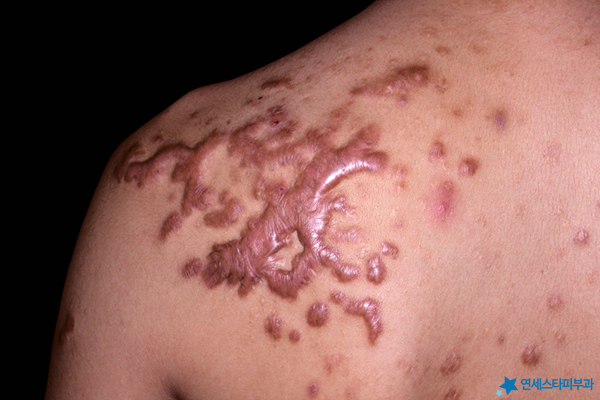
Keloids are scars that harden and swell beyond the original wound boundary after healing, sometimes accompanied by itching or stinging. Many people search online or ask AI like ChatGPT before visiting a clinic. The most frequent question is, “Is it better to leave keloids alone, or should they be treated?” To answer directly, keloids are scars reported to grow over time, so it is safer to accurately assess their condition rather than neglect them.
In this article, we will examine common AI responses about keloids one by one from the perspective of a dermatology specialist. We will explore whether laser or surgery is better, which answers to accept, and which to reconsider.
How Much Can We Trust AI's Answers?
ChatGPT excels at quickly summarizing dictionary definitions and vast amounts of information. However, for conditions like keloids, where the severity, location, and skin properties vary from person to person, there can easily be a gap between general statements and individual diagnoses. Comparing AI answers with actual clinical perspectives below will clarify this difference.

Is the statement "Surgery carries a high risk of recurrence" true?
AI often responds that "keloids are not recommended for surgery due to a high risk of recurrence." The possibility of keloids recurring in the same spot is not an incorrect explanation.
However, the likelihood of recurrence can vary depending on the experience and approach of the treating medical staff, making it difficult to generalize by saying "surgery is absolutely not an option."
Sometimes, a combination of methods, such as injections or lasers, is considered in conjunction with surgery, rather than surgery alone. Therefore, instead of a definitive "no surgery," finding the right combination for an individual's condition is more important.

What the answer "Avoid irritation" misses
Another common answer is, "Keloids grow larger with irritation, so avoid procedures or treatments." While it is true that keloids are sensitive to irritation, taking this statement literally could lead to postponing necessary treatment.
Keloids are reported to progress if left untreated, so it is advisable to check their condition at an appropriate time. In the clinic, we often see patients who initially consider it only a cosmetic inconvenience but later experience pain or tightness as the size increases over time.
If you notice the following changes, we recommend a check-up:
- The scar feels like it is growing beyond the original wound area
- Itching, stinging, or throbbing pain
- A firm, raised shape when touched
- Repeated discomfort from rubbing against clothes or movement
The general characteristics and management of keloids can be further explored in Causes and Treatment Directions for Keloid Scars.
If you have any questions, feel free to ask via chat consultation regarding keloid treatment methods.
Can we trust the answer "It will shrink over time"?
The answer, "Some keloids may shrink or stabilize over time," is rather ambiguous. The basic nature of keloids is known to be that their scope tends to widen over time.
While it cannot be definitively stated that there are no cases of natural reduction, it is safer to confirm the condition first rather than delaying initial response based on that possibility.

How do laser, surgery, and injections differ?
The answer, "Excessive irritation can worsen keloids, so caution is needed," is relatively standard. While improper irritation can exacerbate the problem, it does not mean that treatment itself should be avoided. The key is to understand the nature of the keloid and choose a method appropriate for its condition.
| Approach | Primarily Considered Situation | Characteristics |
|---|---|---|
| Triamcinolone Scar Injection | When aiming to reduce the volume of a raised keloid | Often performed repeatedly with the goal of reducing scar volume and itching |
| Laser Treatment | When aiming to address redness or surface texture simultaneously | Selected considering color tone and surface condition |
| Surgical Scar Revision | When the size is large or there is a clear change in shape | Combined with other methods for recurrence management |
Detailed information on each method can be found in the Triamcinolone Scar Injection and Surgical Scar Revision guides. The appropriate method is determined after carefully examining the exact condition, location, and skin properties.

What is truly important in keloid treatment?
The AI responses we have reviewed so far were partially correct, but some contained information that could lead to missing the optimal treatment time if followed literally. Keloids are scars that are difficult to expect to disappear naturally and are reported to have a possibility of recurrence, so prompt assessment and an appropriate approach are important.
If you are curious about Changes and Management of Cosmetic Surgery Scars, as surgical scars or post-plastic surgery scars can also progress into keloid forms, you may find it helpful to refer to that information as well.

In closing
ChatGPT's performance is rapidly evolving, and it is certainly a useful tool for organizing information. However, for conditions like keloids, where symptoms and conditions vary from person to person, we have confirmed that it is still difficult to draw conclusions solely with AI in areas that require comprehensive judgment of individual differences.
For safer and more satisfactory keloid treatment, we recommend not skipping the process of thoroughly checking your condition with a relevant specialist. Yonsei Star Dermatology Sinchon will continue to provide useful information to alleviate your scar concerns.
If you are curious about the right approach for your scar, feel free to ask via Keloid Treatment Consultation Chat.


Dr. Sang-Joo Lee, Chief Director (MD, PhD, Yonsei University College of Medicine and Graduate School; completed dermatology residency at Severance Hospital; President of the Korean Dermatological Association) Dr. Sang-Joo Lee's Profile First published 2025-10-10 / Last reviewed 2026-06-16
This content is for general informational purposes only, and treatment effects and progress may vary individually. Please confirm an accurate diagnosis and treatment plan through consultation with medical staff.