
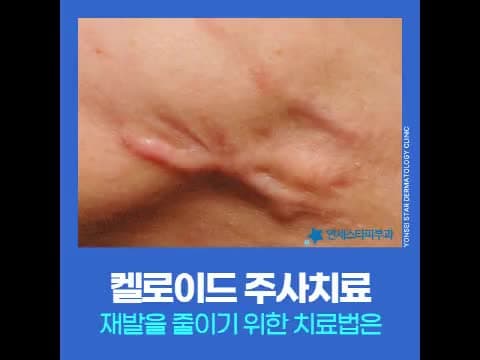
If a piercing or surgical scar, instead of healing, becomes progressively thicker and raised, it's a good idea to check if it might be a keloid.
Typical scars fade and flatten over time. However, keloids are characterized by an unceasing healing process where collagen continues to be excessively produced, causing the shape to become progressively thicker and, in severe cases, spreading beyond the original wound area to the surrounding skin.
How Do Keloids Form?
Keloids can originate from various injuries such as C-section scars, ear piercings, vaccination marks, acne, burns, and surgical sites. They are particularly common in areas where the skin experiences significant tension, such as the chest, shoulders, and ears. Constitutional factors play a significant role, so whether a keloid forms from the same stimulus varies from person to person. You can check which symptoms apply to you in the Keloid Scar information.
Why Is It Called Management, Not a Cure?
Keloids are less a condition to be expected to disappear completely with one or two treatments, and more a condition that requires managing recurrence by reducing size and controlling symptoms.
Recurrence is a crucial factor to consider before starting treatment. Scars may appear to improve only to rise again a few months later, so a sustained management plan is needed rather than concluding with a single treatment. If treatment is limited to temporarily flattening the scar with injections, you may find yourself repeating the same painful process.
How Do Triamcinolone Scar Injections Work?
The most commonly used method for keloid treatment is Triamcinolone Scar Injection. The medication is injected directly into the scar tissue to suppress excessively activated fibroblasts and reduce the overproduction of collagen. This helps to prevent the scar from growing larger while alleviating redness, itching, and pain. Triamcinolone Scar Injection tailored to the lesion's condition will be guided after consultation.
However, the tearing pain during the injection can be considerable, so even though it seems simple, many people find it burdensome to receive repeatedly.
Why Injections Alone Are Insufficient
While certainly effective, Triamcinolone Scar Injection alone has limitations. Although injections can help reduce the height of a raised scar, the likelihood of recurrence does not easily decrease if the problem of vascular overdevelopment, which is the environment in which keloids grow, is not addressed simultaneously. Keloid tissue often contains abnormally developed blood vessels, and these vessels act as a factor that continuously sustains excessive collagen proliferation.
An Approach Combining Injections and Vascular Lasers
Therefore, a complex treatment approach utilizing both injection therapy and lasers is gaining attention. This method involves reducing the raised height of the keloid with Triamcinolone Scar Injection while simultaneously using a vascular laser to selectively suppress abnormal blood vessels within the keloid tissue. When the vascular condition is managed, the environment that sustains excessive collagen proliferation itself is reduced, which is reported to help lower the likelihood of recurrence compared to single treatments.
The table below summarizes the roles of each method.
| Approach | Primary Role | Points to Consider |
|---|---|---|
| Triamcinolone Scar Injection | Reduces the height of raised scars and alleviates redness and itching | Limited in recurrence management when used alone |
| Vascular Laser | Suppresses abnormal blood vessels to reduce the environment for re-proliferation | Helpful when combined with injections |
V-beam Vascular Lesion Treatment, which addresses vascular lesions, is considered in such combined approaches. For large and firm lesions, methods like Ultra Excision may also be considered.
If you wish to determine the stage of your keloid, you can have a consultation. Consult via chat now
Lifestyle Management to Reduce Recurrence
In clinical practice, lifestyle management after treatment often influences the outcome as much as the procedure itself. Consistently following the management below after treatment can help reduce the risk of recurrence:
- Attach silicone sheets to protect the scar area.
- Combine with compression therapy to control the stimulation applied to the scar.
- Make sun protection a habit.
- If you have a keloid constitution, avoid unnecessary skin irritations such as piercings and tattoos.
In Summary
Keloids are a condition where the goal is to manage and suppress them rather than to eliminate them completely. The limitations of Triamcinolone Scar Injection monotherapy can be complemented by combining complex treatments such as vascular lasers, and when combined with lifestyle management, it helps reduce the likelihood of recurrence. Since scar size, condition, and constitution vary from person to person, we recommend establishing a long-term plan tailored to your condition through consultation. Consult via chat now
Chief Director Lee Sang-joo · Dermatology Specialist
As the Chief Director of Yonsei Star Dermatology Sinchon, he has long specialized in pigment and scar treatment. He will serve as the President of the Korean Dermatological Association in 2026 and is also an adjunct professor at the Department of Dermatology, Yonsei University College of Medicine. His profile can be found at Chief Director Lee Sang-joo's Introduction.
First Published 2026-07-08 / Last Reviewed 2026-07-23
This article provides general medical information, and treatment methods and results may vary depending on individual skin condition and scar type. Please consult a dermatology specialist for an accurate diagnosis and treatment plan.