

It's not uncommon for a small mole removal to leave behind red marks or indented scars that are bothersome. The first question that comes to mind is likely, "Can this scar be made smooth again with a laser?" To answer directly, cases of scars becoming less noticeable with laser treatment tailored to their shape and color have been reported, though there may be individual differences in recovery speed and extent.
Why Scars Remain After Mole Removal
Red marks or depressed scars that appear after mole removal result from damage to the skin's dermal layer and an imbalance in the regeneration process. Depending on the size or depth of the mole, if the skin does not regenerate sufficiently after Laser Lesion Removal, or if collagen is excessively destroyed during the wound healing process, an indented mark may remain.
Especially in environments where healing is slow or scabs are forcibly removed, hindering smooth regeneration, the marks become more prominent. If the area is delicate, such as the nose, around the eyes, or cheeks, the scars from mole removal may appear even more distinct.

Classifying Scar Types
Scars formed after mole removal do not all look the same. In the clinic, they generally fall into two main categories, and distinguishing the type first is the starting point because the treatment approaches differ.
| Scar Type | Key Characteristics | Treatment Approach |
|---|---|---|
| Inflammatory scars with redness | Red marks, erythema, subtle irritation | Vascular laser to alleviate redness |
| Depressed scars with indentation | Indented marks, texture damage | Fractional laser to induce collagen regeneration |
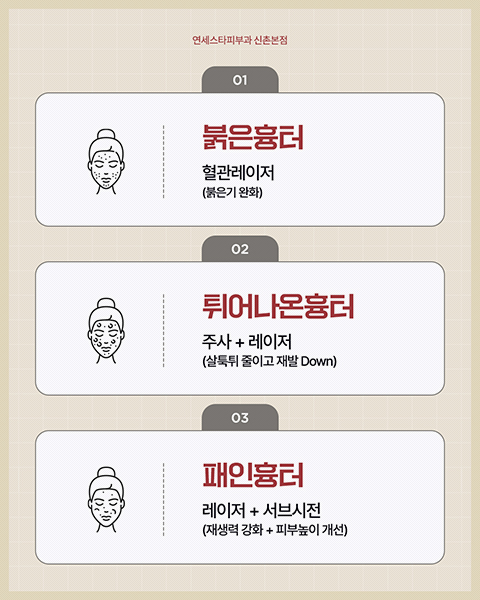
Applying lasers such as Vbeam Prima, StarLux, and Ultrapulse Alpha according to these two types can aid skin regeneration.
Vbeam Prima Manages Redness and Inflammation
Vbeam Prima is a vascular laser used to calm red marks, inflammation, and subtle scar irritation remaining after mole removal. It selectively destroys the blood vessels that cause redness, thereby evening out skin tone.
It helps improve symptoms like red spot scars and erythema in the early stages and prevents them from worsening into depressed scars. With minimal damage to the skin surface and relatively fast recovery, it is suitable for repeated applications while maintaining daily life.
StarLux and Ultrapulse Alpha Fill Depressions
If depressed scars have already formed, StarLux or Ultrapulse Alpha can be helpful. These are fractional CO₂ lasers that work by delivering microscopic thermal stimulation to the dermal layer, promoting collagen regeneration and skin restructuring.
By breaking down damaged collagen layers and inducing new collagen production, they deliver stimulation deep into the dermis when strong regenerative power is needed, such as for depressed scars after mole removal, acne scars, or other post-surgical scars. As a result, changes such as tissue filling and improved skin texture are reported.
If you have any questions, feel free to contact us for a laser consultation tailored to your scar type.
When is the Best Time to Start Laser Treatment?

It is not recommended to proceed with scar treatment immediately after mole removal. It is important to give the skin sufficient time to recover. Generally, it is advisable to start treatment about 2-3 weeks after mole removal, once all scabs have fallen off and new skin begins to emerge.
Even if a depressed scar has been present for a long time, it can gradually fill in and lighten through repeated treatments. We recommend consulting with a specialist first to assess your condition and establish a treatment plan.
Precautions and Aftercare During Treatment

To maintain the treatment's effectiveness, daily care must accompany it. It's good to remember these four points:
- Sun protection is essential. The treated area is sensitive to UV rays, so always use sunscreen.
- Do not forcibly remove scabs. Doing so can lead to hyperpigmentation or re-indentation.
- Maintain moisturizing care. Consistently apply hydrating and regenerative creams to aid skin regeneration.
- Minimize irritation. It is advisable to avoid saunas, alcohol, and strong massages for at least 3-5 days.
Conclusion

We've summarized which lasers can be considered for scars after mole removal, depending on their color and shape. Scars are a type of mark formed within the skin, and their natural disappearance has limitations. However, with advancements in lasers and treatment methods, changes that restore damaged areas to a less noticeable state are being reported.
Similar to treatment for depressed scars including acne scars, approaching scars after mole removal according to their type can lead to a more refined outcome. Don't stress too much about noticeable marks, and we recommend getting your condition checked at the earliest possible time.
If you have any questions, feel free to contact us for a chat consultation regarding mole removal scar treatment.
Dr. Sang-Joo Lee, Chief Director (MD, PhD, Yonsei University College of Medicine and Graduate School, completed dermatology residency at Severance Hospital, President of the Korean Dermatological Association) Dr. Sang-Joo Lee's Profile First Published 2025-11-03 / Last Reviewed 2026-06-16
This article provides general information, and as scar conditions and treatment responses can vary individually, please confirm an accurate diagnosis and treatment plan through consultation with medical staff.