

As the seasons for increased exposure approach, many people hesitate with their clothing choices due to white stripes remaining on their thighs, abdomen, or buttocks. The first question that comes to mind is usually similar: "Can stretch marks that have already turned white fade?" To answer directly, once white stretch marks have settled, they do not disappear on their own, but changes in texture and fading are reported with treatments that stimulate skin regeneration.
Why White Stretch Marks Don't Fade Well with Home Care
Stretch marks are a type of skin damage that occurs when collagen fibers in the dermis tear due to rapid skin stretching. Simply put, scars and damage remain inside the skin, appearing externally as 'stretch marks.' Therefore, it is difficult for general cosmetics or massages that only manage the surface to fill in the damage to the dermis.
They commonly appear in adolescents during growth spurts, mothers experiencing pregnancy and childbirth, and individuals with significant weight changes. Initially, they appear reddish, then gradually turn white over time. White stretch marks that have hardened without early management often leave behind a sunken appearance.
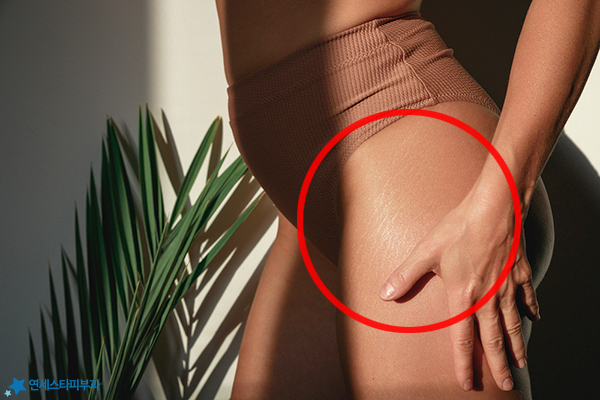
To naturally fill the skin from within, sufficient regenerative power is needed. Therefore, for white stretch marks, an approach of white stretch mark laser treatment that stimulates the dermis is more appropriate than surface management.
Red Stretch Marks and White Stretch Marks Are Different Stages
Even for the same stretch marks, the treatment approach varies depending on the color. This is because the targets to stimulate are different between the early stage, where redness remains, and the stage where they have already turned white.
| Category | Early Stage (Red Stretch Marks) | Late Stage (White Stretch Marks) |
|---|---|---|
| Main Features | Vascular reaction, reddish hue | Pigment loss, sunken texture |
| Treatment Focus | Vascular reaction control, color improvement | Dermal regeneration, texture improvement |
| General Course | Relatively fast response reported | Stepwise treatment often needed |
If redness is present, it is easier to approach with red stretch mark care before the color progresses further. On the other hand, once they have turned white, treatment is needed to boost the skin's regenerative capacity itself.
White stretch marks are traces of broken dermal collagen, so the key is an approach that induces dermal regeneration, not surface moisturizing.
Laser Devices Used According to Condition
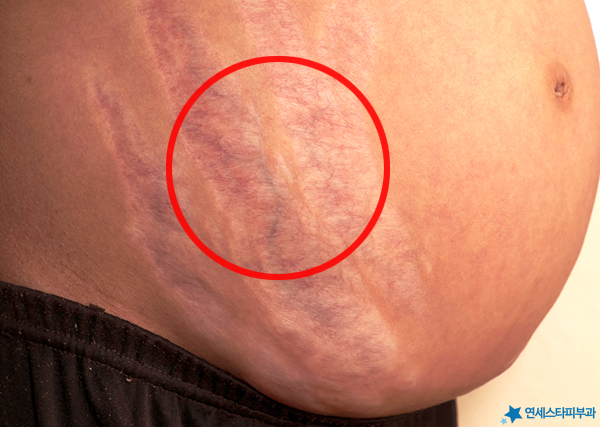
White stretch marks are often treated not with a single device, but by selecting devices according to the skin condition and depth of the stretch marks. The devices utilized at Yonsei Star Dermatology Sinchon depending on the situation are as follows:

- Ultrapulse Encore A representative fractional CO2 laser used for scars requiring regeneration, it reaches deep into the skin to activate regeneration. In this process, new collagen is formed, and changes are reported where the split-shaped white stretch marks and sunken marks gradually fill in.
- Pinhole Technique This method is applied together to enhance the effect of regenerative lasers. Fine pinhole-shaped stimuli are applied to the stretch mark area to induce surrounding healthy skin to aid regeneration. It is used to refine uneven texture, and gradual changes can be expected even for old stretch marks.
- Vbeam Prima If redness still remains in the early stage, a vascular laser is used to manage the color, with the purpose of slowing down the progression to white stretch marks in advance.

The Pinhole Technique has a wide range of applications, with reported outcomes even for difficult cases like burn scars. Applying the same principle to stretch marks, it approaches by refining the texture even if they are old. Since device selection and penetration depth vary for each person, detailed application is determined according to the condition at the procedure level, such as Pinhole Alpha.
If you have any questions, please feel free to leave them via chat consultation regarding white stretch mark laser treatment.
Reasons Why They Don't Disappear All at Once
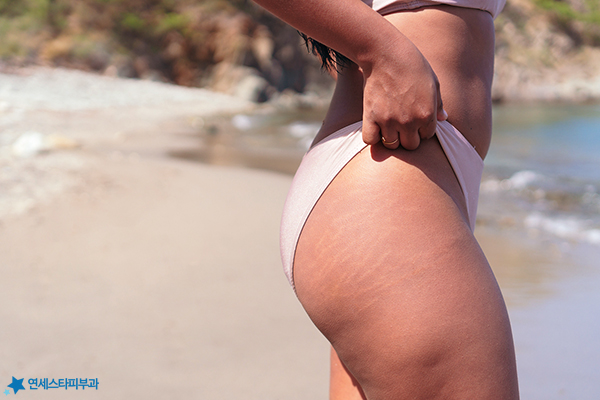
Laser treatment does not make all white stretch marks disappear in a single session. This is because it takes time for new skin to fill in the areas where collagen has broken. However, if treatment is continued step by step, tailored to the skin condition and the depth and width of the stretch marks, changes are reported where the texture becomes smoother and the marks fade.
White stretch marks are often old, so the number of stretch mark treatments may increase somewhat. However, since improvement can be expected when the right device is chosen and consistency is maintained, we hope you do not give up prematurely.
How to Manage Before and After Treatment
In the clinic, we often see that even with the same device, outcomes vary significantly depending on daily management. The following are basic management tips that can help during white stretch mark treatment:
- Moisturize the treated area sufficiently until irritation subsides.
- Prevent pigment changes by using sunscreen when outdoors.
- Reduce saunas, vigorous friction, and intense exercise during the early recovery period.
- Adhere to the prescribed treatment intervals to match the regeneration cycle.
- Remember that changes appear gradually, not all at once.
The speed and degree of improvement vary from person to person, so even if changes feel slow after the first one or two sessions, it is best to adjust while observing the progress.

Towards Regaining Confidence
Once formed, stretch marks do not disappear naturally, causing many people long-term distress. While it was once thought that old white stretch marks were difficult to improve, advancements in regenerative lasers and the Pinhole Technique now allow for tailored approaches.
We hope you can gradually refine white stretch marks with customized treatment suited to your skin condition and regain confidence in your clothing choices.
If you are curious about treatment directions or the number of sessions, please use chat consultation for white stretch mark treatment.


Dr. Lee Sang-Joo, Chief Director (MD, PhD, Yonsei University College of Medicine and Graduate School, Completed Dermatology Residency at Severance Hospital, President of the Korean Society for Dermatology) Dr. Lee Sang-Joo's Profile First Published 2025-08-07 / Last Reviewed 2026-06-16
This content is for general information purposes only, and results may vary depending on individual skin conditions. Please consult with medical staff for an accurate diagnosis and treatment plan.