
![How to Safely Remove Ear Keloids Without Leaving Scars | [Yonsei Star Dermatology Sinchon]](/_next/image?url=https%3A%2F%2Fagqdgbuateknhwpocrgu.supabase.co%2Fstorage%2Fv1%2Fobject%2Fpublic%2Fsources%2Fbbf3bebe-45b6-4415-bd04-bda18b2cac0f%2Fblog-images%2F223202128767_00_f31144a2e8ab.jpg%3Ftype%3Dw966&w=3840&q=75)
If a piercing site or small wound on your ear heals and then gradually hardens and swells, it might not be a simple scar but an ear keloid. We often receive questions like, "Will this go away on its own if I leave it?" Keloids tend to slowly grow rather than disappear over time, so it's best to check their condition early.
Ear Keloids: Why Do They Appear on the Ear?
Sometimes, after getting an earring or piercing, a bump appears on the ear. People commonly refer to it as a "lump on the ear," "ear flesh bump," or "protruding ear flesh." Medically, these symptoms are called ear keloids.
The primary cause of ear keloids is when a wound or trouble on the ear grows into a keloid. The most common instance of a wound on the ear is, of course, when getting an earring or piercing.
Does It Always Happen If You Have Keloid Skin?
There's a common misunderstanding here. Having an ear keloid doesn't necessarily mean you have keloid skin, and having keloid skin doesn't guarantee you'll develop ear keloids. Sometimes, even if both ears are pierced identically, keloid symptoms only appear on one side.
Considering these patterns, it can be concluded that keloids are more likely to form when the body's condition is poor or when the wound is large enough to affect the sebaceous glands. If you want to know more about keloid tendencies, referring to Characteristics and Management of Keloid Scars may be helpful.
Keloids are scars where fibrous tissue grows excessively during the healing process, differing from normal scars in that they can gradually expand beyond the original wound area.
We recommend checking your condition if any of the following apply:
- The earring or piercing site gradually hardens and swells over time.
- You feel itchiness, stinging pain, or a foreign body sensation when touched.
- You have experienced the same lump reappearing after removal.
- A family member has a tendency to develop large scars.
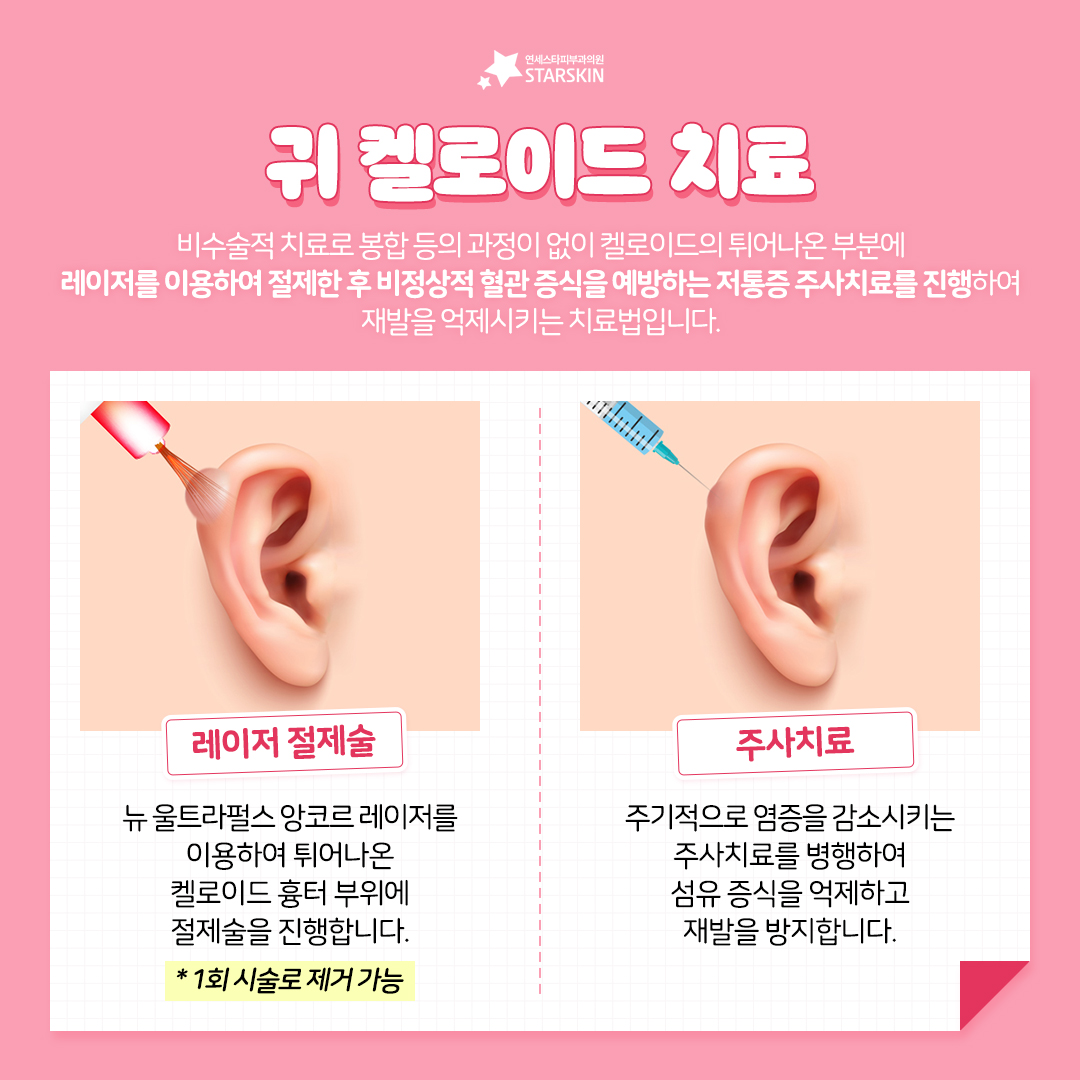
What's Different About Laser Removal?
The protruding part of the ear is removed using Ultrapulse Encore laser. When removed with conventional surgery, there can be shape deformation of the ear and significant bleeding, which tends to prolong the recovery period.
However, laser excision results in less scarring and less bleeding, and the excised area heals relatively quickly. Reports indicate that a single treatment can achieve sufficient results without needing multiple sessions. After excision, injection therapy is combined to suppress fibrous proliferation and reduce inflammation, preventing recurrence.
The differences between laser and surgery are summarized as follows:
| Category | Conventional Surgical Excision | Laser Excision |
|---|---|---|
| Shape Deformation | Can remain | Reported to be minimal |
| Bleeding | Significant | Minimal |
| Recovery Period | Tends to be longer | Relatively fast |
| Number of Treatments | Multiple sessions possible | Possible with 1 session |
If you have any questions, feel free to ask through Chat Consultation for Ear Keloid Treatment.
Back to Original Shape Without Deformation
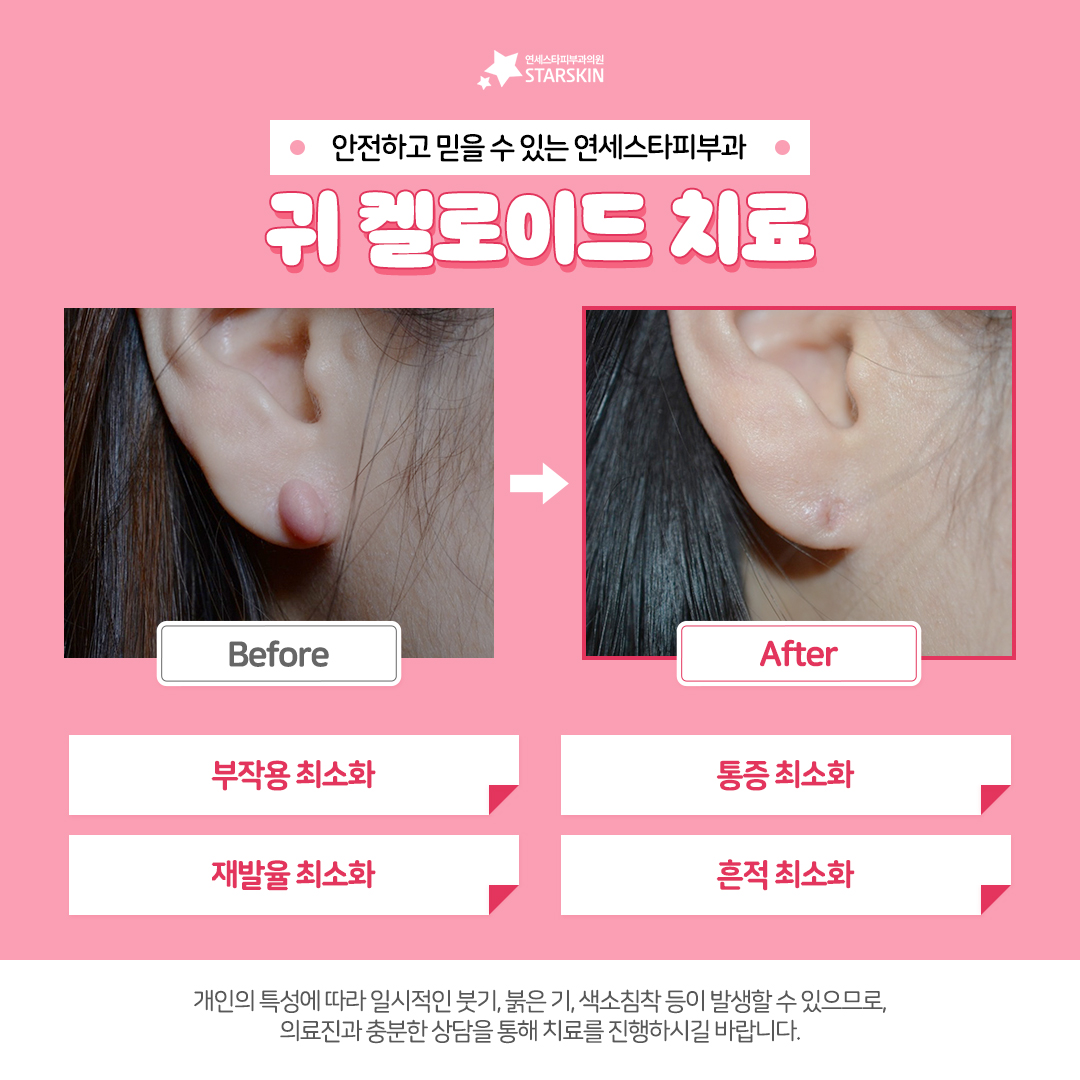
Since the procedure is done with a laser, tissue damage is minimal, resulting in less pain and minimal scarring. The ear keloid is precisely targeted and removed with a fine 0.2mm laser beam, which helps restore the ear to its original appearance without shape deformation.
Triamcinolone Scar Injection, combined after excision to reduce recurrence, works to suppress the excessive regrowth of fibrous tissue. The effects and recovery patterns may vary individually.
How to Manage After Treatment
In the clinic, we often see that even with the same procedure, the results vary depending on post-treatment management habits. It's good to pay attention to the following points after removal:
- During the recovery period, do not rush to re-pierce or wear earrings in the same spot.
- Avoid frequently touching or irritating the treated area with your hands.
- Adhere to the injection therapy schedule provided by the medical staff without skipping.
- If the area hardens again or shows itchy changes, schedule a follow-up appointment.
- Reduce sun exposure to prevent pigmentation.
Things to Check When Scar Changes Are Observed

The approach to ear keloids varies depending on their size, location, and recurrence. If surgical scars or traumatic scars are present along with keloids, methods like Surgical Scar Revision may also be considered. If the ear keloid is too large and you're wondering where to get treatment, we recommend starting with a direct consultation with a dermatologist to assess your condition.
Yonsei Star Dermatology Sinchon has focused on scar treatment, helping patients achieve minimal scarring tailored to their individual condition.
Frequently Asked Questions
You can also find answers to frequently asked questions about ear keloid removal in a video featuring Dr. Lee Sang-joo, the chief director. Additionally, if you have various scar concerns beyond keloids, you may find Information on Cosmetic Surgery Scars helpful.
If you have any further questions about the ear keloid removal methods introduced today, please use Consultation for Ear Keloids. A professional consultant will answer your questions.
Chief Director Lee Sang-joo (MD, PhD, Yonsei University College of Medicine and Graduate School, completed dermatology residency at Severance Hospital, President of the Korean Dermatological Association) Chief Director Lee Sang-joo's Profile First published 2023-09-04 / Last reviewed 2026-06-16
This content is general information to aid understanding, and even with similar symptoms, treatment directions and results may vary individually. Please consult with medical staff for accurate diagnosis and treatment.