
![How to Remove Self-Harm Scars on the Wrist: Laser Treatment with Pinhole Technique | [Yonsei Star Dermatology Sinchon]](/_next/image?url=https%3A%2F%2Fagqdgbuateknhwpocrgu.supabase.co%2Fstorage%2Fv1%2Fobject%2Fpublic%2Fassets%2Fyonsei-star%2Fblog%2F224389905084%2F1.jpg&w=3840&q=75)

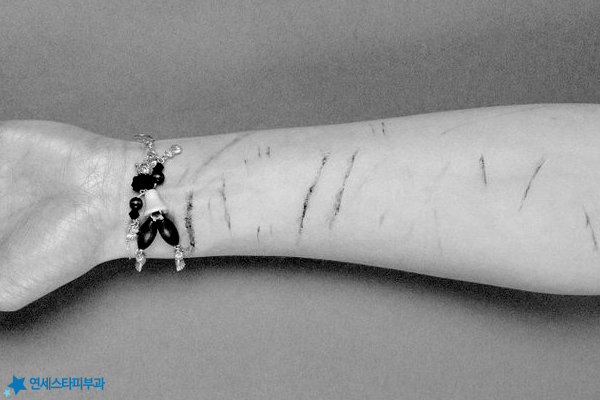
Marks left on the wrist often occur repeatedly in the same spot, frequently hardening into overlapping lines. As time passes, the color changes and the tissue hardens, making treatment more challenging. Furthermore, the wrist is a difficult area to conceal, and we often hear in consultations that patients feel self-conscious whenever they wear short sleeves or extend their hand.

Deciding to Treat is Already a Step Forward
Erasing these marks is not just about appearance. It's closer to a process of moving on from the past. If you've developed the desire to erase them, that desire itself is the beginning of change.
The most common reasons for delaying treatment are concerns about others' perceptions and the clinic's reaction. Self-harm scars are treated just like any other scar in dermatology. We recommend making a plan rather than hiding them alone.

Why Laser is Considered Before Surgery
Treatment is broadly divided into surgery and laser. Surgical methods were the option before lasers existed.
Because the wrist has a lot of movement and thin skin, the process of incision and suturing could lead to new scars or even more noticeable results. In cases where multiple lines overlap, skin grafting might be necessary, which could make the grafted area's marks even more prominent.
For these reasons, laser treatment is now considered first.

Pinhole Technique — A Method That Doesn't Create New Scars
The most commonly used method currently is the Pinhole Technique. It creates deep, dense micro-holes on the scar surface with a regenerative laser.
This stimulation helps to loosen the collagen fibers that have been tangled and clumped for a long time, and a regenerative response is reactivated in that area. Repeating this process gradually softens the scar tissue, and long, continuous lines become shorter and lighter. The goal is to make them barely noticeable in daily life.
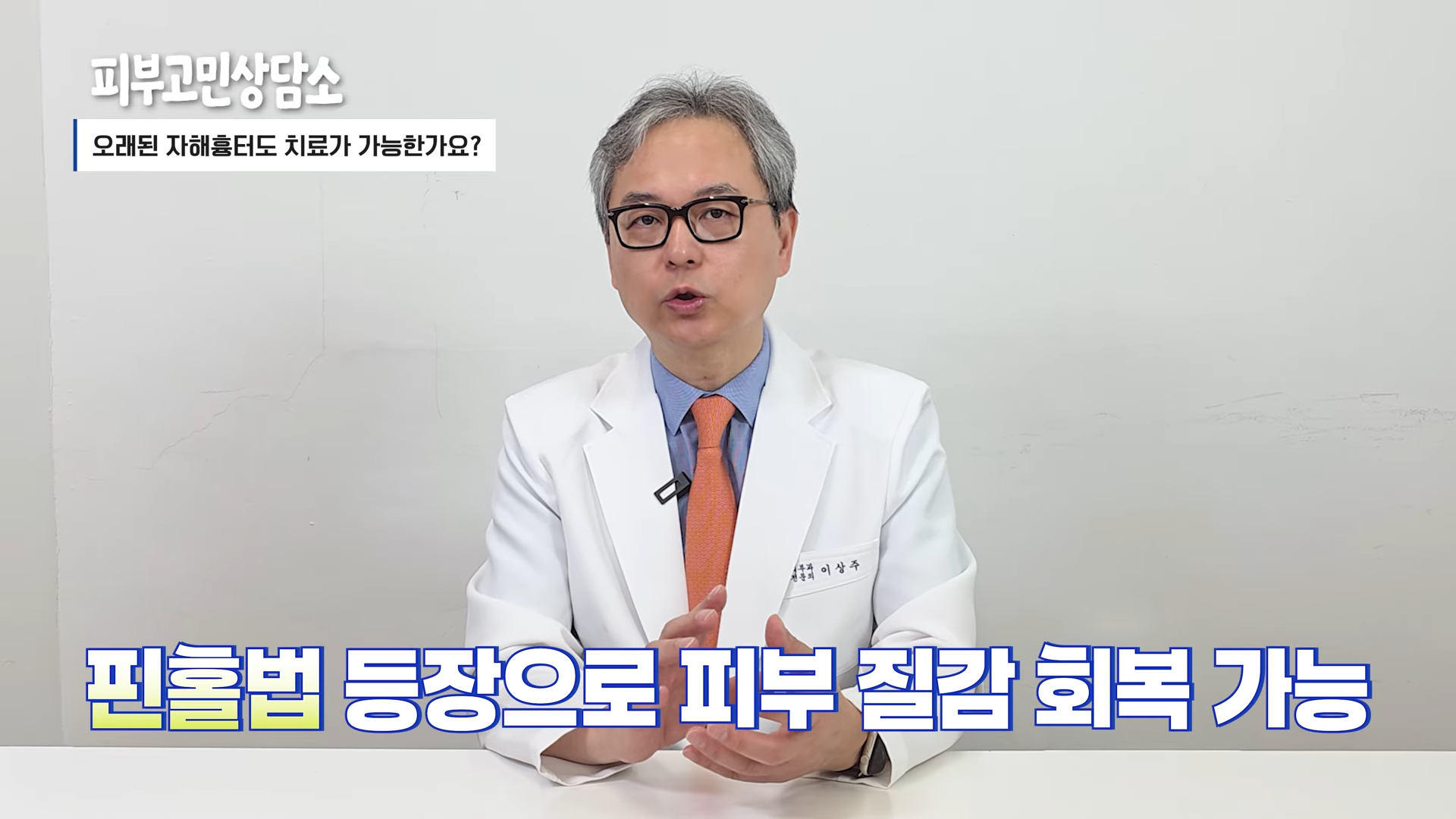
The biggest advantage of the Pinhole Technique is that it creates no new marks, as there is no incision or suturing. Even long, linear scars can be precisely treated along their lines.

For Older Scars, Planning is Crucial
Treatment usually begins long after the scars have settled. For hardened scars, regenerative lasers like Ultrapulse Alpha are used with the Pinhole Technique.
Since the wounds occurred repeatedly in the same spot, their depth and length vary, making them among the more challenging types of scars to treat. The laser gradually works to improve regeneration up to the dermis.
Treatments are typically repeated multiple times, usually with intervals of 4-6 weeks or more. If the scars are covered with a cover-up tattoo, the overall duration will be longer as it includes a pigment removal process.
Starting early when redness remains is the fastest, but in any case, it will not be resolved in one or two sessions. It is better to plan for the long term from the beginning to avoid giving up midway.

Skin Treatment Alone May Not Be Sufficient
Something as important as erasing scars is preventing new ones. If new wounds occur, the marks can overlap with the treated area, reversing the progress made.
Therefore, we recommend combining dermatological treatment with consultation from a mental health specialist. The recovery of both body and mind lasts longer when they progress together.

In Summary
Marks left on the wrist are not something to hide. With the Pinhole Technique, you can gradually lighten them without adding new scars. Since the method varies depending on the color, depth, and time elapsed, we recommend consulting to confirm a plan that suits your current condition.

Author · Dr. Lee Sang-joo, Board-Certified Dermatologist As the chief director of Yonsei Star Dermatology Sinchon, Dr. Lee Sang-joo has extensive experience in scar treatment. He serves as the president of the Korean Dermatological Association in 2026 and an adjunct professor at the Department of Dermatology, Yonsei University College of Medicine. Detailed credentials can be found in his medical staff profile. · Last reviewed September 1, 2026
This article is intended for general medical information and the number of treatments and results may vary depending on the depth and duration of the scar and individual skin condition. For an accurate diagnosis and treatment plan, please consult with a board-certified dermatologist.