

Many people are concerned about scars left after a procedure to remove a small mole. The first question that usually comes to mind is, "Can this scar return to being smooth again?" To answer directly, mole removal scars are reported to be able to improve to a point where they are almost unnoticeable if treated according to their shape and timing.
Although it is known that moles can be easily removed with lasers, the skin may become depressed during the procedure, or tissue may excessively rise during the recovery process, leaving a trace. Therefore, post-removal care often determines the outcome more than the moment of mole removal.
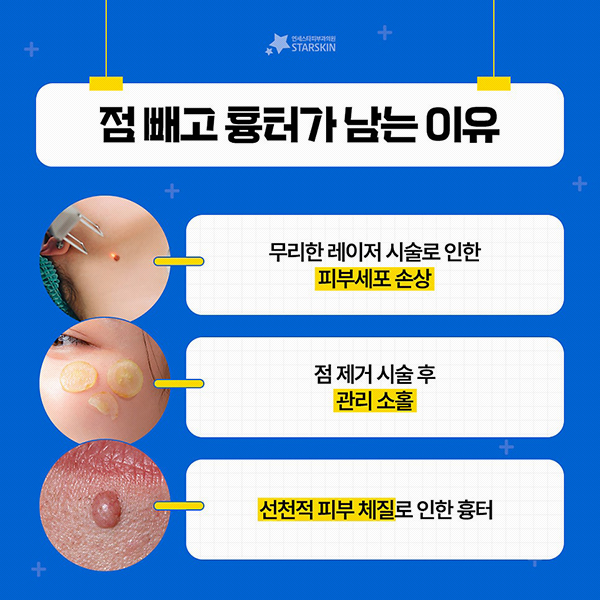
Why Do Mole Removal Scars Occur?
Moles often have roots deeper in the skin than expected. Therefore, if the dermis is stimulated during the removal process, skin regeneration may not occur smoothly, leaving a trace.
Even if moles are removed at the same depth, the degree of scarring varies from person to person. In the clinic, skin type, wound care habits, and individual regenerative capacity often significantly determine the outcome. The following factors can make traces more prominent:
- If the mole was deep, causing damage to the dermis
- If scabs were forcibly removed or irritated
- If sun protection was neglected during the recovery period
- Skin prone to keloids or hypertrophic scars
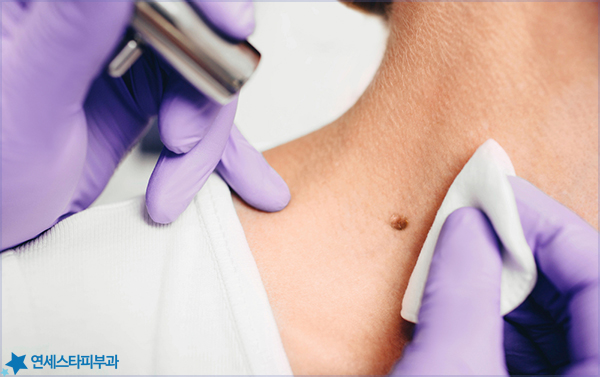
What Shapes Do They Take?
Mole removal scars are broadly divided into two shapes. The underlying principles of these two types differ, so the treatment approach must also be different.
| Type | Shape | Cause |
|---|---|---|
| Depressed Scar | Skin is sunken | Dermis collapsed due to deep mole removal |
| Raised Scar | Skin is convex | Excessive collagen proliferation |
Depressed scars are approached by refilling the sunken tissue and aiding regeneration, while raised scars are approached by calming the thickened tissue. Therefore, accurately distinguishing the shape is the starting point of treatment. If a raised scar is growing, similar to a keloid scar, more active management is needed.

When Can Treatment Begin?
Treatment can usually begin 2-4 weeks after the wound has healed and new skin has grown to some extent. If initial redness is severe, treatment with a vascular laser like Vbeam Prima may be started first to prevent the scar from worsening.
It is reported that the earlier intervention occurs before a scar fully forms, the faster the recovery and the more satisfactory the results.
Starting management early allows the scar to be treated before it hardens, so relatively rapid changes can be expected. However, there are individual differences in recovery speed.
If you are wondering what stage your mole scar is at, or if it's okay to start treatment now, we recommend checking your condition through chat consultation for mole removal scar treatment timing.
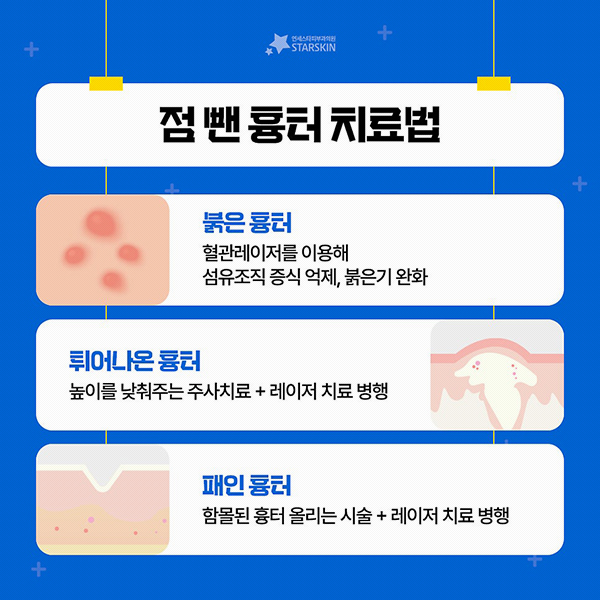
What Treatment Methods Are Available?
Mole removal scars are approached by combining various treatments depending on their condition. Each method targets different scar shapes and stages.
- Vbeam Prima laser: Used for red scars, reduces vascular reactions to alleviate inflammation
- Ultrapulse Encore laser: Improves depressed scars, promotes collagen regeneration
- Triamcinolone Scar Injection: Used for raised hypertrophic and keloid scars, expected to suppress thickened tissue
- Subcision: Releases adhered tissue under the skin to improve depressed scars
Scars often show limitations with only one method. Therefore, better results can be expected by combining laser treatment with Triamcinolone Scar Injection or adding Subcision for depressed marks, tailored to the condition. If the texture of a depressed scar is similar to that of a depressed acne scar, regenerative treatments based on similar principles may be applied.
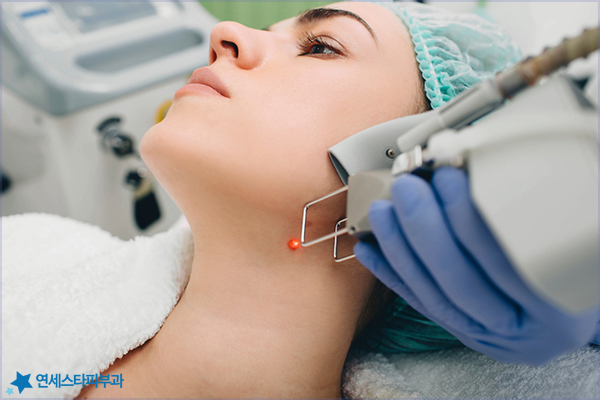
How Much Improvement Can Be Expected from Laser Treatment?
It is difficult to completely erase mole removal scars in a short period. However, consistent treatment is reported to improve them to a point where they are almost unnoticeable. Typically, 3-5 or more sessions are required, and the number of sessions and results may vary depending on the depth and width of the scar and individual skin condition.
The best approach is to start active management quickly when a scar begins to appear. Rather than sticking to one treatment, flexibly adjusting the direction while carefully checking the progress is beneficial for the outcome.

How to Prevent Scars from Worsening
As important as treatment is post-mole removal care. Habits during the recovery period can determine whether a scar remains or heals without a trace. It is good to check the following:
- Do not touch the scab until it falls off naturally
- Protect the wound with regenerative ointment and protective tape
- Ensure thorough sun protection when going out
- If redness or a raised feeling persists, do not delay seeking medical attention
If such a trace is on a noticeable area like the face, it is naturally more concerning in daily life. Similar to cosmetic surgery scars or surgical marks, mole removal scars are an area that can be sufficiently managed with the right timing and methods.

In Summary
Many people find themselves more concerned about scars left after removing a small mole. Mole removal scars are reported to be significantly improved with early and appropriate treatment. We recommend not delaying too long and finding suitable methods such as laser equipment, Subcision, and injection treatments that are right for you.
If you are wondering what type of scar you have and what treatment would be suitable, you can ask comfortably below.
💬 Chat for consultation now
Sang-Joo Lee, Chief Director (MD, PhD, Yonsei University College of Medicine & Graduate School, completed dermatology residency at Severance Hospital, President of the Korean Dermatological Association) Chief Director Sang-Joo Lee's Profile First published 2025-08-20 / Last reviewed 2026-06-16
This content is for general information purposes only, and the appearance and recovery of scars may vary individually. Please consult with medical staff for an accurate diagnosis and treatment plan.