

Hello. This is Yonsei Star Dermatology Sinchon, striving for clear and flawless skin.
You've probably noticed dark, prominent pigmentation every time you look in the mirror. The first question that usually comes to mind is: "Is this lentigo or seborrheic keratosis, and can it be completely removed with a single laser treatment?" To get straight to the point, although they may look similar on the surface, their thickness and location differ, so even with the same laser, the approach often varies.
Why Pigment Troubles Become More Prominent in This Season
The scorching summer sun has subsided, but the skin, stimulated by UV rays, now meets dry weather, making it a time when dark pigmentation tends to become more distinct. There are surprisingly many types of pigment troubles that appear on the face, such as melasma, seborrheic keratosis, lentigo, freckles, and blemishes.
While these pigments do not significantly harm health, they often become a major cause of dull-looking skin and an aged appearance. Many individuals visit us with concerns, as these act as external stress factors.
The Misconception That Blemishes Disappear All at Once
Many people refer to all pigmentation on their face as "blemishes" and often expect that laser treatment will resolve them comprehensively in one go.
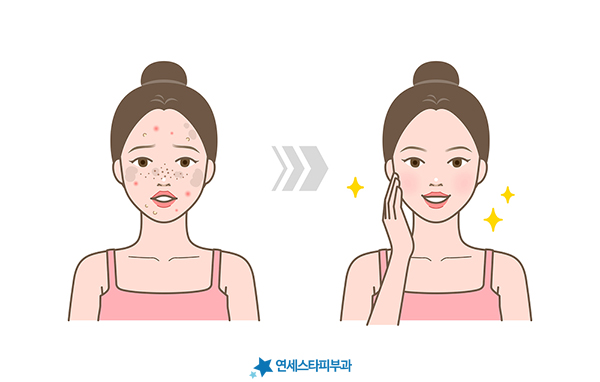
Although they may appear to be similar problems on the surface, clean removal requires laser treatment tailored to where in the skin layer the problem occurred and what type of pigmentary disorder it is.
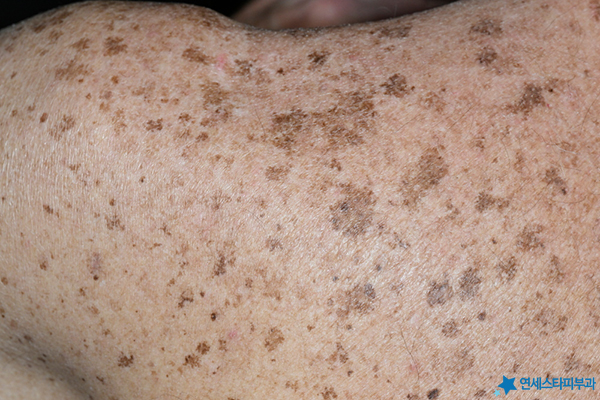
Even if they look like the same pigment, lentigo and seborrheic keratosis differ in thickness and shape, and thus the treatment direction may also differ.

Lentigo and Seborrheic Keratosis: What's Similar and What's Different?
The RePott Laser is a frequently sought-after laser for removing seborrheic keratosis or lentigo. The commonality between lentigo and seborrheic keratosis is that they occur in the epidermal layer and typically appear as brown or black lesions with relatively clear borders and well-defined shapes.
This is somewhat different from melasma, which spreads widely like a hazy fog. The size varies from person to person, ranging from small 1mm lesions to those growing several centimeters. Since the lesions can enlarge due to UV exposure or aging, it is advisable to address them early.
| Classification | Lentigo | Seborrheic Keratosis |
|---|---|---|
| Location | Epidermal layer | Epidermal layer |
| Thickness | Relatively flat | Often thick and protruding |
| Texture | Generally smooth | Can feel rough and bumpy |

Why Should Protruding Seborrheic Keratosis Be Viewed Differently?
Simply put, seborrheic keratosis often appears as lesions that protrude significantly above the skin surface. A key characteristic of seborrheic keratosis is its thick, bumpy texture when touched. However, the degree of protrusion varies from person to person, and many individuals may not easily notice their symptoms.
Therefore, for an accurate diagnosis, we recommend consulting with a dermatologist. It is commonly perceived as an aging phenomenon, often thought to appear in middle-aged and older adults, typically from their 40s or 50s.
While this is statistically true in clinical practice, genetic factors and the influence of ultraviolet rays cannot be overlooked. Thus, even in relatively younger age groups, caution is needed as seborrheic keratosis can form in the following areas:
- Face, where sun exposure is frequent
- Back of hands, often exposed to UV rays
- Neck, not covered by clothing
- Outer arms, difficult to cover during outings
If you are curious about treatments for epidermal pigment removal or are unsure about the type of your pigmentation, you can easily check by inquiring via chat consultation.

Can RePott Laser Remove Both Lentigo and Seborrheic Keratosis?
In the case of protruding seborrheic keratosis, the lesion to be removed is often very thick. RePott Laser is reported to be advantageous for pigment removal due to its strong laser intensity and ability to precisely target necessary areas. For relatively flat lentigo, a single laser treatment often yields good results.
For thicker, protruding seborrheic keratosis, while the basic removal method remains the same, combining it with other lasers may be necessary depending on the thickness. Simply put, an additional process of flattening the skin surface to prevent it from protruding significantly, like lentigo, may be added.
High-output laser devices such as Ultrapulse Alpha may be used to create an environment where RePott Laser can effectively remove pigment. When removing moles, warts, or syringomas with a laser along with seborrheic keratosis, different equipment is applied according to the nature of the lesion.
Even for the Same Seborrheic Keratosis, Treatment Plans Vary by Individual
Even for the same seborrheic keratosis, the detailed treatment process varies from person to person. Here are important points to check for safe and good outcomes:
- Confirm the shape of the lesion: flat or protruding
- Determine if the pigment is in the epidermis through diagnosis
- Assess whether combining laser devices is necessary based on thickness
- Plan for post-treatment care, such as UV protection
- Ensure consultation with a specialist knowledgeable in relevant skin conditions
Please remember that it is crucial to establish a treatment plan by comprehensively considering the above items.

If You Can't Find the Answer in the Mirror
This time, we discussed in more detail the differences and characteristics of seborrheic keratosis and lentigo, and whether RePott Laser can remove both. Since the approach varies depending on the type and location of the pigment, it can be difficult to judge for yourself what features are prominent when looking in the mirror.
If you can't find a clear answer regarding treatment methods, please feel free to inquire via chat consultation when you're curious about the difference between seborrheic keratosis and lentigo, and we will help you solve your concerns with a customized approach. Thank you.


Chief Director Lee Sang-joo (MD, PhD, Yonsei University College of Medicine and Graduate School; Dermatology Resident, Severance Hospital; President, Korean Dermatological Association) Chief Director Lee Sang-joo's Profile First Published 2025-09-25 / Last Reviewed 2026-06-16
This content is general information to aid understanding; treatment effects and outcomes may vary by individual. Please confirm accurate diagnosis and treatment direction through consultation with medical staff.