
While more people are looking to remove tattoos, many hesitate due to concerns that removal procedures are more painful than getting the tattoo itself.
Here are three anesthesia methods used at Yonsei Star Dermatology Sinchon. They differ not only in the degree of pain relief but also in preparation time and conditions for going home.
Topical Anesthetic Cream
This is the most common method. It's a topical anesthetic containing lidocaine, applied to the skin surface to temporarily numb it and reduce pain.
It is commonly used before various dermatological procedures, not just tattoo removal. Anesthesia takes approximately 40 minutes after application to the skin.
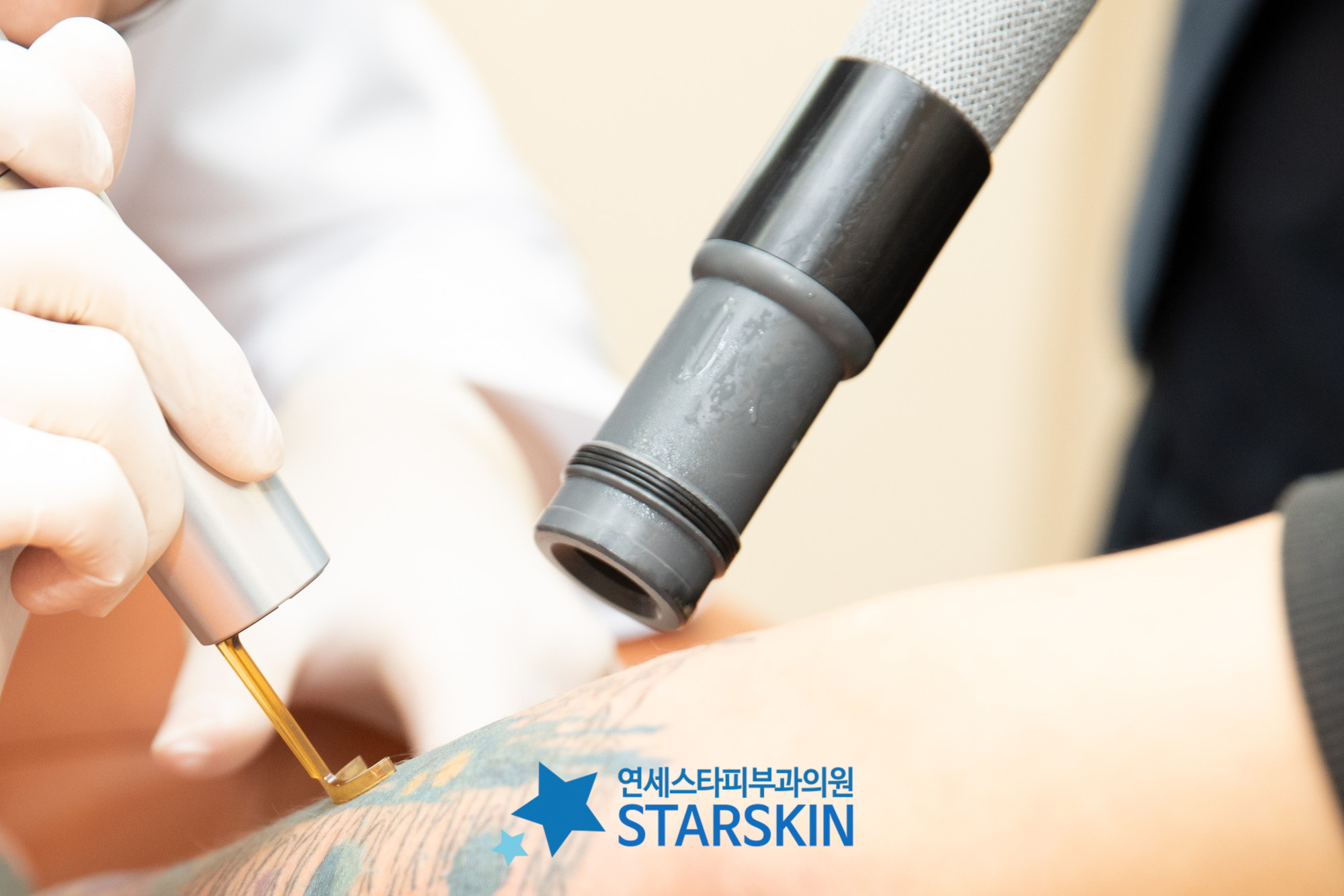
Air Cooling
This method involves deeply applying cold air to the skin to suppress sensation. Since the cooling device is used simultaneously with the laser procedure, no separate anesthesia time is required.
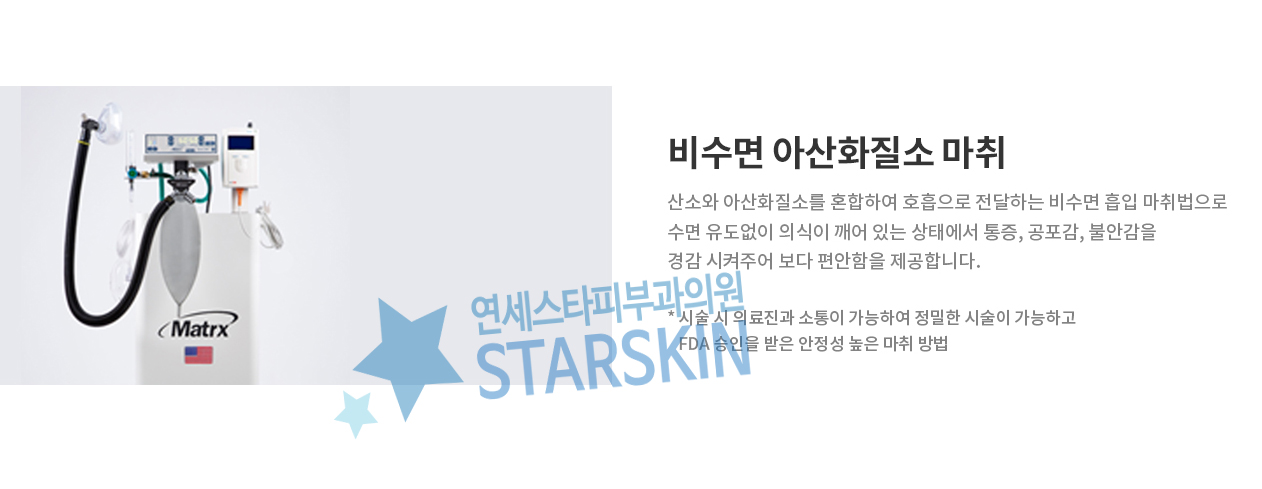
Non-Sedative Nitrous Oxide Anesthesia
This is administered via inhalation and is a pain relief system used in dentistry for children. It creates a state of sedation using nitrous oxide and oxygen inhalation.
- No separate fasting is required.
- You remain conscious during the procedure and can communicate with the medical staff.
- No separate recovery time is needed after anesthesia, so you can drive on the same day.
This is a highly safe anesthesia method approved by the FDA, with a low risk of side effects.

Comparing the Three Methods
| Category | Topical Anesthetic Cream | Air Cooling | Non-Sedative Nitrous Oxide |
|---|---|---|---|
| Preparation Time | Approx. 40 min after application | No separate waiting | No fasting required |
| Method | Lidocaine topical anesthetic application | Sensation suppression with cold air | Nitrous oxide and oxygen inhalation sedation |
| Communication during procedure | Possible | Possible | Possible |
| Conditions for going home | Immediate return home | Immediate return home | Return home after rest, driving possible on the same day |
What to Take Care of After the Procedure
After the procedure, some individuals may experience dizziness. It is advisable to rest sufficiently at the clinic before returning home.
On the day of the procedure, pay attention to hydration, and if headaches persist, you can take pain relievers like Tylenol.
Conditions That Increase Pain
If the tattoo area is large or close to bone, you may experience more severe pain. If the pain is significant, some individuals may feel burdened to continue the procedure consistently and may give up midway.
Nitrous oxide anesthesia is administered after thorough consultation with the medical staff. The perceived level of pain may vary from person to person.
Details of the procedure itself can be found in R-Zero Pico-Frectat Tattoo Removal and Pinhole for Burn & Surgical Scar, and the overall treatment flow in Tattoo Removal Treatment Guide. For anesthesia consultation, please inquire via chat now.

Authored and Medically Reviewed by Dr. Jin-Moon Kang, Chief Director (Dermatologist) Graduated from Yonsei University College of Medicine · Completed Dermatology Residency at Severance Hospital Currently an Adjunct Professor at Yonsei University College of Medicine, Department of Dermatology · Member of the Korean Dermatological Association View Medical Staff Profile
First Published 2023-12-01 · Last Reviewed 2026-07-29
This article contains general medical information and does not substitute for individual diagnosis and treatment. Results and recovery progress may vary from person to person.