


After laser tattoo removal, some people may experience scars, blisters, swelling, or persistent itching and pain. Many inquire, worried that something might be wrong.
Responding with incorrect information from online sources can worsen symptoms. We have compiled information on how to manage each symptom correctly.
Scabs are a protective barrier
During removal, the laser reacts with the tattoo pigment within the skin tissue, which can cause inflammation and blisters. As the inflammation subsides, scabs may form in that area.
Do not forcibly remove these scabs. Scabs already serve as a protective barrier against external bacteria and contaminants. Instead of a hydrocolloid bandage, apply an antibiotic ointment like Fucidin.
Itching is a sign of regeneration
Many people complain of itching in the scabbed area. This is caused by the secretion of a substance called histamine as the skin regenerates, and it usually disappears over time, so there is no need to worry excessively.
If the itching is too severe, medication such as antihistamines may be necessary. If you are concerned about persistent redness after the scab falls off, it is important to diligently apply a regenerative cream and sunscreen.
Blisters are distinguished by size
- Small, minor blisters are best left untouched.
- Excessively large blisters can be uncomfortable in daily life and often burst on their own, so it may be better to pop them.
When popping blisters, you must use clean, sterilized tools to prevent infection. After popping, do not remove the skin; continue to apply antibiotic ointment to help the wound heal properly.
Although it can vary depending on the size of the blister and individual skin regeneration capabilities, they usually disappear within about a week.
When swelling and pain persist
If tattoo pigment reacts to the laser, causing an inflammatory response, the treated area may become itchy or temporarily red and swollen. Regenerative and moisturizing creams can help with itching, and cold compresses can help with swelling.
Swelling and itching usually subside within 2 to 3 days, but occasionally they can persist for over a week. If daily life becomes difficult, medication may be necessary, so we recommend visiting the clinic where you received the treatment for a consultation.
Pain usually disappears within a few hours after the procedure. If the tattoo is large, it may persist for several days, and it is known that the darker the tattoo pigment, the more severe the pain. Taking painkillers, applying regenerative cream, and using cold compresses may help.
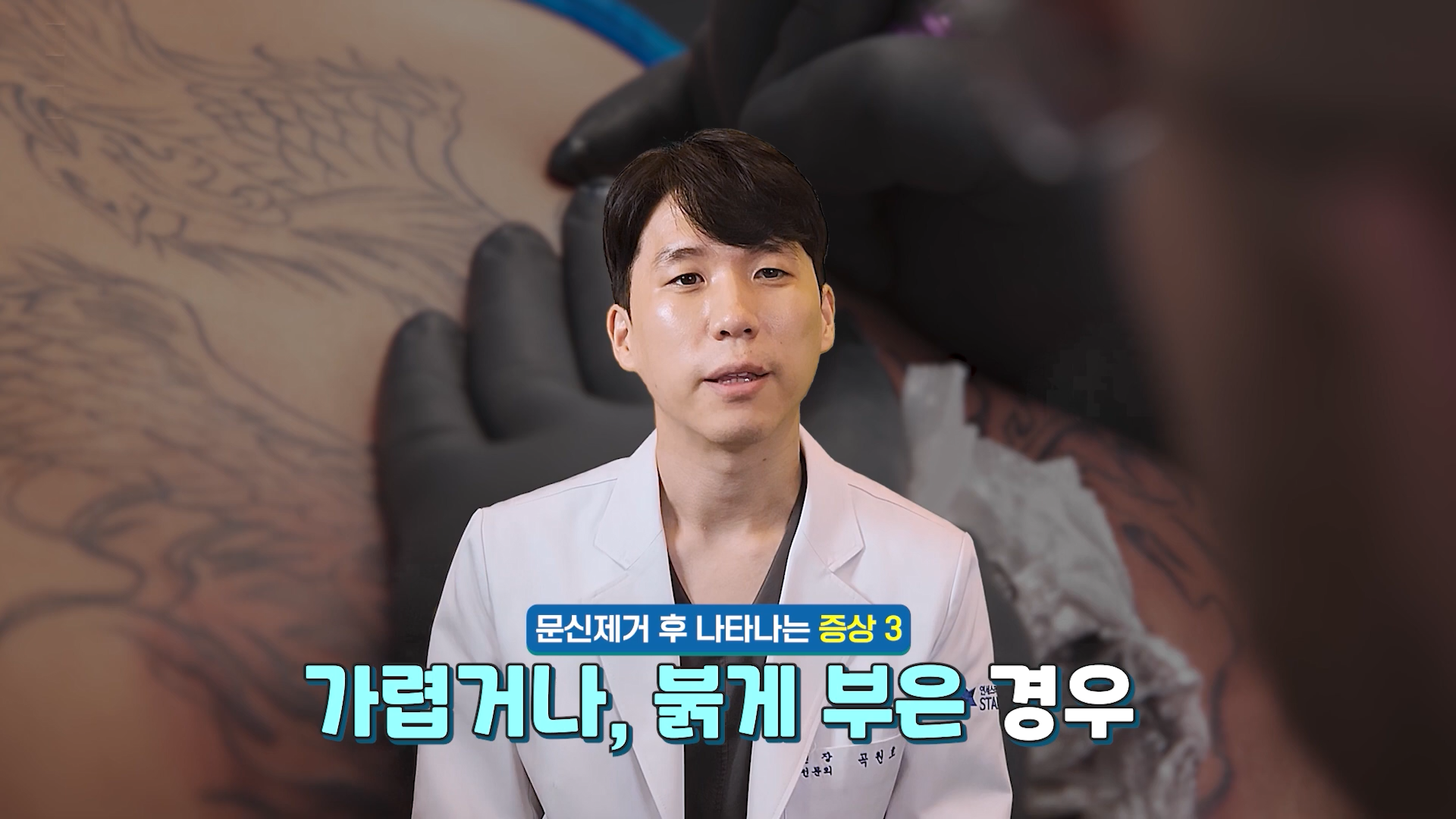
When scars and brown marks remain
Scars are more likely to form if large or severe blisters occur during the removal process, if a secondary bacterial infection develops, or if scabs fall off before fully healing. You should apply antibiotic ointment well to the wound area.
Scars can also occur due to improper aftercare or if the practitioner uses excessive laser intensity. If scars have already formed, combining laser scar treatment can help improve them. Related procedures can be found in the Pinhole for Burn & Surgical Scar guide.
| Symptom | Management |
|---|---|
| Scab | Do not peel, apply antibiotic ointment |
| Small blisters | Leave as is |
| Large blisters | Pop with sterilized tools, then apply ointment |
| Swelling | Cold compress |
| Itching | Regenerative and moisturizing cream; if severe, medication |
| Brown marks | Fade over time; can be accelerated with laser toning |
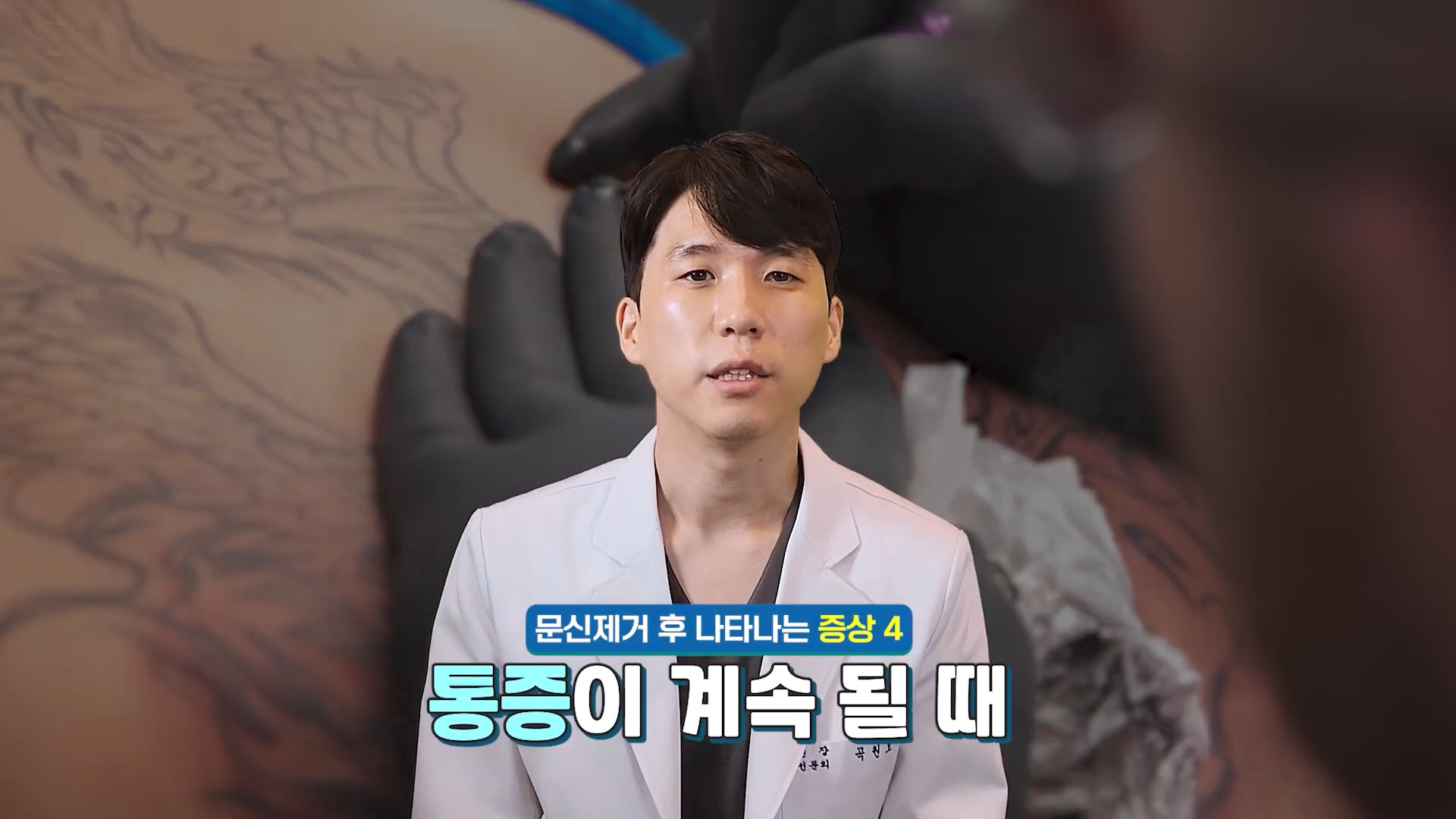
Pigmentation and allergic reactions
If the area appears brown after removal is complete, it means the tattoo pigment has disappeared, and only post-removal pigmentation remains. Brown pigmentation naturally fades over time, but laser toning, as introduced in the Pico·Dual·Gold-Diamond Toning guide, can accelerate its resolution.
For individuals with slightly darker skin, the area around the treatment site may appear somewhat lighter, but this also usually recovers on its own over time.
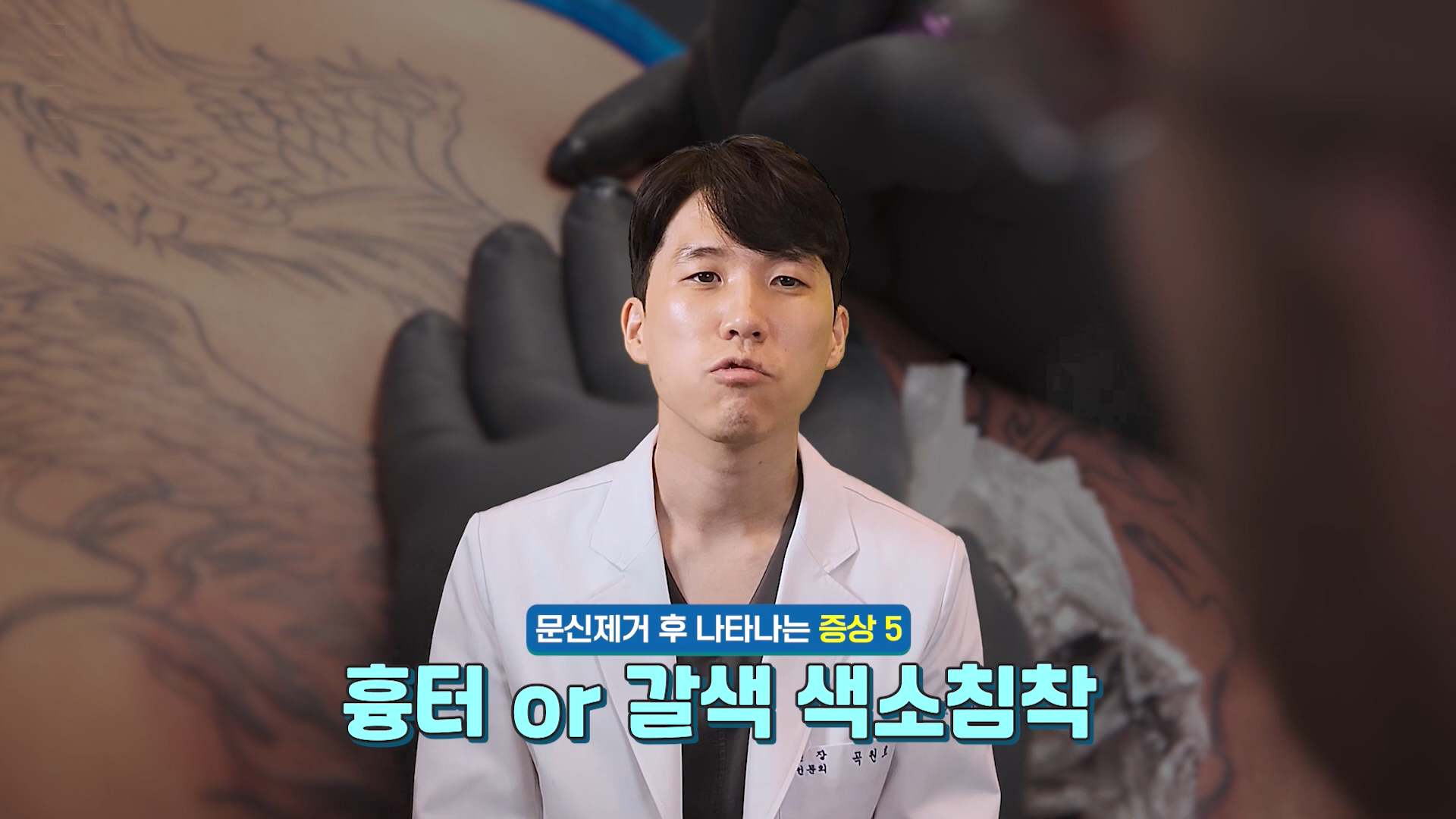
Red pigment and allergies
In extremely rare cases, some individuals may have a constitution that develops an allergic reaction to pigments during tattoo removal. Red pigment, in particular, is known to frequently cause allergies.
There have been cases where individuals with red tattoo pigment experienced severe swelling and itching in the removal area, and even topical and oral medications did not show significant improvement.
Fortunately, as the red pigment disappeared with each session, most symptoms subsided by the end of the removal process. Red allergic reactions are more likely to leave scars, but improvement is possible through laser treatment and other methods.
Allergic reactions caused by pigments other than red also gradually disappear as the tattoo color fades with repeated treatments. The treatment flow is summarized in the Tattoo Removal Treatment Guide, and if you have symptoms that are difficult to assess, please inquire via chat now. Recovery progress may vary individually.

Authored and Medically Reviewed by Chief Director Lee Sang-joo (Dermatologist) Resident in Dermatology at Severance Hospital · Doctor of Medicine, Yonsei University College of Medicine Graduate School Former Professor of Dermatology at Youngdong Severance Hospital · Author of Medical Body Care View Medical Staff Profile
First published 2024-04-17 · Last reviewed 2026-07-29
This article contains general medical information and is not a substitute for individual diagnosis and treatment. Results and recovery progress may vary individually.