

Facial wounds often seem to heal quickly, but over time, faint marks remain, causing concern. The most common question from those who visit the clinic for the first time is one: "Can this scar return to being smooth again?" To answer directly, if the scar's type and timing are accurately identified and the appropriate treatment is chosen, a significant lightening of the scar is reported.
Why do facial wounds so commonly leave scars?
Children often get abrasions from falling or scratching while playing. If the damaged area is inadvertently stimulated during the healing process, the mark can eventually harden. It is also not uncommon in daily life for minor accidents or scratches from pets to lead to facial scars.
The face is a part that determines a person's impression, so even a small mark can change the overall atmosphere. The difficulty of covering it with clothes also increases the burden. Therefore, many people pay attention to care from the beginning and try to start treatment quickly.

Scars are not all one shape
Facial scar patterns vary depending on the depth of the wound and the healing process. Deep wounds are more likely to result in depressed scars or raised scars due to excessive new tissue growth. Conversely, even light abrasions can lead to dull pigmentation if left untreated. This is because inflammatory reactions during recovery stimulate melanin pigment, and even seemingly minor marks can take time to clear up.
| Scar Type | Common Manifestations | Treatment Approach |
|---|---|---|
| Early Pigmented Scars | Redness, dull pigmentation | Laser care for pigment and redness |
| Depressed Scars | Sunken depressions | Inducing skin regeneration, combining treatments if necessary |
| Raised Scars | Excessive new tissue growth | Step-by-step refinement tailored to the condition |
Because the manifestations are so varied, even for the same facial wound, it is necessary to first distinguish the condition and establish a suitable treatment process to expect good improvement. If you have similar concerns, referring to the information on Depressed Acne Scar Treatment may also be helpful.
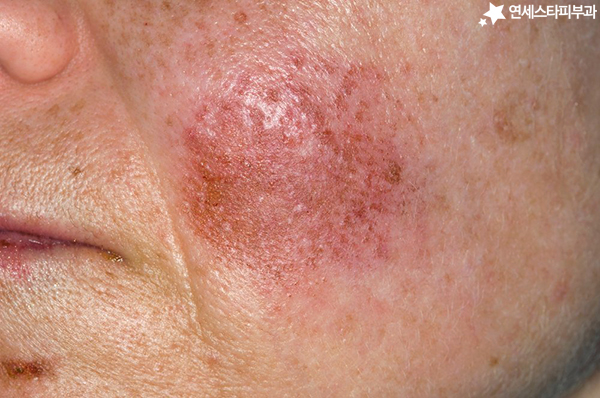
Early scars: not missing the golden time
For early scars where pigmentation has begun due to relatively light abrasions, it is advisable to start treatment before they worsen. Even if they are not very prominent at first, it is common for a lot of redness to remain on the lesion.
This is a natural phenomenon that occurs during recovery, and it is reported that if redness is cared for with a laser during this period, the scar does not progress further and is relatively quickly refined. This is why the early stage is considered the golden time for treatment. If you are concerned about similar red marks, please also refer to Initial Management of Cosmetic Surgery Scars.

How to treat old and deep scars
Old scars that have fully settled, or those that are deeply sunken or excessively raised, are more noticeable and cause significant stress. In such cases, various lasers and treatment methods may be applied together to refine them closer to the original skin. While it takes more time than for early scars, the fact that significant improvement is possible through lasers, even without surgery, is meaningful.
To boost insufficient regenerative power, high-output lasers deliver energy deep into the skin at the problematic area. As the laser precisely creates microscopic holes, the skin gradually fills in over time, resulting in a fading of the marks. This micro-perforation method can be seen in detail in Mild Pinhole Treatment.
In the clinic, the recovery pattern of the same scar varies greatly depending on when it first appeared and its shape. Therefore, it is more important to first identify 'what state my scar is in' rather than 'what procedure is good'.
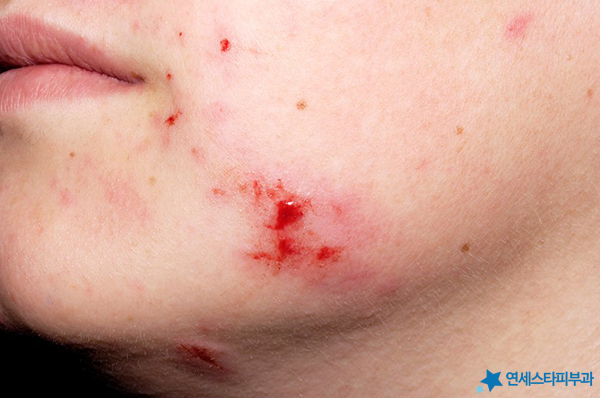
When lasers alone are not enough, combining methods
If fibrous bands formed by damaged skin tissue pull the skin downwards, the scar may feel deeper. When lasers alone do not produce sufficient change, the effect can be enhanced by combining them with the Subcision method, which involves cutting the downward-pulling fibrous bands with a needle.
For large or complex scars, Surgical Scar Revision may be considered, and Rejuran Skin Boosters can be applied as an auxiliary method to help restore skin texture and elasticity. Since there are individual differences in which combination is suitable, it is safer to plan after directly assessing the condition.
If you are confused about the timing and method of treatment, it is faster to have your condition checked rather than worrying alone. For any questions, you can use Chat Consultation for Facial Scar Treatment.

When deliberating between surgery and laser
Since the face is an area where one prefers to have as few marks as possible, many people hesitate between surgery and laser. While laser methods may take some time to show effects, they are considered an option because they can create changes while reducing the potential burden of the procedure.
If you decide on treatment, it helps to check the following points in advance:
- Distinguish the time the scar appeared and its current form (redness, depression, protrusion, etc.)
- Start as quickly as possible, but set a step-by-step plan rather than being overly ambitious
- Consult and decide on the type of laser, number of sessions, and duration together
- During the recovery period, ensure sun protection and minimize irritation
- Have the mindset of adjusting the treatment as you observe the progress, rather than expecting it to be finished in one go

What to remember
Facial scars vary in shape and timing from person to person. From light pigmentation to deep depressions, accurately distinguishing the condition and approaching it according to the timing is key. Initially, care for redness and pigmentation, and for old scars, consider methods that induce regeneration and combine treatments. Since there are individual differences in any method, the priority is to plan after directly checking the condition.
If the treatment direction feels daunting, you can comfortably ask below.
💬 Consult Now

Chief Director Lee Sang-ju (MD, PhD, Yonsei University College of Medicine and Graduate School, completed dermatology residency at Severance Hospital, President of the Korean Dermatological Association)
Chief Director Lee Sang-ju's Profile
First published 2025-05-28 / Last reviewed 2026-06-16
This content is for general information purposes only. Treatment effects and progress may vary by individual, and accurate diagnosis and treatment direction should be confirmed through consultation with medical staff.