
When researching tattoo removal lasers, you may notice that there are several treatment methods. Among the methods commonly used at our clinic are the R-Zero Technique and the Frectat method.
We have summarized what these two methods treat differently and why that difference affects the number of sessions.
Path of Pigment Exiting the Body
When a laser is applied, the pigmented area appears white. This is because the tattoo pigment breaks down and bubbles rise.
These broken pigments are consumed and transported by macrophages, a type of immune cell, and are then expelled from the body. The faster the irradiation speed, the finer the pigment is broken down, leading to more effective removal.
Therefore, most tattoo removals are performed with picosecond lasers. At Yonsei Star Dermatology Sinchon, we use the PicoWay picosecond laser. Information on the equipment and procedure can be found in the R-Zero Pico-Frectat Tattoo Removal guide.
Frectat Method: Creating Holes First
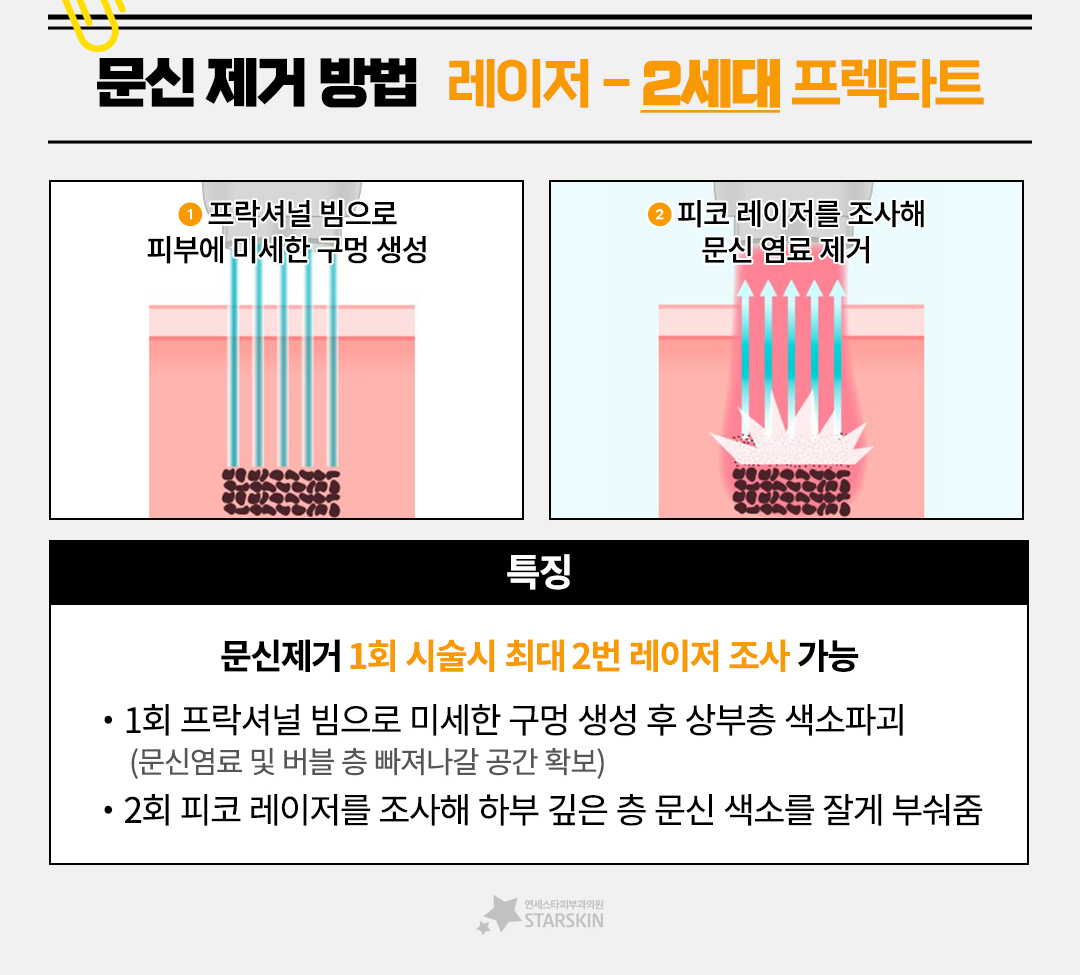
The Frectat method, which can be considered a second-generation removal technique, follows a specific sequence:
- First, a fractional beam is applied to create microscopic holes.
- These holes serve as an exit for the bubbles.
- Five minutes later, a picosecond laser is applied a second time to further break down the pigment particles.
Since laser application occurs twice in a single visit, this method works to reduce the number of sessions compared to conventional tattoo removal methods.
R-Zero Technique: Removing Bubbles
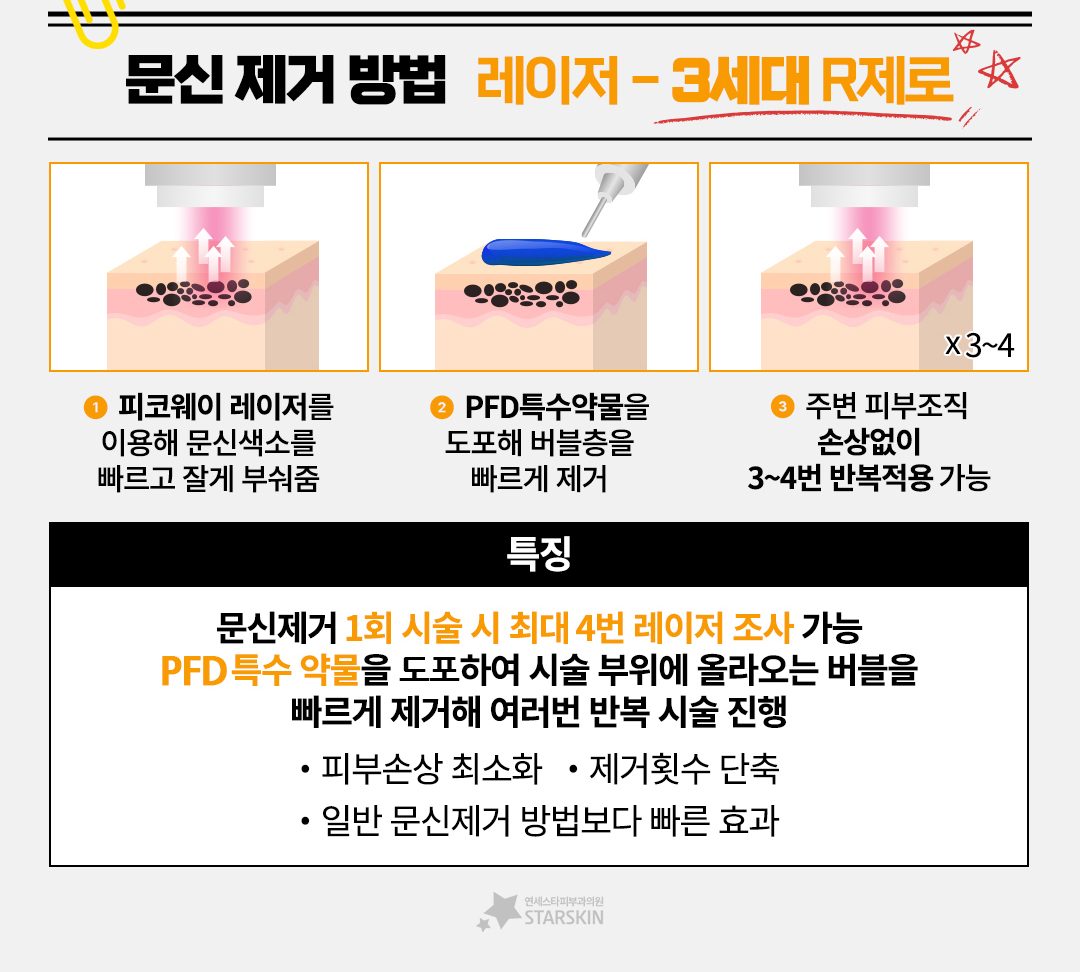
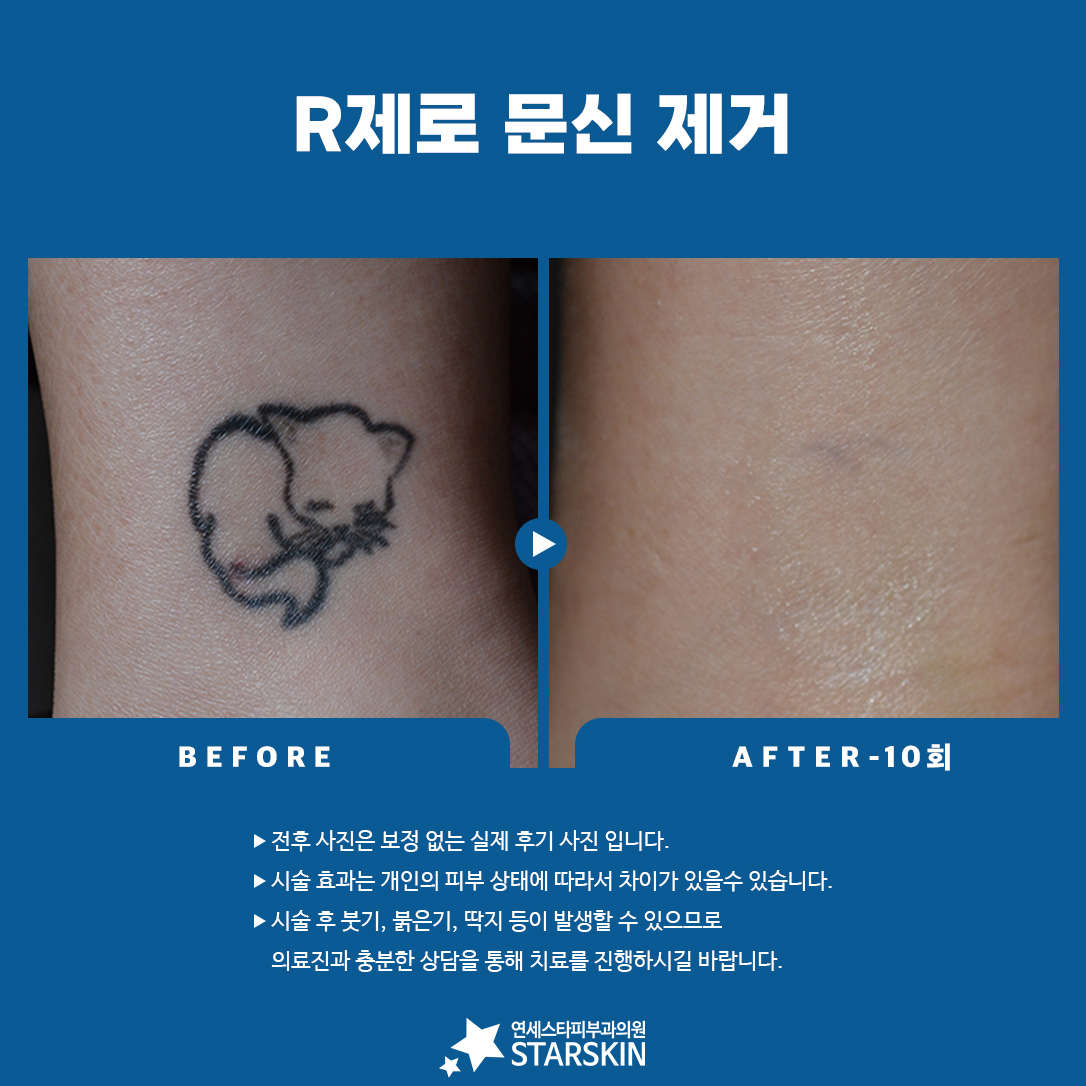
Our clinic frequently uses the R-Zero Technique, often combined with the Pinhole Technique.
As explained earlier, once a laser is applied, bubbles rise, making additional application difficult. In the past, one would wait about 20 minutes for the bubble layer to disappear before reapplying the laser.
Currently, the PFD specialized medication is used to quickly remove the bubble layer. Up to four applications are possible in a single treatment session.
Yonsei Star Dermatology Sinchon, which also focuses on scar treatment, performs Pinhole for Burn & Surgical Scar simultaneously to ensure space for blisters to exit, preventing post-treatment scarring.
Comparing the Two Methods
| Category | Frectat Method | R-Zero Technique |
|---|---|---|
| Bubble Management | Expelled through microscopic holes created by fractional beam | PFD medication removes bubble layer |
| Application Order | Fractional beam, then Pico laser after 5 minutes | Pigment removal, then medication application, repeated |
| Applications per Visit | 2 times | Up to 4 times |
| Concurrent Treatment | Pigment particle miniaturization | Combined Pinhole for Burn & Surgical Scar |
Is Frequent Visiting the Fastest Way?
Many people believe that frequent visits at short intervals will lead to faster removal. However, as per the principle mentioned earlier, immune cells need time to transport the finely broken-down pigment.
Initially, since there is a large amount of pigment to be transported, we recommend visiting at 1-month intervals for up to 5 sessions. As sessions progress, sufficient time is needed for pigment transportation, so treatments are conducted at 2-month intervals from the 6th session onwards.
The Importance of Perseverance
While good equipment and effective treatment methods are important, even more crucial is not giving up and continuing the treatment with the medical staff until the end.
For the overall treatment flow, please refer to the Tattoo Removal Treatment Guide. If you have any additional questions, please use Chat with us now.

Authored and Medically Reviewed by Representative Director Dr. Lee Sang-joo (Dermatologist) Graduated from Yonsei University College of Medicine · Doctor of Medicine · Resident in Dermatology at Severance Hospital Former Professor of Dermatology at Yeongdong Severance Hospital · Current Adjunct Professor at Yonsei University College of Medicine, Department of Dermatology View Medical Staff Profile
First Published 2023-10-18 · Last Reviewed 2026-07-29
This article contains general medical information and is not a substitute for individual diagnosis and treatment. Results and recovery progress may vary from person to person.