
![Finding the Optimal Number of Tattoo Removal Sessions: Laser Selection is Key | [Yonsei Star Dermatology Sinchon]](/_next/image?url=https%3A%2F%2Fagqdgbuateknhwpocrgu.supabase.co%2Fstorage%2Fv1%2Fobject%2Fpublic%2Fsources%2Fbbf3bebe-45b6-4415-bd04-bda18b2cac0f%2Fblog-images%2F223985575900_00_81ee242967d2.jpg%3Ftype%3Dw966&w=3840&q=75)
When people decide to get a tattoo removed and visit a dermatology clinic, the first question they ask is usually similar: "How many sessions will it take to completely remove it?" To answer directly, the number of tattoo removal sessions is not a fixed number, but is determined differently for each person based on the tattoo's color, depth, location, and skin condition.

For large tattoos, colorful tattoos, or even monochromatic tattoos where the pigment is deeply embedded in the skin, the treatment period may need to be extended to 1-2 years or more. Therefore, it's crucial to establish a baseline at the beginning.
What Determines the Number of Tattoo Removal Sessions?

Dr. William Kirby and the Desai research team, known for tattoo removal treatments in the United States, have published a self-assessment index that can predict the approximate number of treatment sessions. Based on this index, we will examine the factors that influence the number of tattoo removal sessions and points to consider for reducing the treatment period.

The research team categorized the factors affecting the number of sessions into six main groups. By converting each factor into a score and summing them up, you can estimate the approximate difficulty.
The self-assessment index is merely a reference for estimating the range, and the actual number of sessions may vary depending on the equipment, treatment method, and skin response.
Why Lighter Skin Tones Are Advantageous
Darker skin tones receive higher scores. This is because a higher concentration of melanin particles can interfere with laser penetration.

With lighter skin, there are fewer melanin particles to interfere, allowing the tattoo removal laser to precisely reach the pigment. Therefore, the response is relatively faster, and the possibility of scarring or pigmentation is reported to be lower.

Avoiding sun exposure or tanning during the treatment period can also help reduce the number of tattoo removal sessions.
Speed Varies by Location

Tattoos located on the face or upper body tend to fade faster. When a tattoo removal laser is applied, the tattoo ink in the dermal layer is broken into tiny fragments.


The fragmented ink is then eliminated from the body by immune cells through blood vessels or lymphatic vessels. Areas like the face and neck, where blood vessels and lymphatic vessels are well-developed, tend to recover relatively quickly, while areas with slower circulation, such as the hands, feet, arms, and calves, may show slower effects.
Five Variables That Increase the Number of Sessions
In clinical practice, tattoos of similar size often show varying recovery speeds. The main variables that increase the number of sessions are as follows:
- Size and Ink Volume: Even small tattoos may take longer if ink is deeply injected into specific areas to create sharp lines.
- Cover-up Tattoos: If a tattoo is covered up without proper removal, the increased amount of ink to be eliminated makes the procedure more challenging.
- Tattoos Covering Scars: Tattoos placed over scars make the procedure itself more difficult, increasing the number of sessions.
- Skin Surface Condition: If the skin is uneven or prone to scarring, laser penetration can be hindered.
- Ink Depth: Deeper tattoos require more sessions to reach the pigment.
Many people choose tattoos to cover scars. However, if scars are present in the treatment area, the number of tattoo removal sessions will increase, so it's important to be cautious when deciding on a tattoo initially. If scars themselves are a concern, considering Approaches Based on Scar Type and Condition first might be an option.
If you are unsure about the tattoo's location or whether it's accompanied by scars, you can consult with us by sending photos through Tattoo Removal Session Chat Consultation.
The More Colors, the More Sessions Required



Each color requires a different laser wavelength for effective tattoo removal. Black, which absorbs all wavelengths, generally responds well, while tattoos with mixed colors tend to require more sessions. The difficulty level by color is summarized below:
| Color | Removal Difficulty |
|---|---|
| Black | Relatively easy |
| Blue, Red | Relatively easy among colors |
| Skin tone, Yellow | Challenging |
| Mixed colors | Tends to increase sessions |
What is the Approximate Score for Koreans?
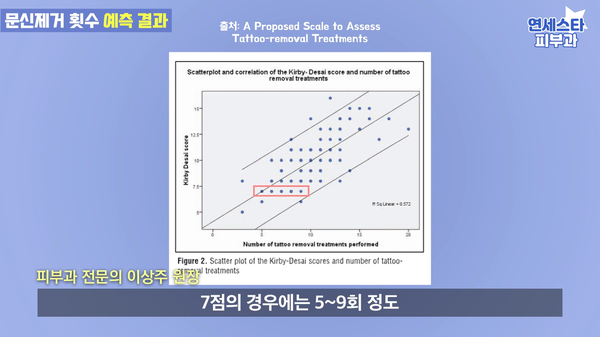


While there is significant individual variation due to the diverse shapes, colors, and locations of tattoos, Koreans typically score between 7 and 15 points. This score range indicates that at least 5 sessions, and often more than 10 sessions, are required for tattoo removal, usually taking about 1-2 years.
However, this is for self-diagnosis to get an approximate estimate, and results may vary depending on the laser equipment used, the treatment method, and the practitioner's expertise. For accurate information, we recommend referring to the Tattoo Removal Treatment Details or consulting with the medical staff at the clinic.
The Type of Laser Used Also Matters
The index above was created based on the number of sessions for treatment with Nd:YAG lasers.

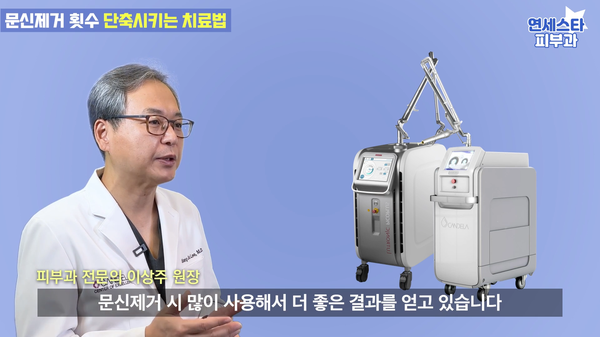
Recently, picosecond lasers, which have a pulse width approximately 1000 times shorter than nanosecond lasers, are often used to break down pigment more finely, and are reported to achieve better results more quickly.





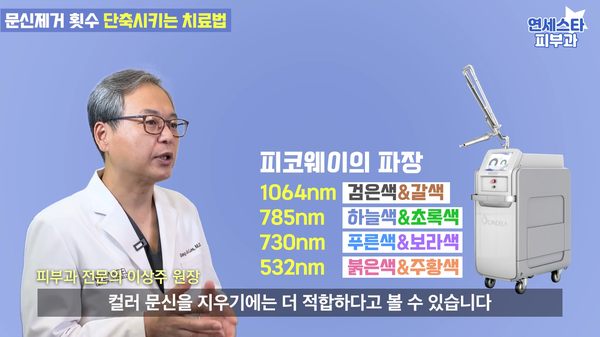
There are also various types of picosecond lasers. Considering a dermatology clinic that has PicoWay, which has multiple wavelengths and can achieve good results for colorful tattoo removal, can lead to more efficient treatment.
Differences Based on Treatment Method and Conclusion

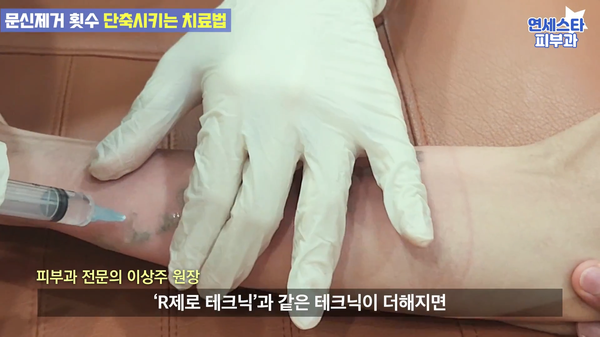
The results can also vary depending on the treatment method. It is reported that applying specialized medication to improve the existing method, which only allows one session at a time, to allow up to four sessions at once (e.g., R-Zero Technique), can help reduce the number of tattoo removal sessions. If you wish to optimize the recovery environment after treatment, you can also consider Hyperbaric Oxygen Chamber as a complementary option.

Tattoo removal is not a one-time procedure, but rather a process of planning while considering color, depth, and location. If you are curious about the estimated number of sessions and duration for the tattoo you are considering, please feel free to consult below.
💬 Consult NowChief Director Lee Sang-joo (MD, PhD, Yonsei University College of Medicine and Graduate School, completed dermatology residency at Severance Hospital, President of the Korean Dermatological Association) Chief Director Lee Sang-joo's Profile First published 2025-08-27 / Last reviewed 2026-06-16
This article is for general information purposes only, and treatment responses may vary individually. Please confirm an accurate diagnosis and treatment plan through consultation with medical staff.