

Have you ever been bothered by your face constantly appearing red in the mirror? Facial redness is more than just a temporary reddening of the face; if it recurs and persists for a long time, it can lead to skin problems that require management. The first question people often ask is, "Will this go away on its own, or does it require treatment?" The approach differs for temporary flushing versus persistent vascular dilation.
What is Facial Redness?
Facial redness is a symptom where the upper body, such as the face or neck, suddenly flushes and the skin turns red. It occurs due to the expansion of blood vessels beneath the skin, and various factors can contribute, including autonomic nerve stimulation, vasoactive substances, hormonal changes, temperature changes, alcohol or spicy foods, and stress.
Sometimes, redness is temporary, like during rapid temperature changes in winter, and returns to normal. However, if symptoms persist for a long time, the capillaries on the skin surface can expand and become fixed, leading to a chronic condition. In such cases, it is reported that there is a possibility of developing vascular skin diseases like rosacea.
Rather than simply dismissing it as "the face just turning red for a moment," if symptoms recur or persist for a long time, it's advisable to consider both management and treatment.
Why Does Facial Redness Occur?
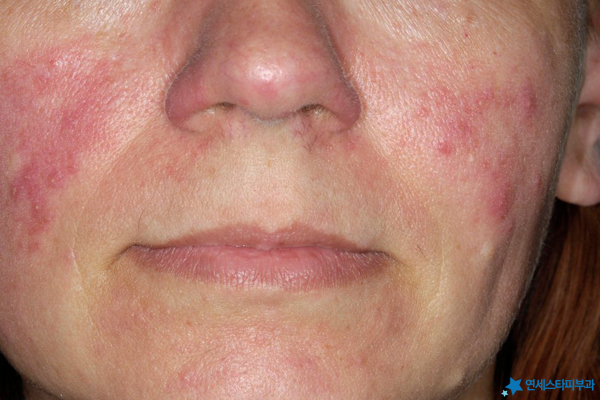
Facial redness is often caused by a combination of several factors rather than a single one. The main contributing factors are as follows:
- Changes in blood vessels and skin structure: UV exposure, skin aging, and chronic inflammation (such as acne, atopic dermatitis, seborrheic dermatitis) can damage blood vessels and connective tissue, making blood vessels more prone to dilation.
- Lifestyle and irritants: Hot foods and drinks, spicy foods, alcohol, caffeine, stress, and rapid temperature changes can all cause blood vessels to widen.
- Hormonal changes: Redness is more likely to occur due to hormonal changes in pregnant women or menopausal women.
- Dermatitis and post-inflammatory sequelae: Repeated inflammation and irritation, or topical medication application, can thin the skin or dilate blood vessels, leading to redness. In severe cases, this can progress to chronic vascular dilation.

If chronic inflammation such as acne or seborrheic dermatitis is present, it may be helpful to also understand acne symptoms themselves.

Why Consider Laser Treatment?
Adjusting lifestyle and avoiding irritants are fundamental to reducing the worsening of redness. However, if capillaries are already dilated or fixed, it can be difficult to sufficiently calm the redness with just moisturizing, avoiding irritants, or cosmetics.
Especially if you experience recurring redness, persistent red skin, or visible blood vessels, careful examination is necessary. This stage requires a professional treatment approach rather than simple management, and lasers are frequently used as a treatment method. If overall facial redness is a concern, you may want to first review information on facial redness treatment.
Why Vbeam Prima is Used for Facial Redness and Rosacea Treatment

Vbeam Prima is a laser device that targets dilated blood vessels. Its operating principle and features are as follows:
- Selectively treats only blood vessels: Based on a 595 nm pulsed dye laser (PDL) wavelength, it selectively acts on hemoglobin in blood vessels. It can target dilated capillaries or vascular lesions while minimizing damage to surrounding tissue.
- Dual wavelength and large spot size: An additional 1064 nm wavelength can be used to address not only superficial blood vessels but also deeper vascular issues. Thanks to a maximum 15 mm spot size, large areas can be treated in a relatively short time.
- Minimal skin damage: During the procedure, a cooling system protects the skin surface before and after laser irradiation, which tends to reduce discomfort such as pain and heat. It is generally well-suited for sensitive skin or delicate areas like the entire face.
The treatment time is typically around 15 to 30 minutes, and recovery is reported to be fast enough for immediate return to daily life after the procedure. The likelihood of bruising or purpura is also low.
If you have any questions, please feel free to ask via chat consultation regarding facial redness laser treatment.
When to Consider Treatment
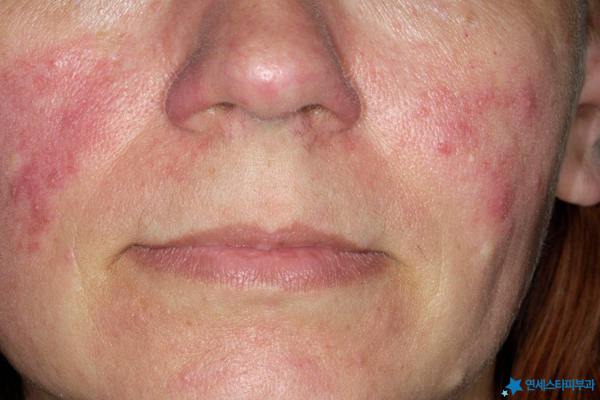
In clinical practice, many people consider professional treatment in the following situations:
- If your face often appears red and blood vessels feel prominent.
- If you apply thick makeup due to redness, leading to continuous skin irritation.
- If redness does not subside with only cleansing, moisturizing, and lifestyle improvements.
- If repeated redness makes your skin sensitive and changes such as erythema or vascular dilation are visible.
Especially if chronic vascular dilation, telangiectasia, or a tendency towards rosacea is observed, professional laser treatment may be more helpful than simple skincare. If redness is accompanied by scar-like changes, we recommend also reviewing red acne scar management.
A Red Face Can Also Be a Matter of Confidence
Facial redness, which often makes the face red and difficult to conceal with makeup, is more than just a cosmetic concern; it can affect self-esteem, interpersonal relationships, and daily confidence. Laser treatments like Vbeam Prima can selectively target problematic blood vessels to help improve recurring redness, dilated capillaries, and chronic erythema—even vascular lesions that are not easily visible on the surface.

Lasers treat using specific wavelengths. The erythema-inducing method, which temporarily enhances redness to achieve strong improvement, is used to address long-lasting facial redness. However, even with the same equipment, results can vary from person to person, so it is important to choose a clinic with accurate knowledge and technology regarding the skin, as well as appropriate equipment.
More people than you might think suffer from stress due to persistent facial redness. This problem can become even more pronounced during periods of significant seasonal change. As prolonged redness and heat on the skin can lead to a cascade of troubles, affecting overall skin condition or accelerating aging, we recommend addressing it early to regain a clearer and more stable skin tone.
💬 Consult NowRepresentative Director Dr. Sang-Joo Lee (MD, PhD, Yonsei University College of Medicine and Graduate School, completed dermatology residency at Severance Hospital, President of the Korean Dermatological Association) Representative Director Dr. Sang-Joo Lee's Profile First published 2025-12-05 / Last reviewed 2026-06-16
This content provides general medical information, and as symptoms and treatment responses vary by individual, please consult with medical staff for an accurate diagnosis and treatment plan.