
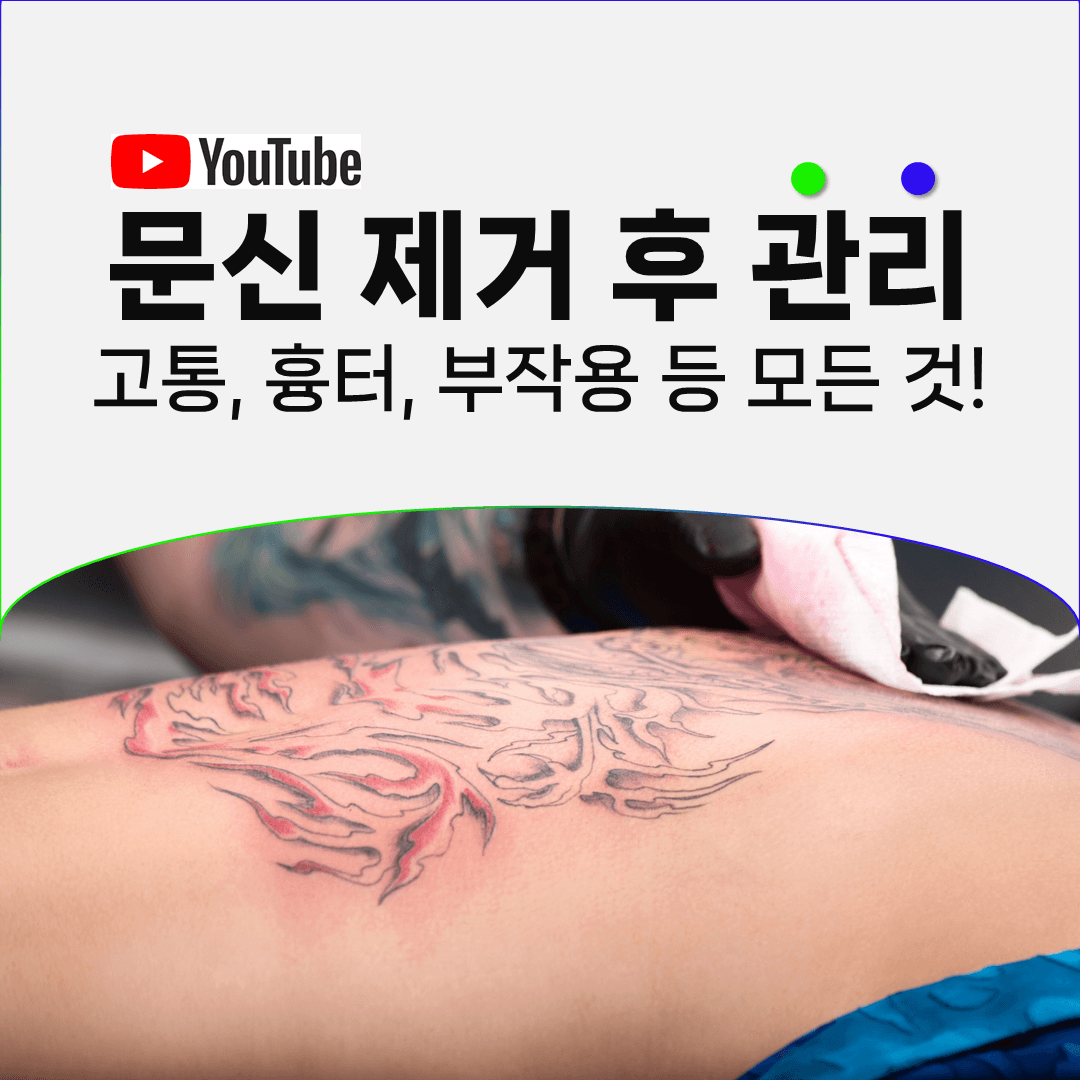
Tattoo removal varies greatly in the amount and depth of pigment, so the treatment process also differs. While quick removal is important, it is more crucial to remove tattoos safely with minimal scarring or pigmentation.
Even if scars or traces inevitably remain, improvement is possible through treatment. We have summarized post-removal care and potential reactions.
Pain Varies by Area
Pain differs depending on the body part. Areas with delicate skin are more sensitive to pain, while areas with thicker skin experience slightly less pain.

Reactions Immediately After Treatment
During tattoo removal, the tattoo pigment particles break down, damaging the surrounding skin. In this process, blood vessels may be damaged, leading to bleeding, and blisters may form on the skin.
Additionally, pain, swelling, and redness, which are common after laser treatment, may occur.
What Remains Over Time
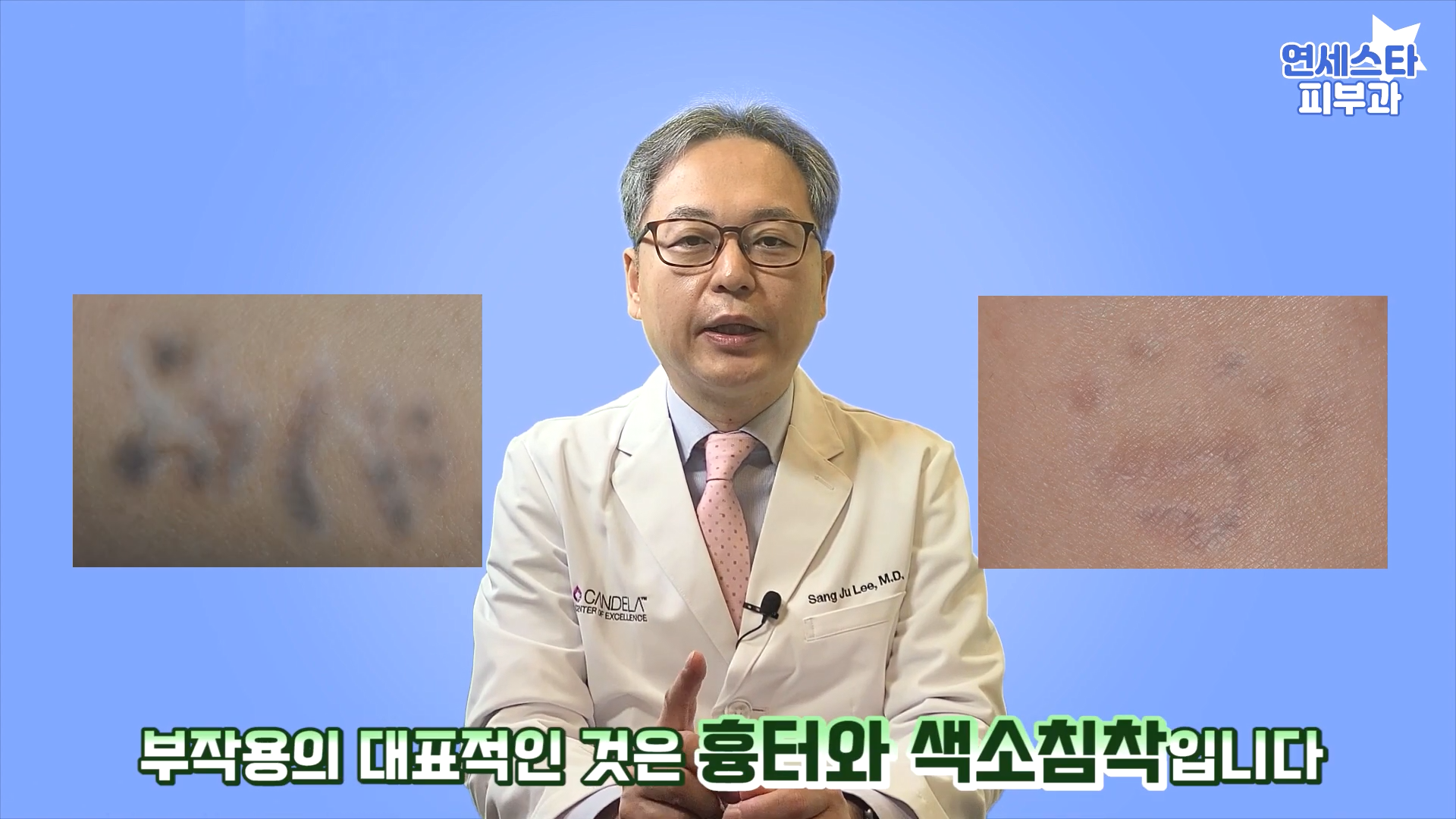
After acute reactions, the main long-term effects that may appear are scars and pigmentation.
| What Remains | Treatment Direction |
|---|---|
| Scars | Pinhole Technique, a laser scar treatment |
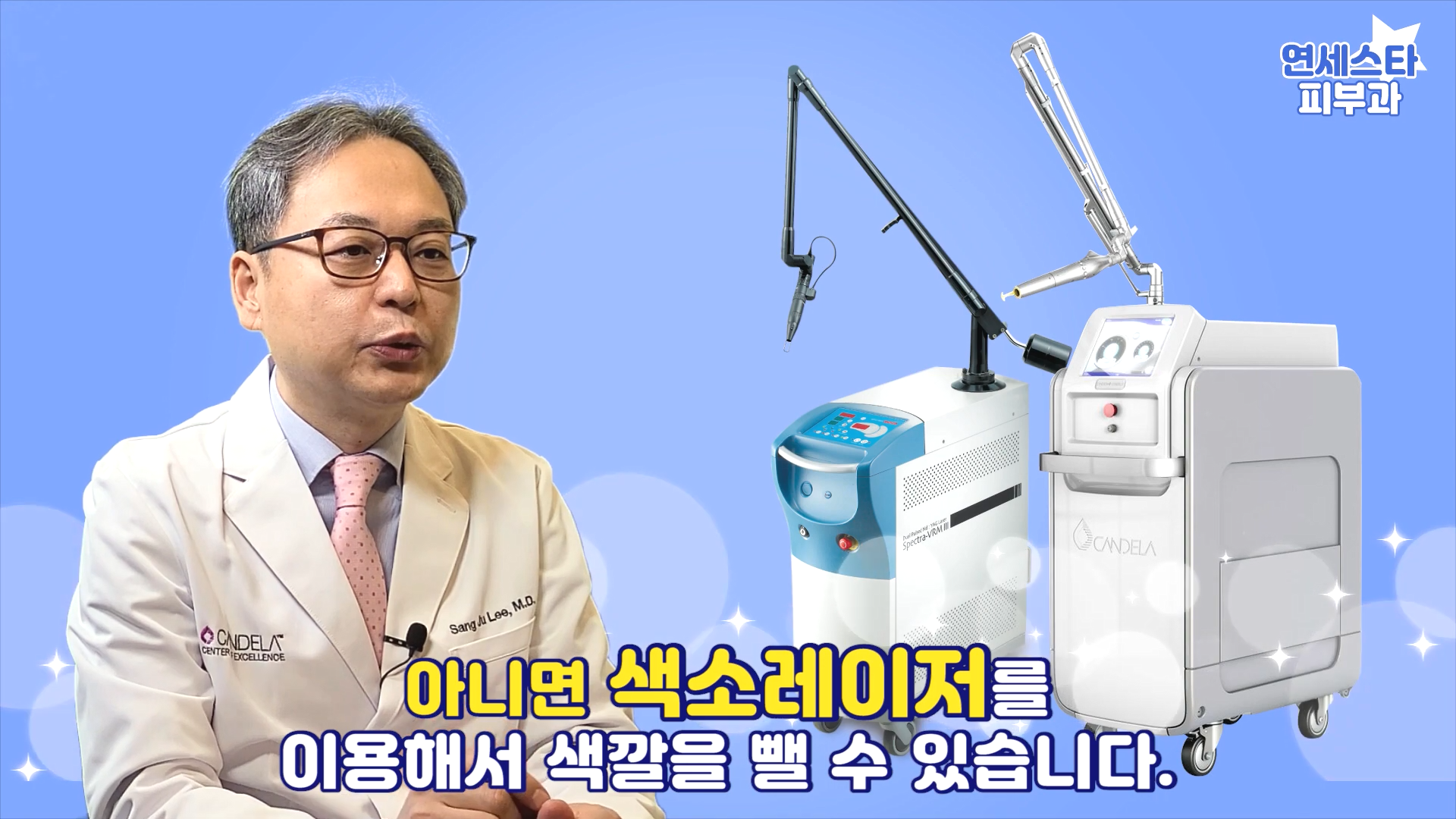
| Pigmentation | Medication or pigment laser |
If scars remain, treatment is possible using the method introduced in Pinhole for Burn & Surgical Scar. If pigmentation remains, the color can be removed with a pigment laser, as discussed in Pico·Dual·Gold-Diamond Toning.
No Need to Avoid in Summer
Many people are hesitant about tattoo removal lasers in the summer. However, removal takes a long time, and generally, only shallow wounds appear on the skin, so light exercise or a little sweating is not a major problem.
Things to Watch Out for Over 2 Weeks
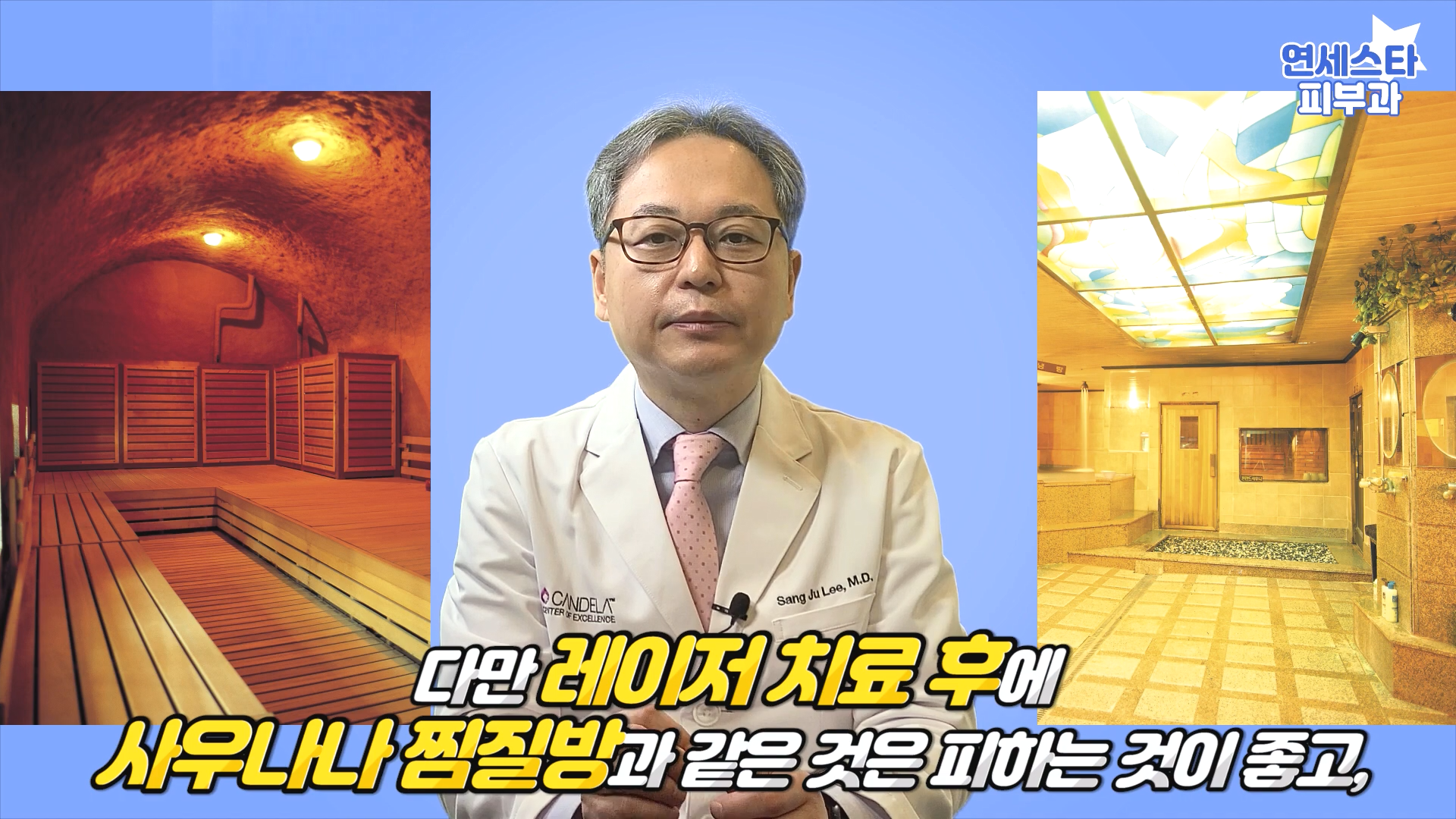
- It is best to avoid saunas and jjimjilbangs (Korean bathhouses).
- Please also avoid exercises that cause a lot of sweating or involve being in water, such as swimming.
- We recommend postponing saunas or swimming for at least 2 weeks.
- Sunbathing or tanning should also be avoided immediately after the procedure and can be done after the skin has recovered, about 2 weeks later.
Wound Care Determines the Outcome
After laser treatment, microscopic wounds occur on the skin. Therefore, wound care is extremely important.
To prevent secondary bacterial infection, apply antibiotic ointment, and it is best to avoid prolonged deep exposure to water. General showering is usually possible.
Signs to Revisit the Clinic
For about one to two days after the procedure, there may be some oozing from the treated area. In the following cases, you should revisit the clinic where you had the procedure to receive a diagnosis from a dermatologist:
This includes cases where blisters form, there is a lot of oozing, or pain continues for more than 2 to 3 days.
Tattoo removal is important, but subsequent care must support it. You can check the consultation and procedure flow in Tattoo Removal Treatment and R-Zero Pico-Frectat Tattoo Removal. For any questions during recovery, please contact us via chat now. Recovery progress may vary by individual.

Authored and Medically Reviewed by Chief Director Dr. Kang Jin-moon (Dermatologist) Graduated from Yonsei University College of Medicine · Resident in Dermatology at Severance Hospital Currently Adjunct Professor, Department of Dermatology, Yonsei University College of Medicine · Member of the Korean Dermatological Association View Medical Staff Profile
First Published 2024-05-17 · Last Reviewed 2026-07-29
This article contains general medical information and does not substitute for individual diagnosis and treatment. Results and recovery progress may vary by individual.