

Have you ever been surprised to find that a mark left after mole removal, which you thought would disappear over time, actually became more prominent? While mole removal is known as a simple procedure, it is not uncommon for red or white raised marks, or sunken indentations, to remain after removal. To put it simply, you can expect recovery from Laser Lesion Removal scars only after accurately distinguishing their shape and color and choosing the appropriate treatment.
Many people remove moles while managing facial blemishes. It is a procedure that can be done without much burden, as it creates a clean impression without needing to cover up, but it is surprisingly common for unexpected marks to remain, leading to concerns.
Reasons Why Marks Remain After Mole Removal
Moles are a type of unnecessary cell cluster, and mole removal is the process of eliminating this tissue. The recovery pattern after the procedure can vary depending on the size and depth of the mole embedded in the skin, and the individual's skin regeneration capacity.

Furthermore, the performance of the laser used for removal and the skill of the practitioner also significantly influence the results. Therefore, we recommend carefully checking what equipment will be used and who will perform the procedure before proceeding.
How to Distinguish Between Normal Progress and Scars
After a normal procedure, a red mark will naturally remain. If the mole was large or deeply embedded, it might appear more distinct, but it usually fades gradually over a period of about 6 months to 1 year.
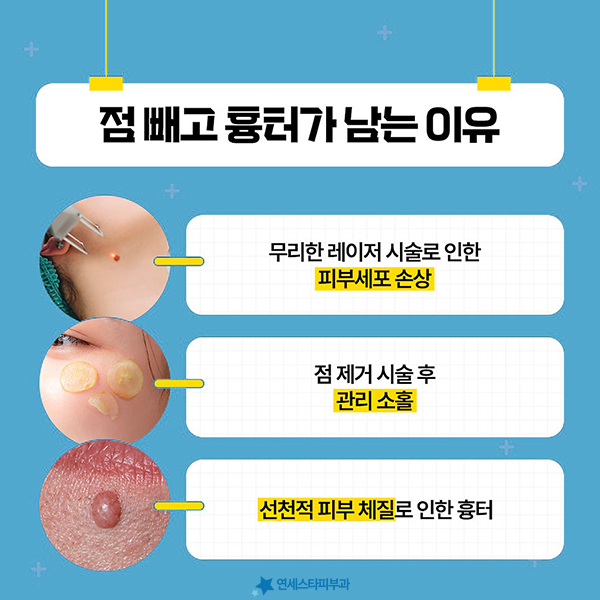
If the mole to be removed is large or deeply situated, it can be more satisfying to proceed safely over several sessions rather than putting excessive strain on the skin by trying to remove it in a short period. This is because attempting too much at once can lead to greater skin damage and a higher chance of scarring.

If several months have passed since the procedure and the red mark has not faded much, or if a scar-like trace is noticeable, it is a good idea to have it checked.
Three Types of Laser Lesion Removal Scars
In the clinic, marks remaining after mole removal are broadly divided into three types:
- Red type: The area is red and appears slightly raised.
- White type: The area is white and appears raised.
- Indented type: The depression, like a hole, has not filled in.

If there is redness, it often occurs when the laser stimulates the skin during the procedure, causing the body to excessively create blood vessels to regenerate itself. If the tissue regenerates more than necessary, it can appear more raised than the original skin. This is similar to the vascular response seen in facial redness.
| Type | Main Cause | Treatment Direction |
|---|---|---|
| Red type | Excessive proliferation of blood vessels | Vascular laser to normalize blood vessels |
| Raised type | Excessive tissue proliferation | Injection treatment + laser combination |
| Indented type | Insufficient regeneration, depression | Regeneration induction like Pinhole Technique, surgical revision if necessary |
Starting Before the Color Changes is Important
Laser Lesion Removal scars initially appear red, but if the treatment timing is missed and time passes, they can gradually turn white, and the recovery time may also lengthen. It is better to start as early as possible.
Conversely, if the regeneration rate is slow and recovery is insufficient, the mark may remain as a sunken indentation. Therefore, meticulous care to ensure proper wound healing immediately after mole removal is also important.
To expect effective results, it is crucial to accurately identify the shape and color first, and then treat accordingly.
If raised or sunken marks remain even after a sufficient recovery period, it is time to seriously consider treatment. Before treatment, we examine two things: whether it is still indented, and whether it is raised with a red or white color.
If you are concerned about marks remaining after mole removal, you can check your condition first by inquiring about Laser Lesion Removal scar treatment directions via chat consultation.
Treatment Methods Tailored to the Type
If redness persists, a vascular laser such as Vbeam is applied to normalize excessively proliferated blood vessels. If the shape is raised, treatment to reduce its height is necessary. Injection procedures can lower the skin's height, and combining this with laser treatment can be more beneficial.

If the shape is indented, a process to refill the sunken area is needed. The Mild Pinhole method, which uses high-output lasers like Ultrapulse Encore to create microscopic holes in the Laser Lesion Removal scar area to boost skin regeneration, is utilized. A similar approach for treating indented scars is also used in atrophic acne scar treatment.
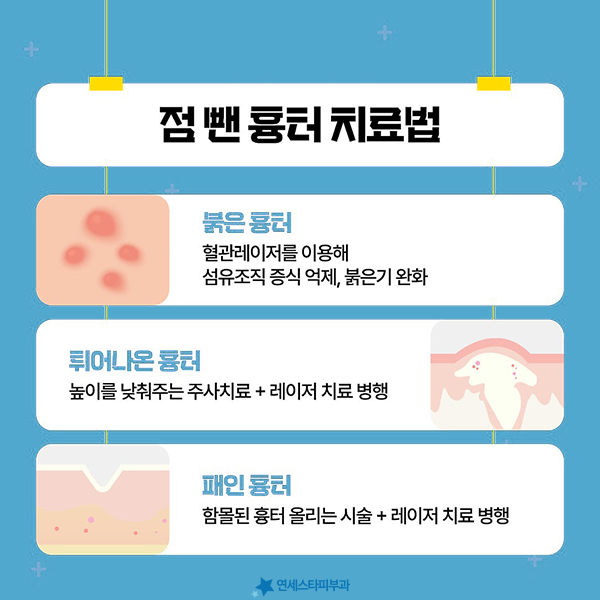
Even without major surgical methods, the skin can be naturally filled and marks can be faded. If the indentation is deep, combining laser treatment with procedures like Subcision or Suture-Free Punch to lift the sunken area can enhance satisfaction. These approaches are covered under the category of Surgical Scar Revision.
However, these treatment methods are not easily performed everywhere, so we recommend receiving them safely from a specialist with sufficient expertise.

Before and After Mole Removal, Remember These Things
Since mole removal is done for a cleaner impression, the most important thing is safe removal. The next step is finding a dermatology clinic that can meticulously assist with treatment if marks remain. Checking the following items in advance can be helpful:
- Get the size and depth of the mole diagnosed first.
- For large or deep moles, remove them safely over several sessions.
- Immediately after removal, avoid irritation and UV rays to ensure proper wound healing.
- If marks do not fade after several months, have their shape and color checked.
- For indented marks, do not neglect them; consult early, just as with surgical scars.

The shape of the marks and the recovery pattern can vary individually, so even if they appear similar, the treatment direction will differ from person to person.
💬 Consult Now
Chief Director Lee Sang-ju (Yonsei University College of Medicine, Ph.D. in Medicine, completed dermatology residency at Severance Hospital, President of the Korean Dermatological Association) Chief Director Lee Sang-ju's Profile First published 2025-02-11 / Last reviewed 2026-06-16
This article is for general information purposes only. The condition of marks and suitable treatment vary individually, so please confirm an accurate diagnosis through consultation with medical staff.