


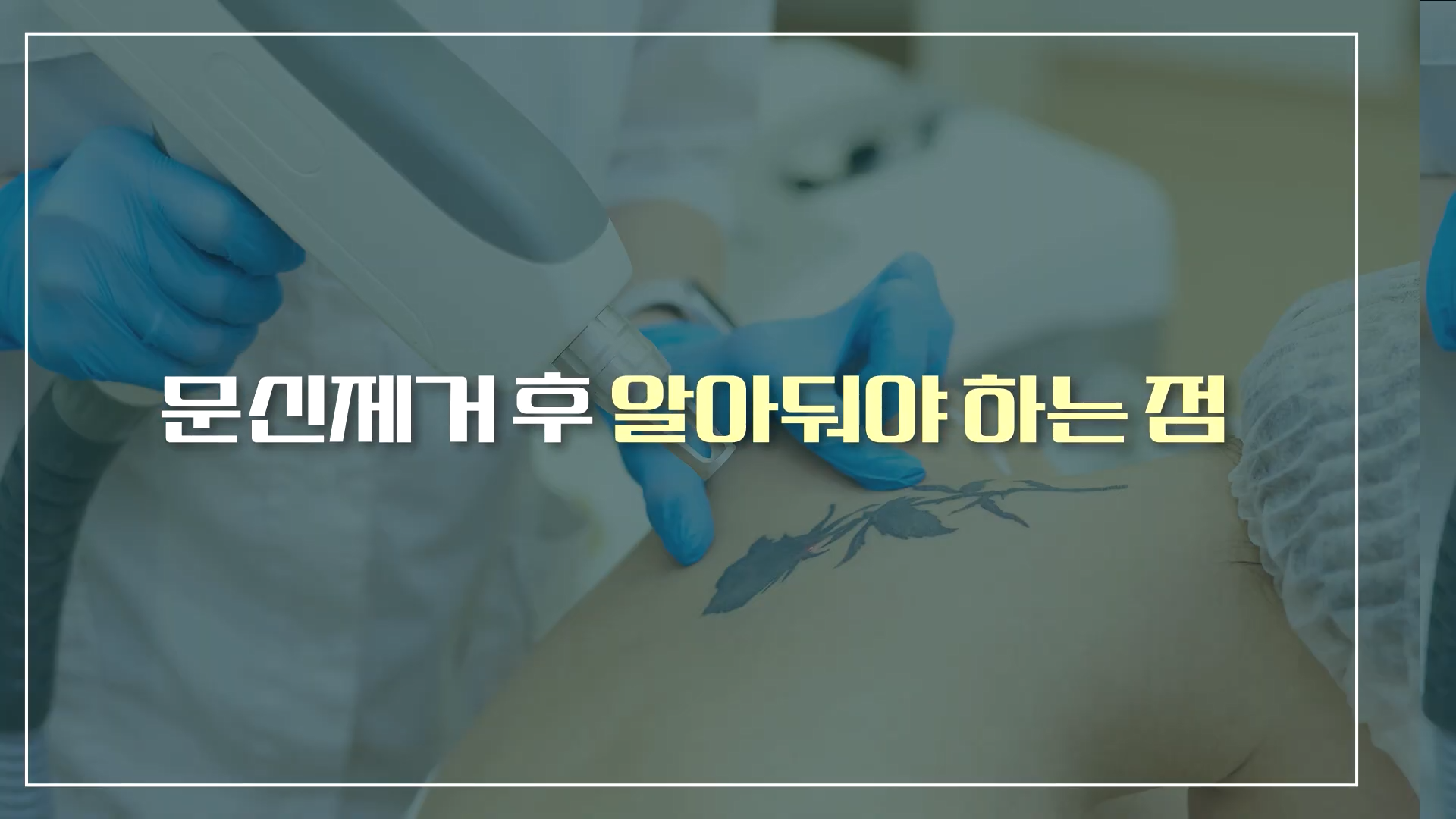
Tattoos are often chosen by young people as a way to express their individuality. However, it is true that as time passes, more people regret them, and consequently, more people wish to have them removed.
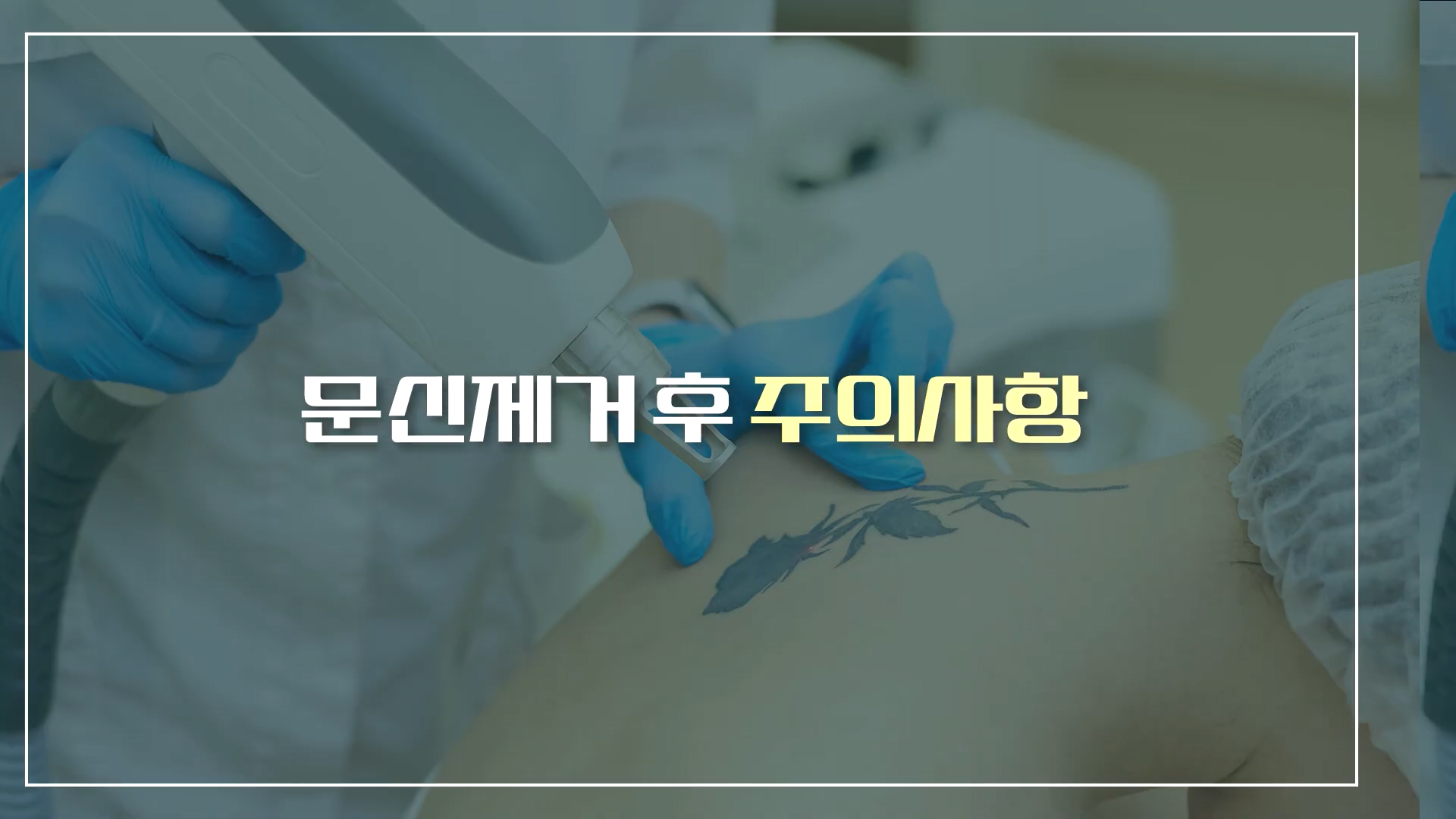
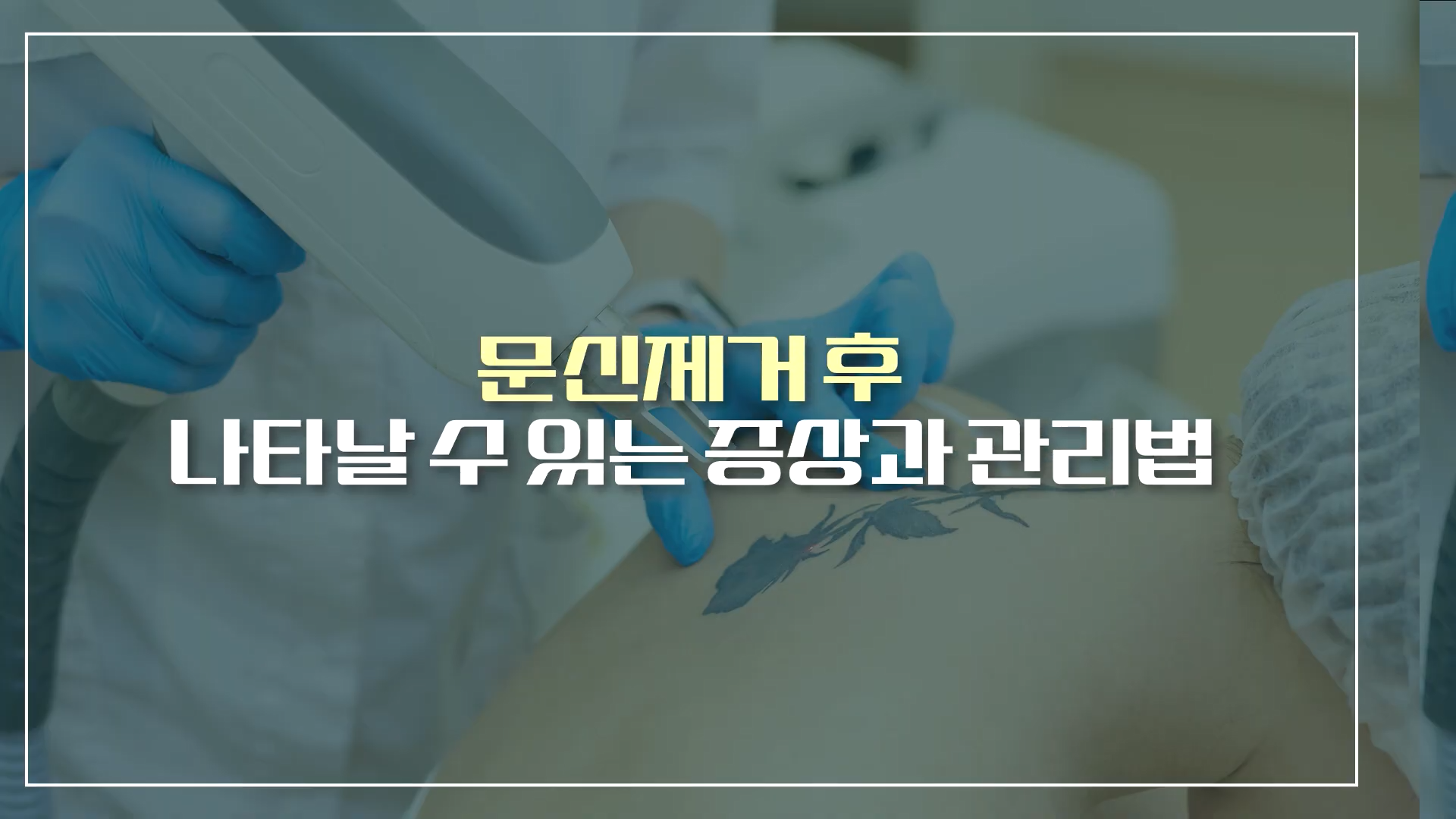
Today, we have compiled important precautions and care methods after Laser Lesion Removal, which are even more crucial than the tattooing process itself.
On the Day of Treatment and the First Week
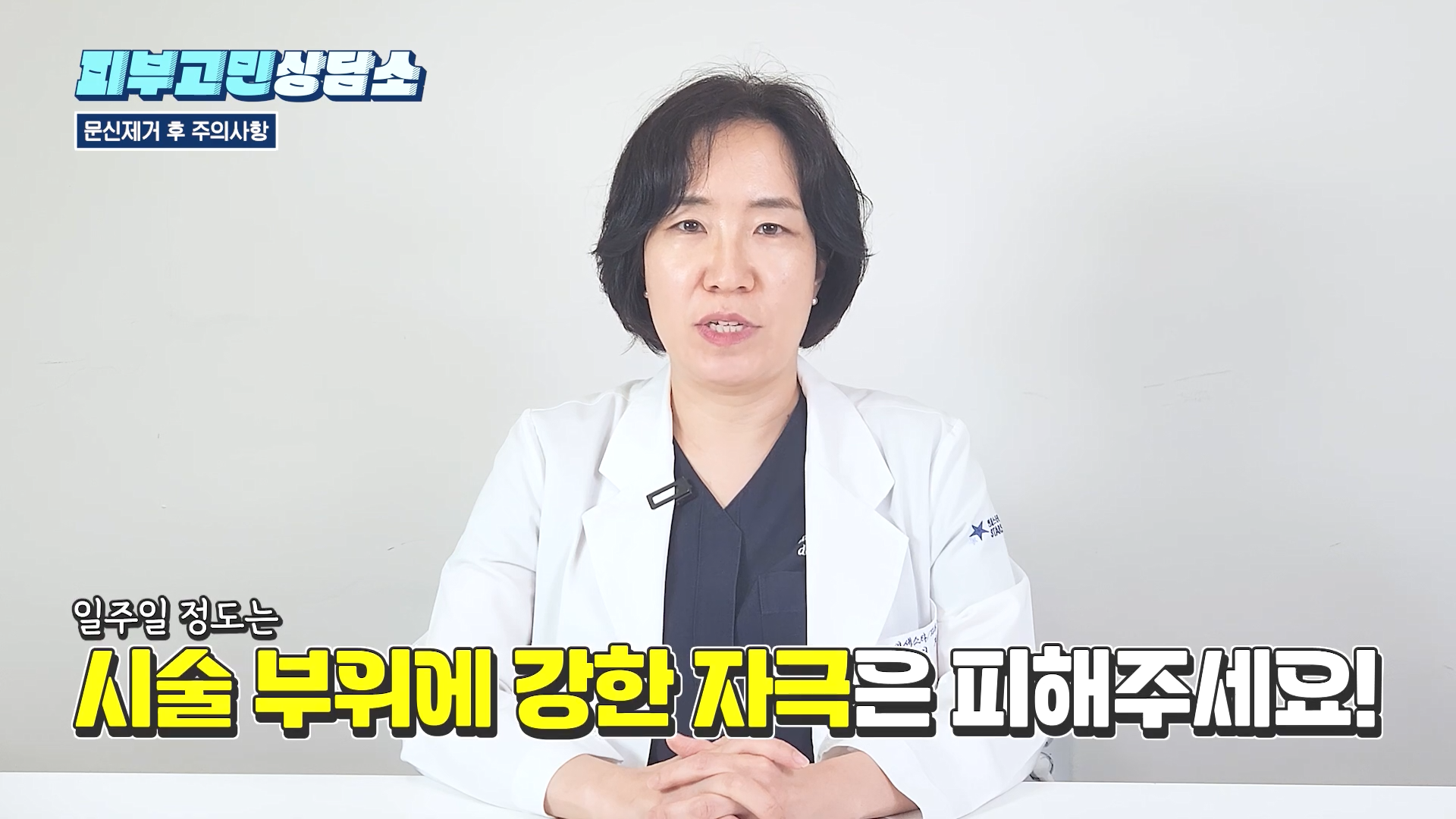
Light cleansing and showering are possible from the day of the treatment. However, it is advisable to avoid strongly stimulating the treated area for about a week.
If you apply a hydrocolloid dressing to the treated area, an allergic reaction may occur depending on the individual. It might be better to avoid applying it and instead allow the area to air out.
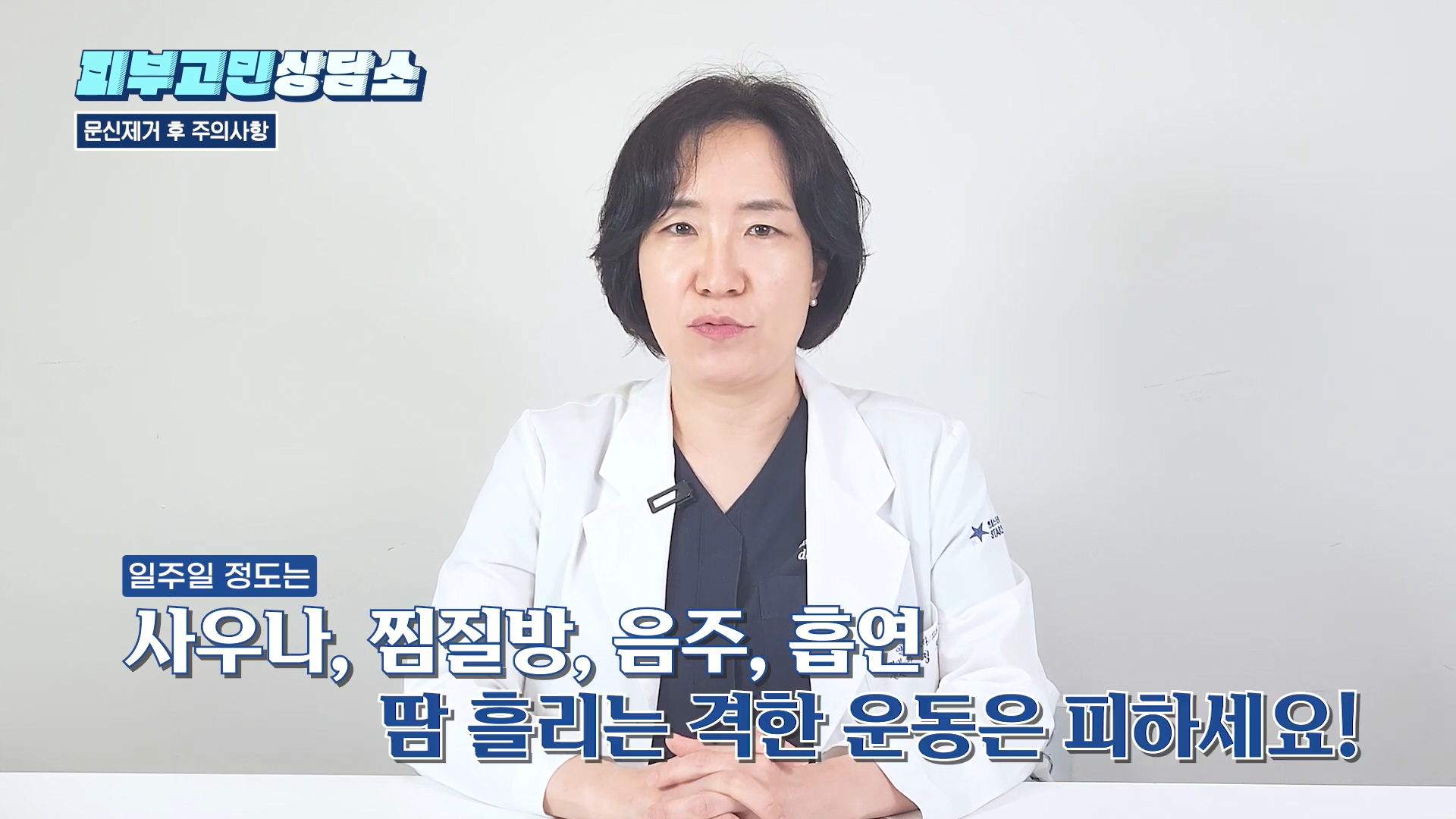
Please also avoid the following for about a week:
- Saunas, jjimjilbangs (Korean bathhouses), and swimming
- Alcohol and smoking
- Strenuous exercise that causes sweating
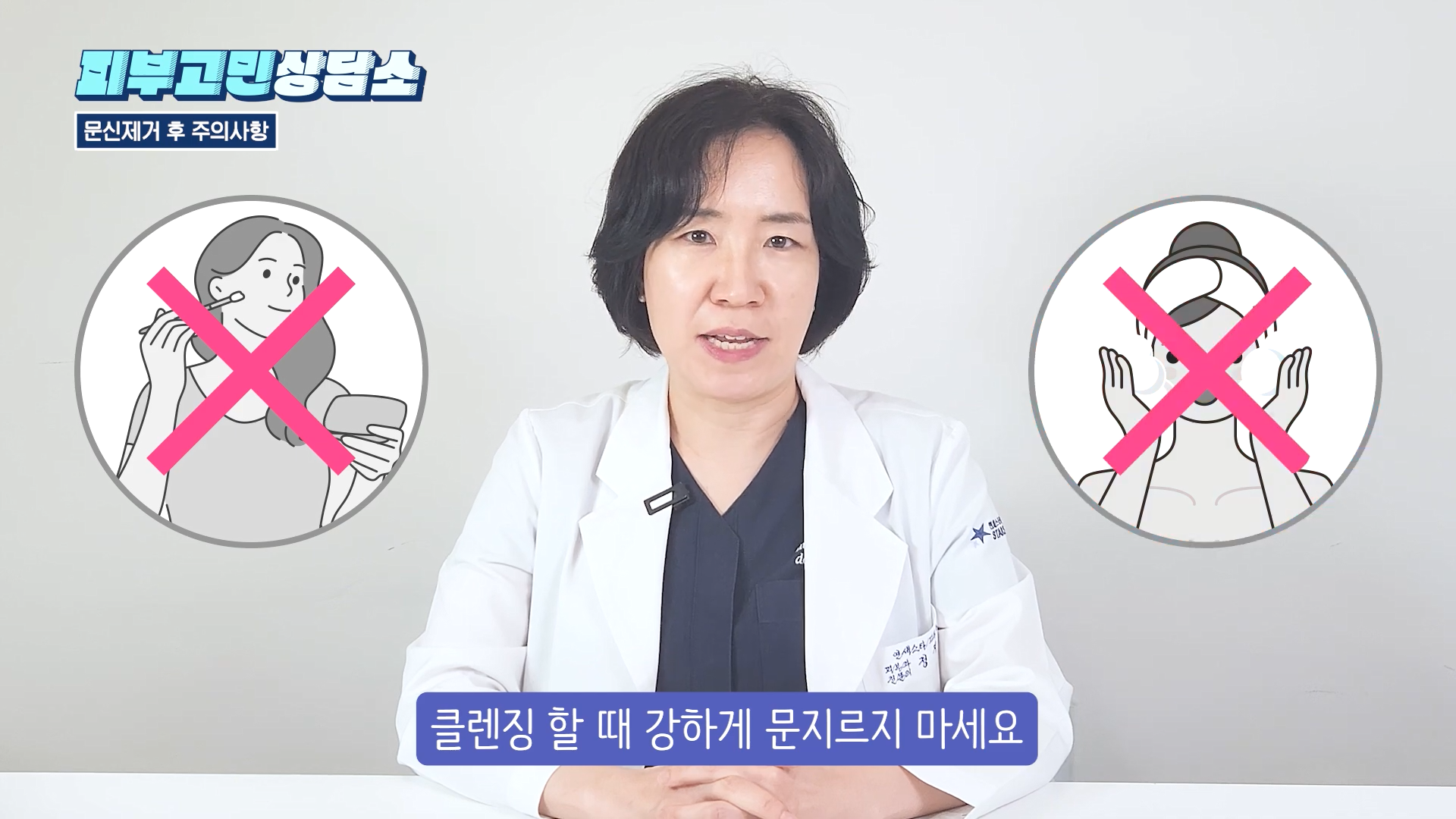
For semi-permanent makeup tattoo removal, you should avoid applying makeup to the treated area for about a week and ensure there is no strong friction when cleansing.
When Redness and Blisters Appear
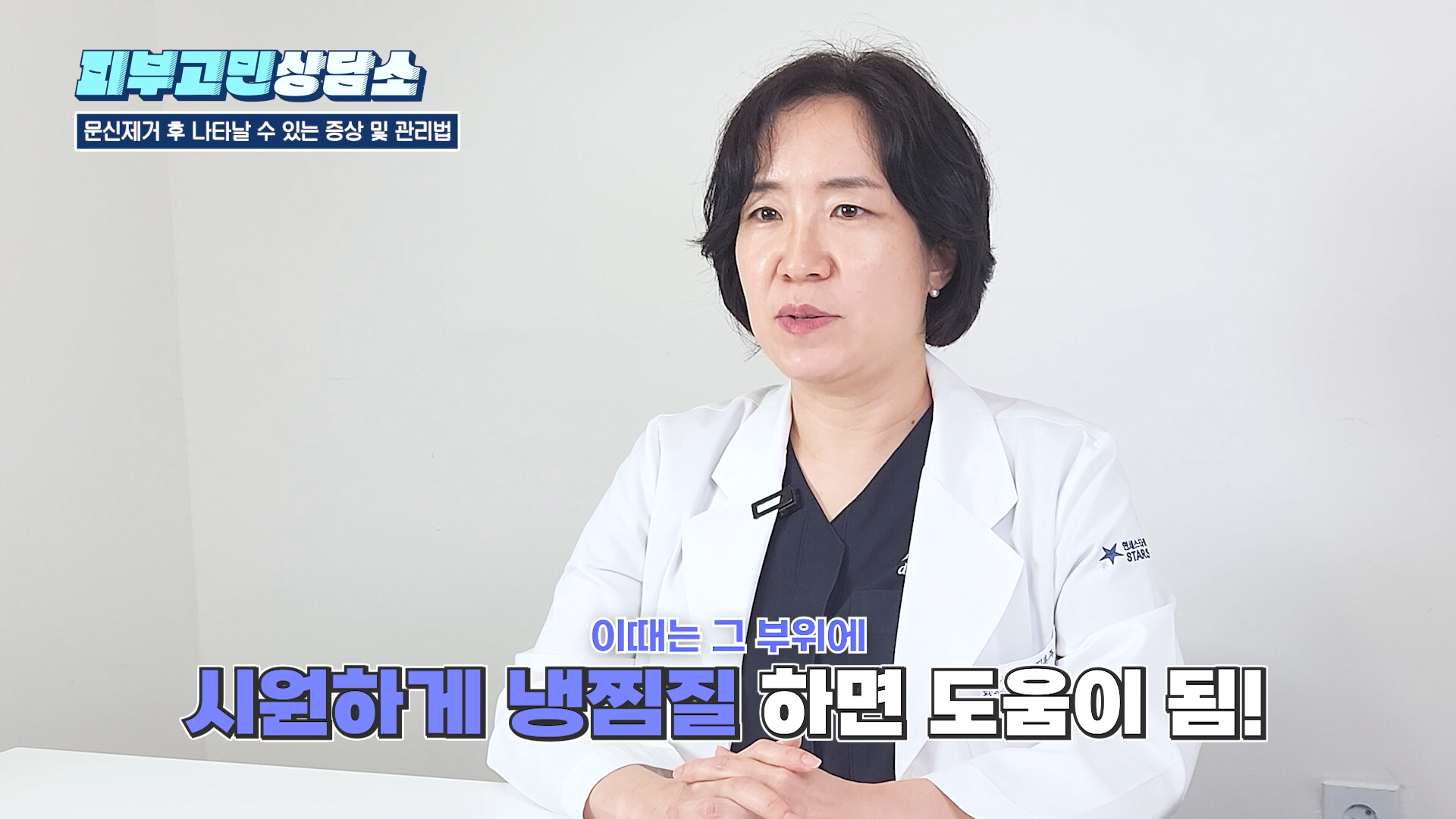
After Laser Lesion Removal, the treated area may temporarily become red, swollen, and itchy. In this case, applying a cool compress to the area can be helpful.
If blisters have already formed, it is best not to pop them if possible.
Occasionally, if blisters pop and ooze, you will need to manage the dressing. You can also refer to the Pinhole for Burn & Surgical Scar treatment guide, which explains how to create space for blisters to drain.
If Scabs Have Formed
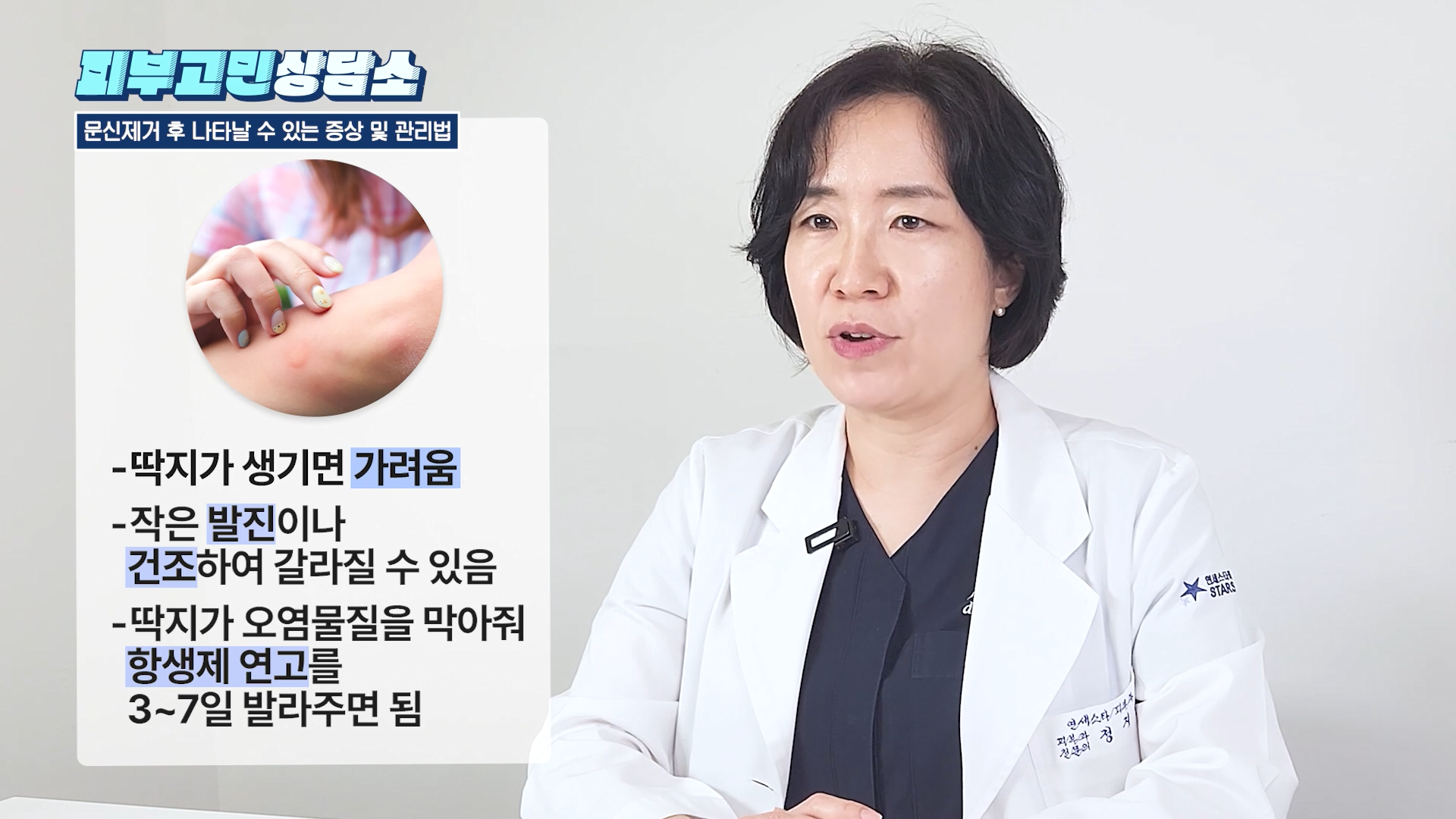
Scabs may form after tattoo removal. When scabs appear, the area may become itchy, develop small rashes, and crack due to dryness.
In such cases, you can apply an antibiotic ointment for 3 to 7 days to prevent contamination.
Home Care Summary by Symptom
| Symptom | Management Method |
|---|---|
| Redness, swelling, itching | Cool compress |
| If blisters form | Do not pop |
| Blisters pop and ooze | Dressing management |
| Scabs, small rashes, cracking | Antibiotic ointment for 3 to 7 days |
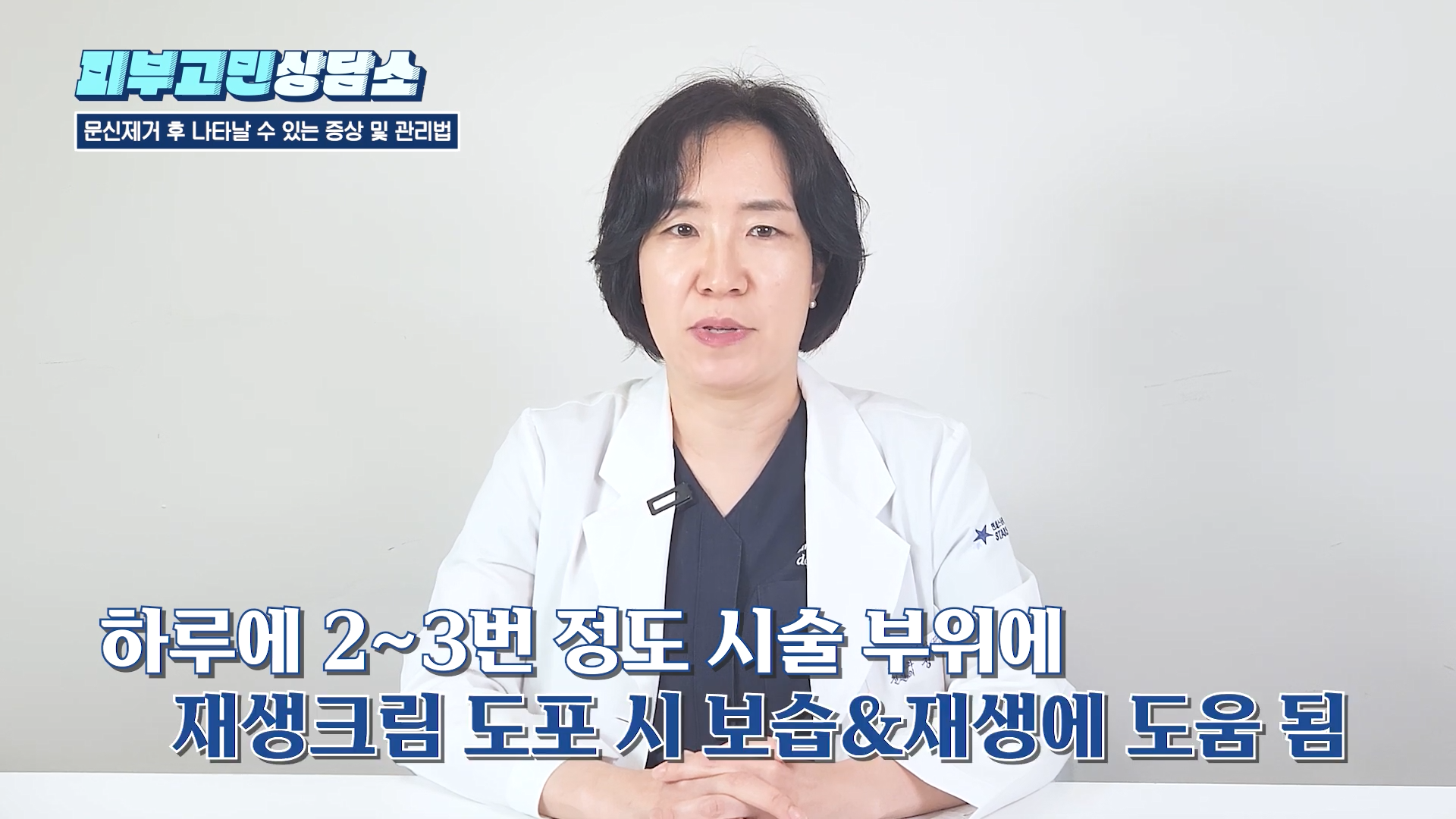
| Dryness | Regenerative cream 2 to 3 times a day |
| UV exposure | Use sunscreen |
Regenerative cream helps with moisturizing and regeneration. If you are exposed to UV light, it is highly recommended to apply sunscreen.
Red Tattoos and Allergic Reactions
In the case of red-colored tattoos, although rare, allergic reactions or inflammatory responses may occur depending on individual skin immunity. In such cases, we recommend consulting your doctor.
Allergic reactions can occur in the early stages of a tattoo, but they can also arise as an immune response during the Laser Lesion Removal process, which breaks down the ink.
What Happens to Semi-Permanent Eyebrow Tattoos?
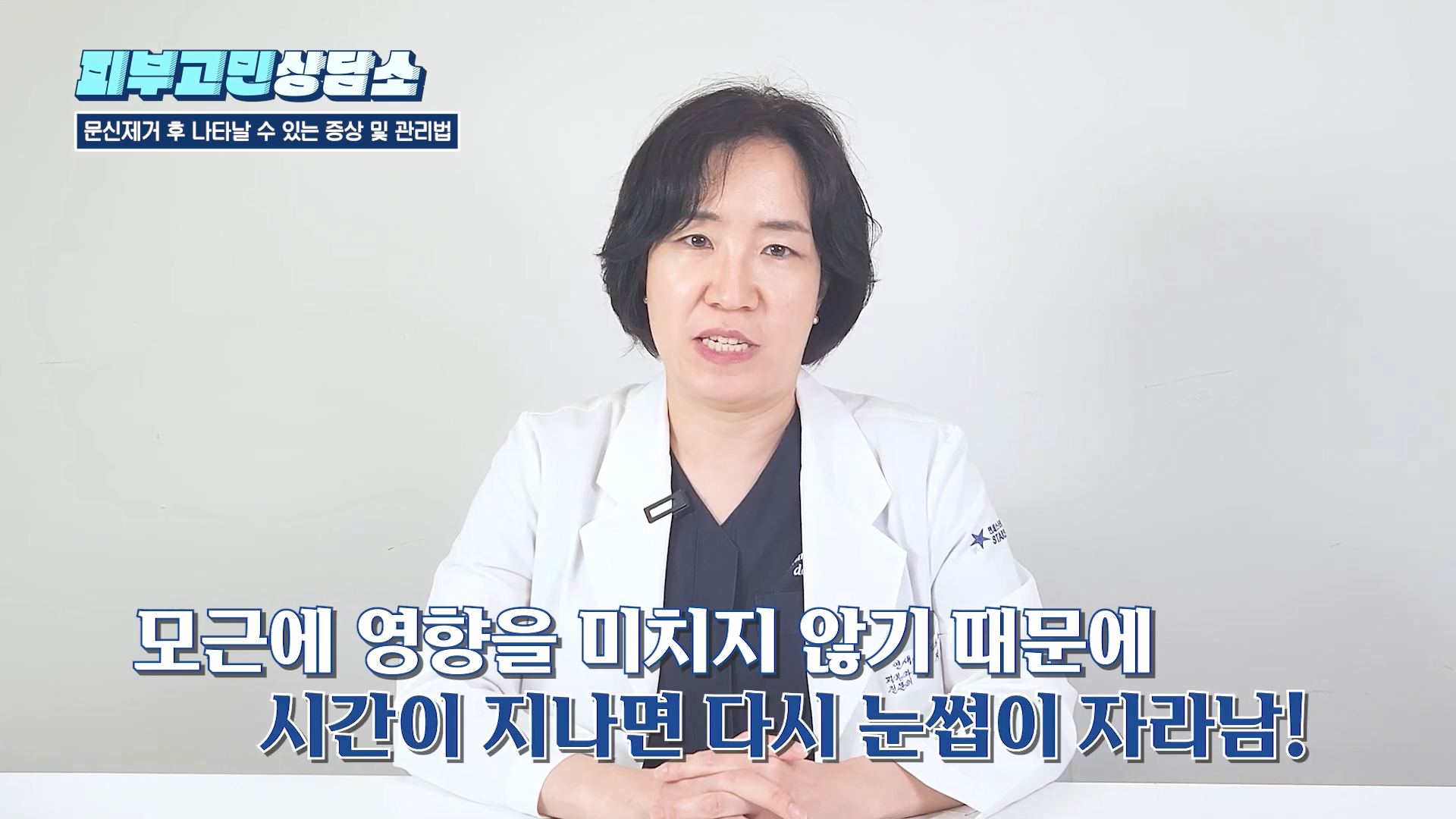
For semi-permanent eyebrow tattoos, it is highly unlikely that the eyebrows will be completely burned by PicoWay Laser. Some charring may occur.
However, since it does not affect the hair follicles, the eyebrows will grow back over time. You do not need to worry excessively.
Time Taken for Ink to Fade
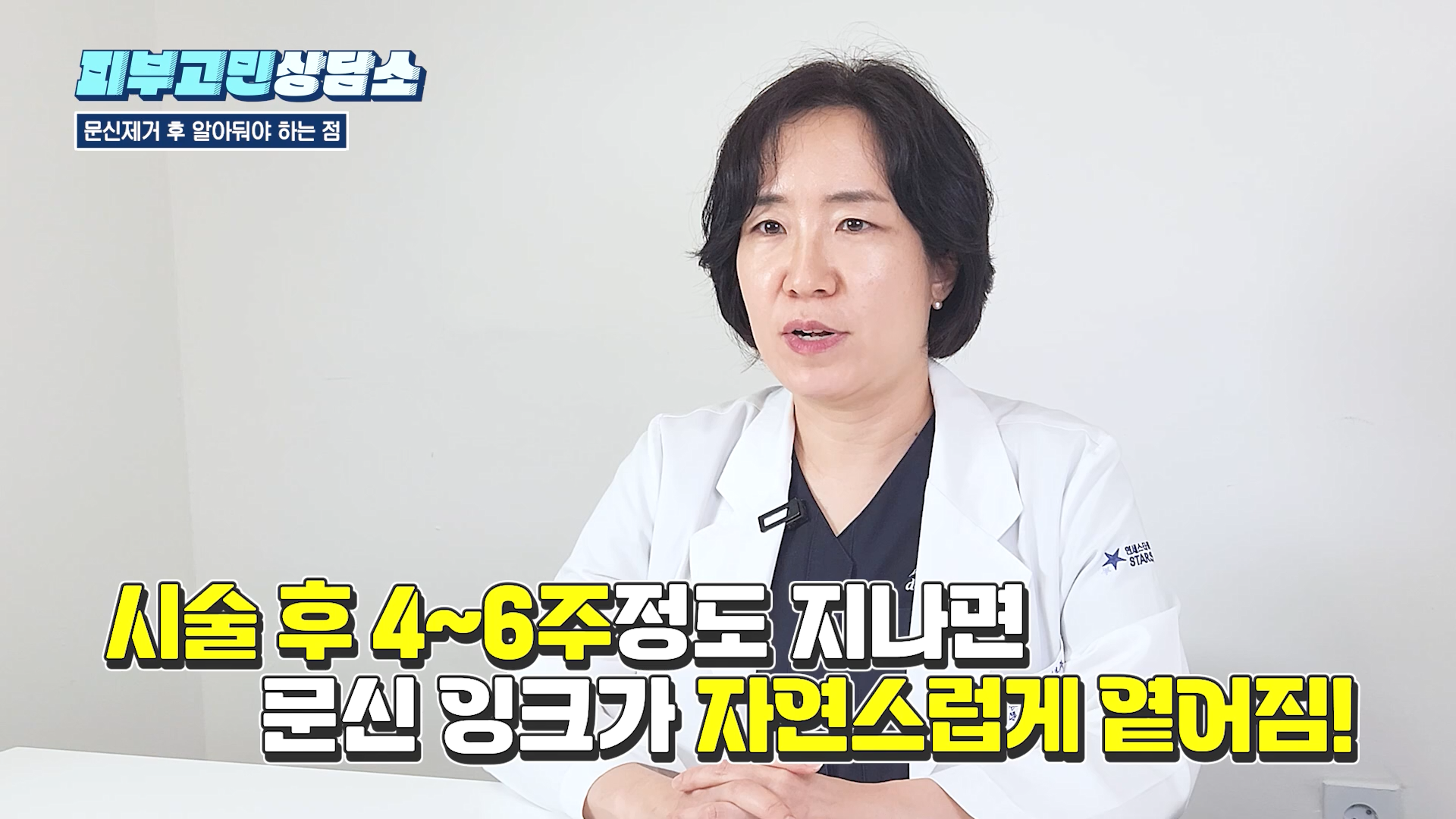
The ink of a tattoo does not disappear immediately after treatment.
When the ink that has penetrated the body is broken down into tiny particles, macrophages engulf and excrete them, which takes time. Therefore, tattoo ink naturally fades 4 to 6 weeks after the treatment.
Multiple repeated treatments may be necessary depending on the amount and depth of the ink. The treatment process is detailed in the R-Zero Pico-Frectat Tattoo Removal guide and the Tattoo Removal Treatment guide.
Additional Considerations for Color Tattoos
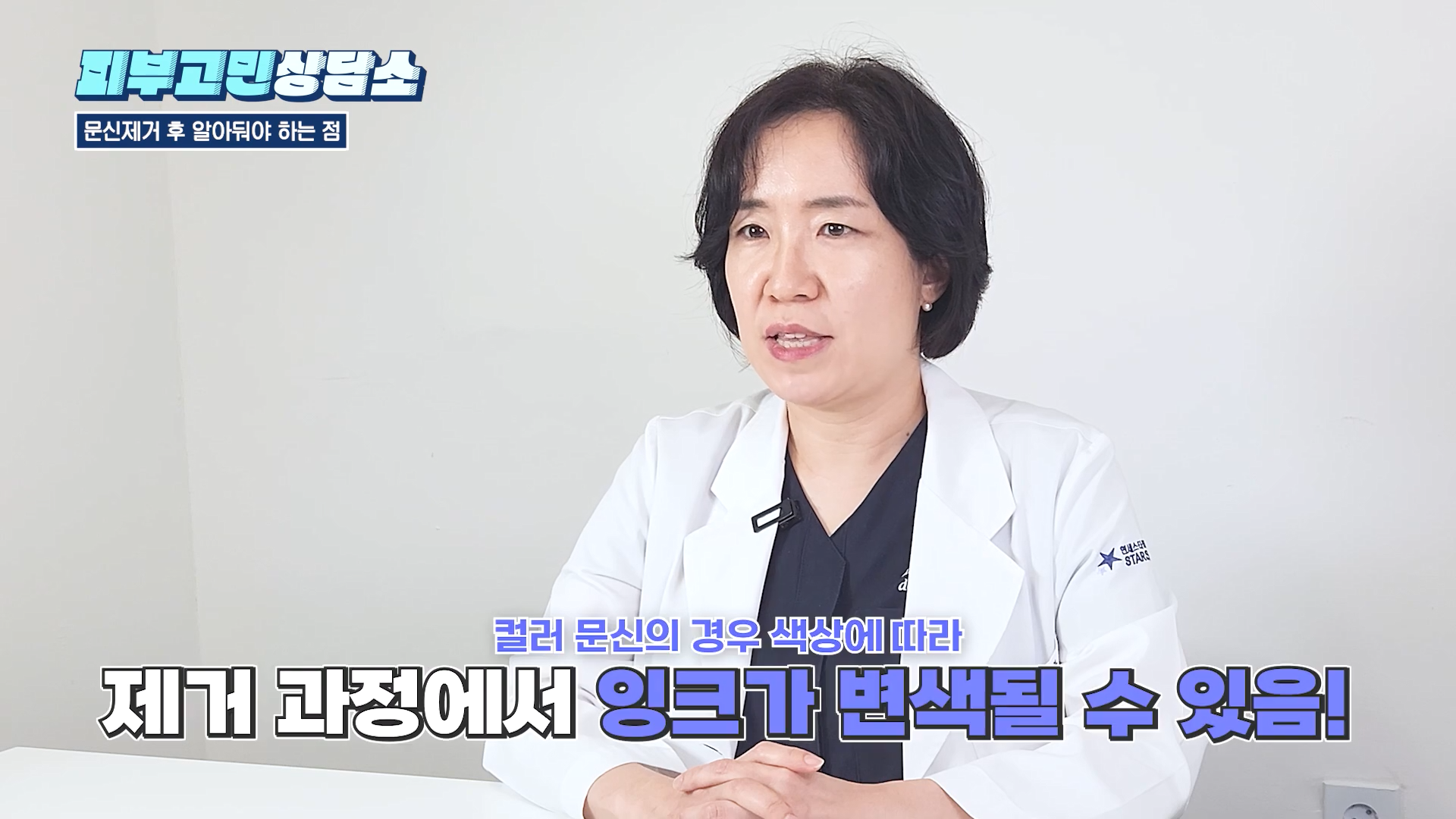
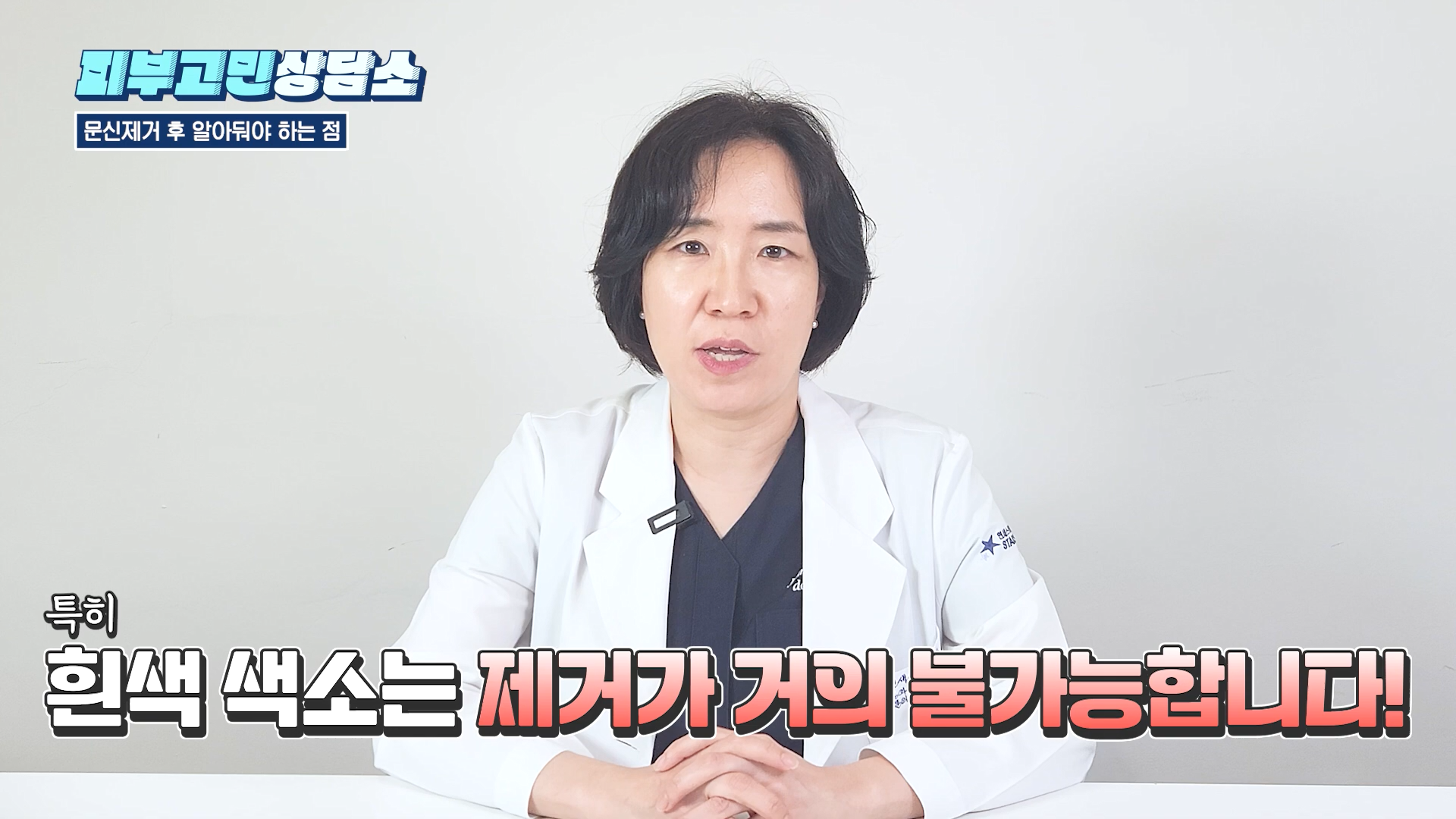
Color tattoos may experience ink discoloration during the removal process, depending on the color. Red, in particular, may temporarily darken. White pigment may be almost impossible to remove.
Furthermore, the likelihood of developing white scars or hypertrophic scars is much higher with color tattoo removal compared to black tattoos. If scars form, additional scar treatment may be necessary.
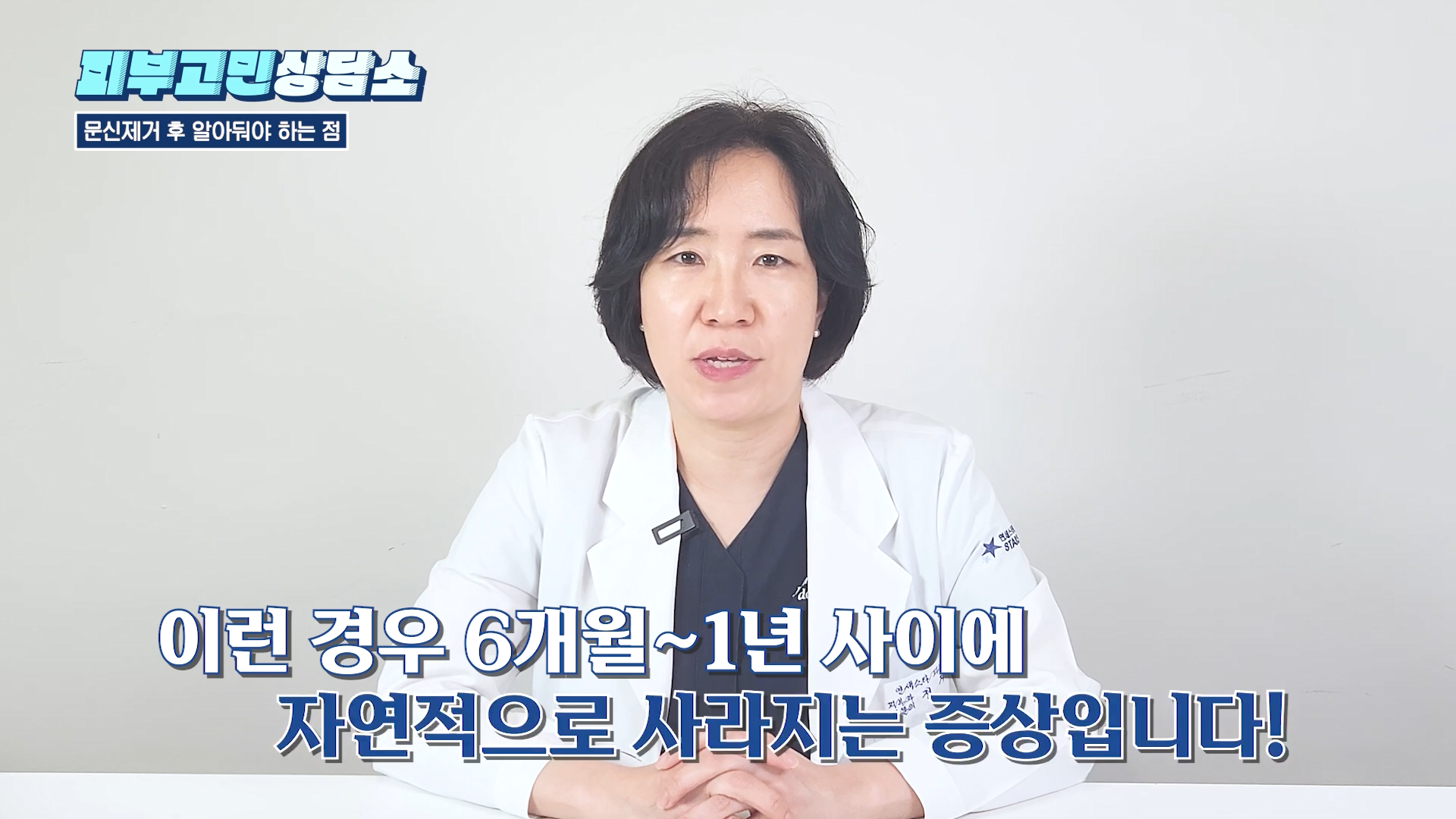
There is also a high possibility of post-inflammatory pigmentation occurring during the removal process or after all pigment has been removed. In such cases, it is a symptom that naturally disappears after 6 months to 1 year, so you do not need to worry. Depending on the progress, additional laser toning may be performed or whitening cream may be prescribed. Explanations regarding toning can be found in the Pico·Dual·Gold-Diamond Toning guide.
It is therefore crucial to properly manage any discomfort, blisters, itching, or discoloration that appear after tattoo removal. If you find it difficult to assess, please contact us via chat now to describe your symptoms.

Authored and Medically Reviewed by Chief Director Dr. Jinmoon Kang (Dermatologist) Graduated from Yonsei University College of Medicine · Former Professor at Bundang CHA Hospital Currently Adjunct Professor at Yonsei University College of Medicine, Department of Dermatology · Member of the Korean Medical Laser Association View Medical Staff Profile
First Published 2024-07-23 · Last Reviewed 2026-07-29
This article contains general medical information and does not substitute for individual diagnosis and treatment. Results and recovery progress may vary by individual.