

As we age, if dark spots increase on our face or the back of our hands, we might feel a little heavy-hearted looking in the mirror. Commonly called "spots of the underworld," seborrheic keratosis often appears after the age of 60, but can also be observed in people in their 30s and 40s who are frequently exposed to sunlight. The first question that comes to mind is always the same: Can it be completely removed in one go with a laser? To answer directly, most seborrheic keratoses can often be removed with a single laser treatment, though deeper or larger lesions may require one or two more sessions.
How to distinguish between seborrheic keratosis and lentigo
Seborrheic keratosis and lentigo (spots) can be easily confused due to their similar color and shape. The simplest criterion to differentiate the two is whether they are raised above the skin's surface.

Seborrheic keratosis is characterized by being slightly raised above the skin's surface because the stratum corneum thickens.
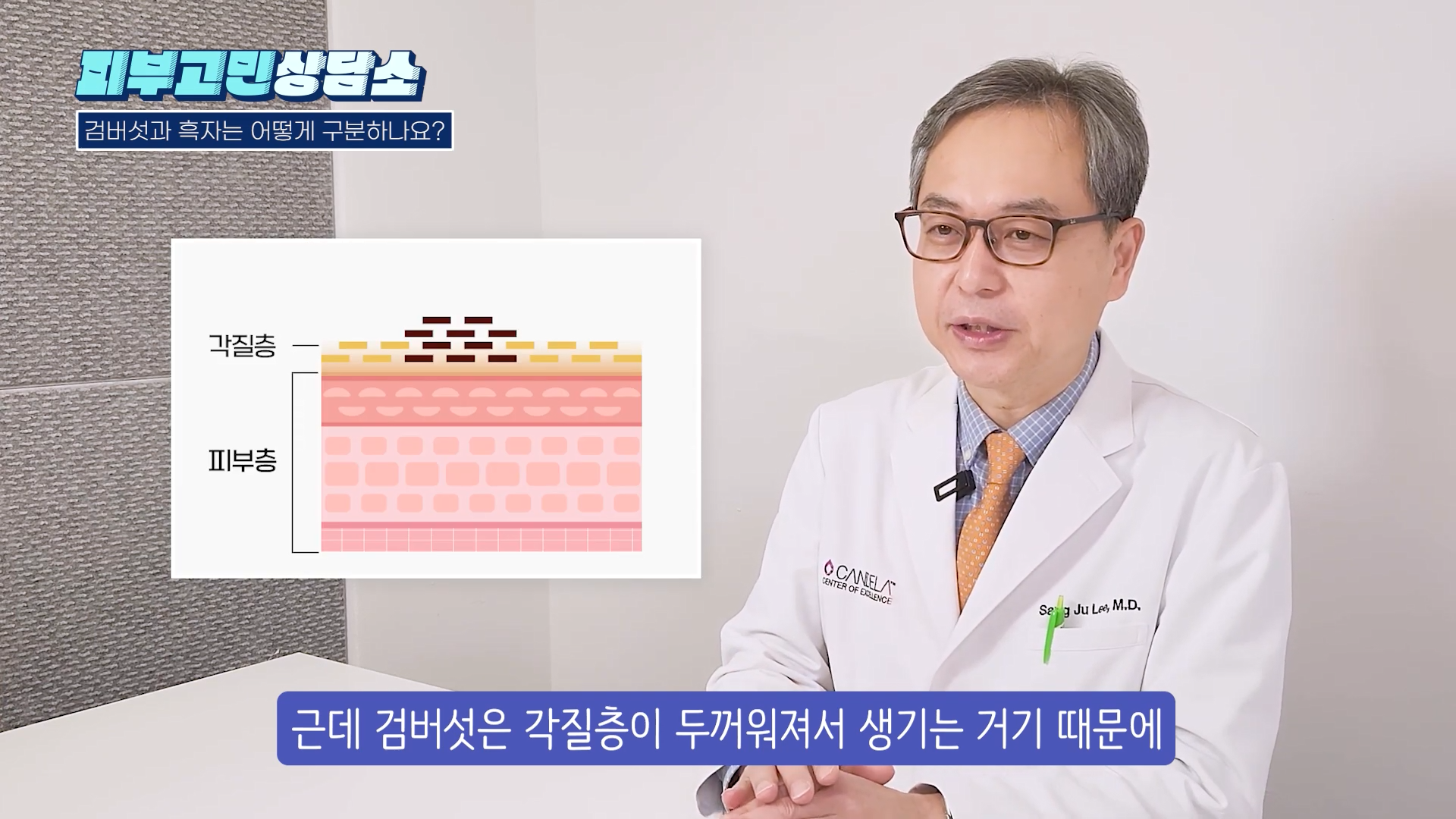
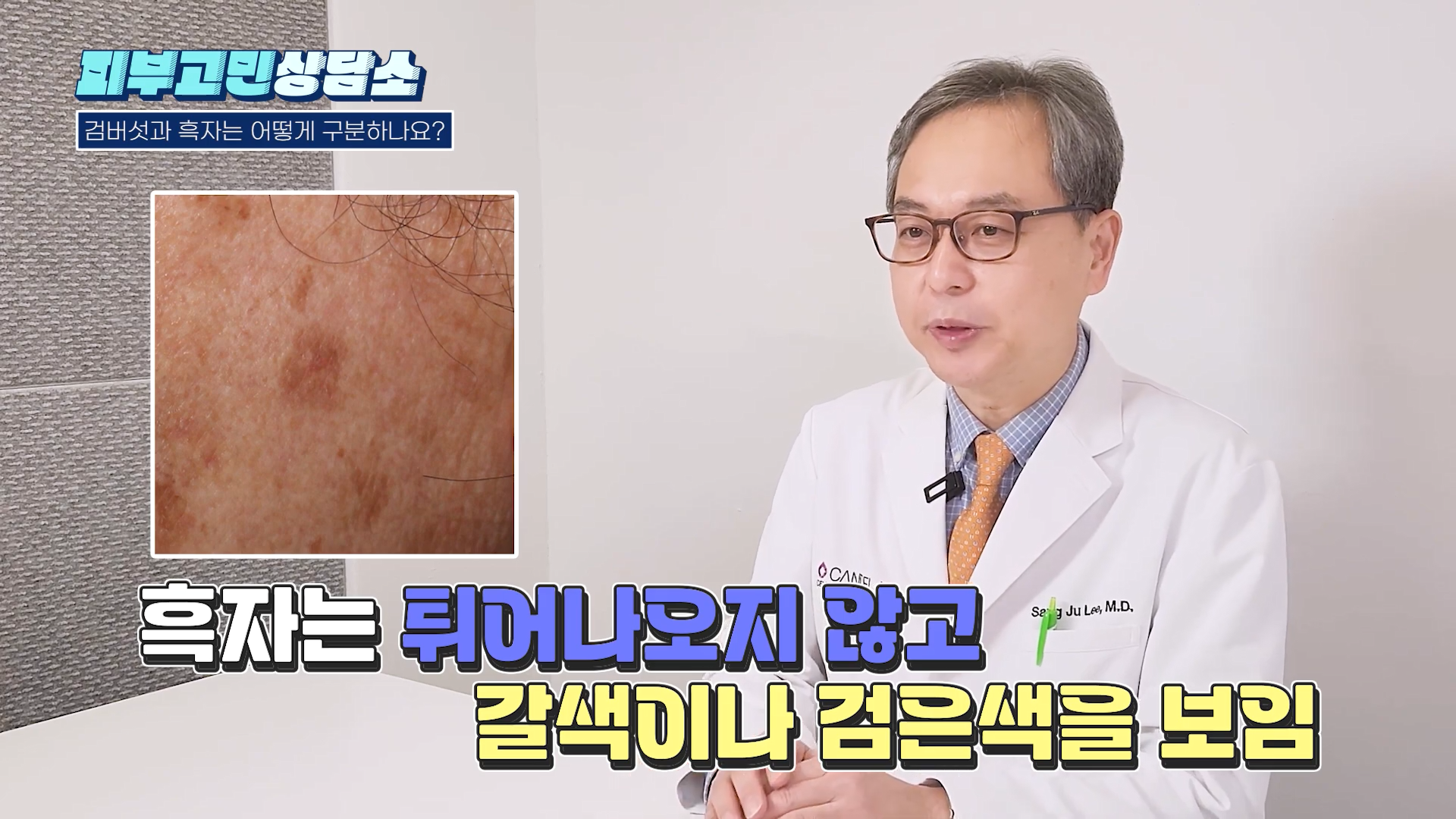
In contrast, lentigo results from an increase in melanin cells on the skin's surface, so it appears flat with only a brown or black color, not raised. Here's a summary:
| Category | Surface Height | Principle of Formation |
|---|---|---|
| Seborrheic Keratosis | Raised above the surface | Thickening of stratum corneum and epidermis |
| Lentigo | Level with the surface | Increase in melanin cells |
If it feels bumpy when you touch it, it's likely seborrheic keratosis, but it's safer to get an accurate diagnosis through a consultation.
What is seborrheic keratosis and why does it occur?

Seborrheic keratosis is a benign skin tumor that forms when the skin's stratum corneum and epidermis thicken. Although benign and not inherently dangerous, complete removal requires precisely eliminating the affected area. In the past, surgical methods were used, but recently, treatment involves ablating the lesion with a laser.
The type of laser used varies depending on the thickness. Generally, for thicker lesions, a CO2 laser is used for ablation, while for thinner seborrheic keratoses, a pigment laser can be used for treatment. Even for the same seborrheic keratosis, the approach differs based on its shape and color, so customized treatment for each lesion is necessary. If you are curious about how epidermal pigment lesions are treated, you can refer to Epidermal Pigment Removal.
Can it be removed in one go with a laser?
When thick lesions are ablated, a regenerative tape like DuoDERM is typically applied. For shallow lesions closer to lentigo, pigment laser treatment usually heals well without leaving a scar or requiring separate dressing. The key is to choose the appropriate laser based on the shape and color.

Laser ablation can usually remove it in one session. However, if the root is too deep or the lesion is too large, it may require one or two more sessions.
Seborrheic keratosis is a condition that develops with age, so even after removal, new ones may appear in other areas over time. It's good to remember that a single removal does not guarantee a lifetime of freedom from them.
Lesions similar to seborrheic keratosis, such as moles, syringomas, and warts, are also treated with lasers. It may be helpful to also look at the differences in Laser Lesion Removal depending on the type of lesion.
For questions, inquire via chat consultation about seborrheic keratosis removal
Post-removal pigmentation is different from recurrence

Sometimes, after seborrheic keratosis is removed with a laser, a brown or slightly black color remains in that area. It's easy to mistake this for the seborrheic keratosis reappearing, but this is not a recurrence of seborrheic keratosis; it's post-inflammatory hyperpigmentation.

The difference between pigmentation and seborrheic keratosis is clear. As mentioned earlier, seborrheic keratosis is raised above the surface, whereas pigmentation is a change in color with the surface height remaining the same. Generally, pigmentation gradually fades over time. If you want to accelerate the process, you can try methods like whitening creams or laser toning for faster improvement. If you are concerned about pigment management, a Customized Whitening Solution is also an option.
Folk remedies: removing with vinegar or glacial acetic acid at home

In the past, people sometimes tried to remove seborrheic keratosis at home using vinegar, flour, or baking soda.

In the clinic, we often see cases where such folk remedies have worsened the condition, leading patients to seek professional help. Strong substances like glacial acetic acid dissolve the skin, making it difficult to remove at an accurate depth, and often leave secondary scars, prompting visits to the hospital.

We strongly emphasize that glacial acetic acid, in particular, can cause burns and should never be used. Before attempting anything at home, please remember the following:
- Do not apply glacial acetic acid or strong acidic substances to seborrheic keratosis.
- Do not try to remove it with folk remedies like vinegar, flour, or baking soda.
- Do not forcibly scratch it off with fingernails or tools.
- If a lesion changes rapidly in color or shape, seek professional medical advice instead of self-diagnosing.
Seborrheic keratosis treatment: a summary
Seborrheic keratosis can be removed relatively simply in a dermatology clinic. Thicker lesions are treated with a CO2 laser, while thinner ones are treated with a pigment laser, and most are often removed in a single session. Any remaining color after removal is often pigmentation, not recurrence, and tends to fade over time. Most importantly, it is safer to avoid folk remedies as they can leave scars.
If you are curious about laser types and the recovery process, you can also refer to RePott Laser Treatment. If dark spots are bothering you, we recommend getting an accurate diagnosis from a hospital with a board-certified dermatologist.
💬 Chat for a consultation now
Sang-Joo Lee, Chief Director (MD, PhD, Yonsei University College of Medicine and Graduate School, completed dermatology residency at Severance Hospital, President of the Korean Dermatological Association) Chief Director Sang-Joo Lee's Profile First Published 2024-05-07 / Last Reviewed 2026-06-16
This article provides general information about seborrheic keratosis. The appearance of lesions and treatment response can vary from person to person, so please consult with medical staff for an accurate diagnosis and treatment plan.