

Burn scars, even after a long time, differ from normal skin in color and texture, often causing self-consciousness in daily life. The most common question we hear is, "Can burn scars that are several years or even decades old still improve?" To answer directly, there's no method for them to disappear all at once, but consistent treatment has been reported to gradually improve their color, thickness, and lumpiness.
Many people hesitate for a long time before seeking treatment, thinking, "It'll probably be difficult to treat anyway." While it's true that recovery takes longer than with general scars, understanding the principles of treatment before giving up can help in making a decision.
Why Old Burn Scars Don't Heal Easily
Severe burns damage not only the epidermis and dermis but also skin appendages like hair follicles and sweat glands. The damaged skin heals by being filled with fibrous tissue. If this fibrous tissue is formed in a disorganized and excessive manner, the skin's color, texture, and lumpiness will remain different from normal skin.

Common characteristics observed in old burn scars include:
- Tissue that is thicker and raised or hardened compared to the surrounding area
- Color changes, appearing red, brown, or depigmented white
- Contractures that cause a pulling sensation and uncomfortable movement
- A rough texture due to the disappearance of pores and fine hairs
These changes occur because the collagen in the deep dermal layer of the skin has become disordered and hardened, making it difficult to achieve changes with surface-level care alone.
Past Surgical Treatments and Current Approaches
In the past, burn scars were often treated with surgical methods like skin grafting or tissue expansion. However, many people gave up midway due to dissatisfaction with the results or an unnatural appearance after surgery.
Yonsei Star Dermatology Sinchon offers scar treatment using lasers. This method combines the Ultrapulse Encore laser with the Pinhole Technique to induce powerful regeneration in the dermal layer. In the consultation room, we often see people who had postponed treatment due to the burden of surgery feel much more at ease when they learn about laser treatment as an option.
How Does the Pinhole Technique Work?

The Pinhole Technique is a procedure that Yonsei Star Dermatology Sinchon reported to various dermatological societies in the early 2000s, subsequently establishing itself as a burn scar treatment method. It involves creating microscopic holes in the scar tissue with a high-output scar laser.
Through these microscopic holes, the thick, contracted dermal tissue is gently loosened, and powerful laser energy is delivered to induce the rearrangement of clumped collagen.
Depending on the symptoms, Triamcinolone Scar Injection may be used concurrently to help alleviate thick, raised tissue. Pinhole-based treatments are applied with varying intensities, such as Mild Pinhole or Pinhole Alpha, tailored to the condition and area of the scar.
If you have any questions, please feel free to contact us via chat consultation about laser treatment for burn scars.
Number of Treatments and Expected Changes
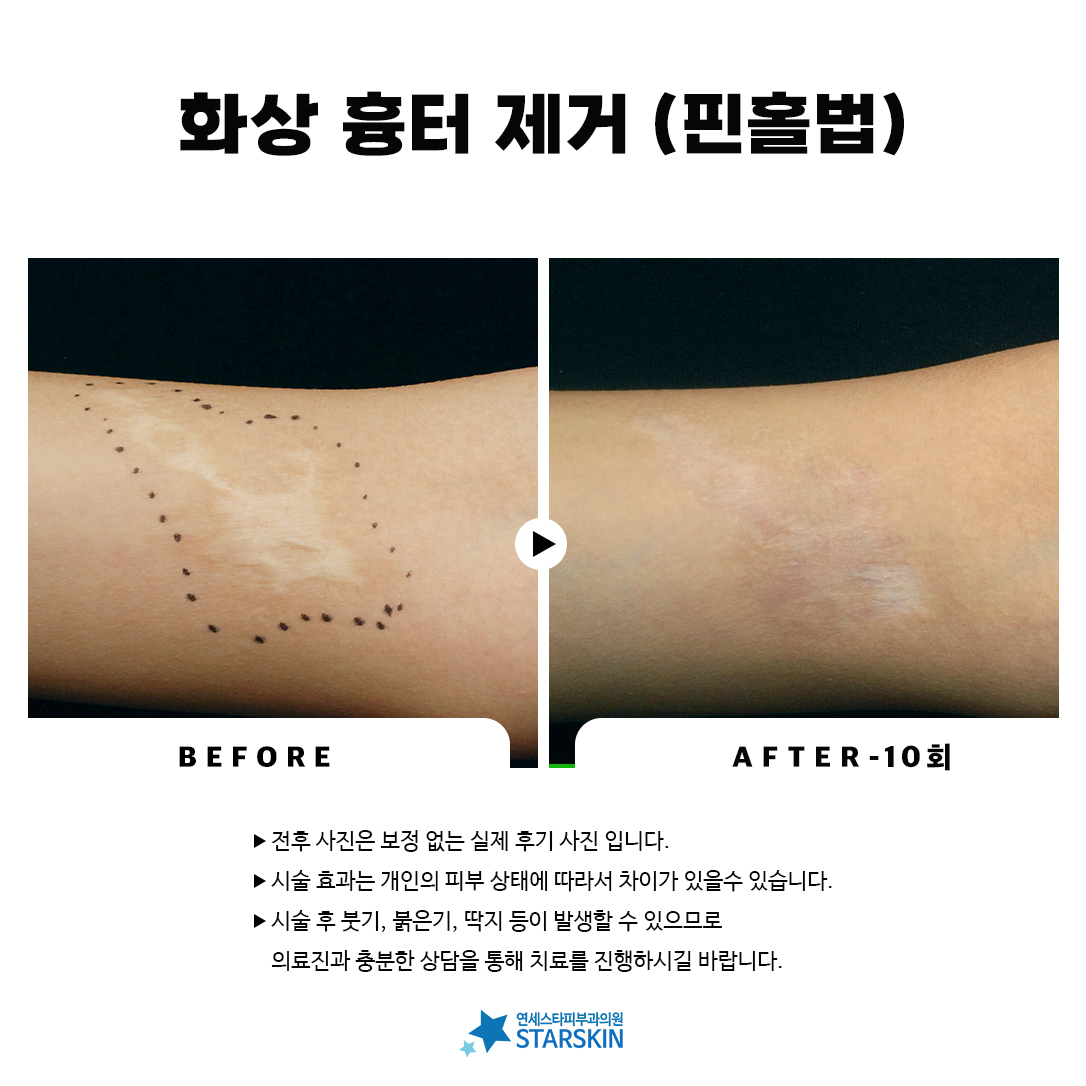
While there are individual differences depending on skin regeneration capabilities and scar size, old burn scars often require a minimum of 5 to 10 or more treatments. Among current treatment methods, there is no way to restore the skin to its exact previous state, and results may vary from person to person.
However, consistent repeated treatments have been reported to gradually improve color, thickness, and lumpiness. Before any treatment plan, a dermatologist will conduct a one-on-one consultation to assess the scar condition and adjust the number of sessions.
| Category | General Progression |
|---|---|
| Treatment Interval | Repeated at regular intervals according to scar recovery status |
| Recommended Sessions | Consider 5 or more sessions for old burn scars |
| Concurrent Treatment | Review concurrent scar injections for thick, raised areas |
| Evaluation Point | Check changes in color, thickness, and texture at each session |
Home Care to Consider
Daily care is also important to maintain treatment effects. We recommend taking care of the following:
- Apply sufficient sunscreen to reduce pigmentation
- Avoid scratching or rubbing the treated area vigorously
- Maintain consistent moisturizing to prevent dryness
- If new scabs or oozing appear, seek medical attention instead of self-treating
Scars are also sensitive to pigment changes, so neglecting UV protection can cause the improved skin tone to darken again.
Other Scar Concerns Can Also Be Addressed
In addition to burn scars, if you are curious about burn scar symptoms and treatment directions, or if you have deep, pulling scars like surgical scars, Surgical Scar Revision may be considered concurrently. Since the appropriate method varies depending on the type and depth of the scar, it is better to assess the condition first rather than assuming a single approach.
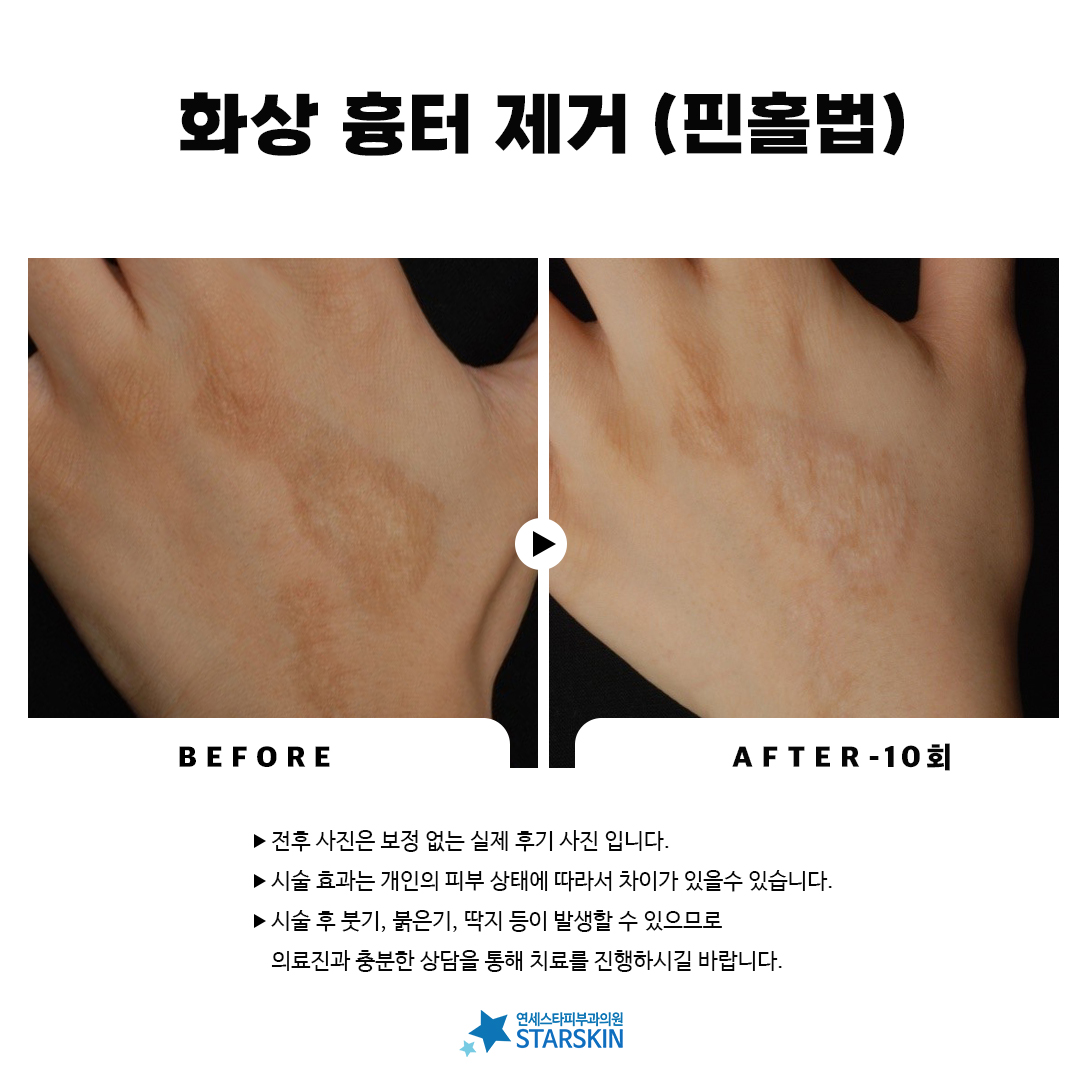
Based on over 20 years of clinical experience in scar treatment, Yonsei Star Dermatology Sinchon provides customized treatment tailored to individual symptoms. Even for the same burn scar, the area, depth, and color vary, so the key is to create a plan that suits the condition, rather than a uniform method.

Even for burn scars that you've hesitated about for a long time, change begins with assessing your current condition.
💬 Chat for a consultation nowChief Director Lee Sang-ju (MD, PhD, Yonsei University College of Medicine and Graduate School, completed dermatology residency at Severance Hospital, President of the Korean Dermatological Association) Chief Director Lee Sang-ju's Profile First published 2024-01-29 / Last reviewed 2026-06-16
This content provides general information for understanding, and the condition and recovery patterns of scars vary from person to person. Please confirm an accurate diagnosis and treatment plan through consultation with medical staff.