

Chickenpox suffered in childhood can sometimes leave depressed scars on the forehead or central face that do not disappear even after a long time. The first question that comes to mind is simple: "Can such old chickenpox scars be treated now?" To answer directly, treatment is possible, though it is more challenging and takes longer than treating early scars.

Why Do Chickenpox Scars Remain Depressed?
Chickenpox is one of the highly contagious infectious diseases commonly contracted in childhood. The problem arises after a severe bout. If skin damage occurs after chickenpox virus infection and the dermal layer is also damaged, it can result in deeply depressed scars on the central face.

Since these scars remain in the middle of the face, patients inevitably experience significant stress. Similar to depressed acne scars, which are caused by the same mechanism of skin depression, the key is that these scars cannot be resolved by merely making the surface appear smooth.
The Sooner, The Better: Early Scar Prevention Treatment
Chickenpox scar treatment can begin once the scabs have fallen off and there is no more oozing. As with other scars, the earlier the treatment, the better the results.

If scar prevention treatment with lasers or injections is performed during the early scar stage, immediately after the wound has healed, the depth of chickenpox scars can be minimized. Intervening before the scar fully forms can reduce the burden of future treatments.
Old Adult Chickenpox Scars: Is It Really Too Late?
Many people carry chickenpox scars from childhood into adulthood. The most common question these individuals ask is, "Isn't it too late to do anything about old scars?"

In the clinic, old chickenpox scars are more challenging to treat and take longer than early scars, but they are not impossible to treat. Repeated treatments can lead to significant improvement over the current state. Since there can be individual differences, it is important to first examine the depth and extent of the scar.
The approach varies depending on the nature of the scar.
| Scar Type | Characteristics | Treatment Direction |
|---|---|---|
| Early Scar | Immediately after wound healing, not yet established | Scar prevention treatment with laser or injection |
| Old Depressed Scar | Dermal fibrous tissue pulls the skin | Subcision to release tension, then laser |
| Scar with Prominent Edges | Significant height difference with normal skin | Erbium YAG laser to refine edges |
For deep and old scars, surgical approaches such as Surgical Scar Revision, which addresses scar tissue surgically, may also be considered.
If you have any questions about whether the scar treatment direction is suitable for your case, you can easily ask through chat consultation regarding chickenpox scar treatment.
Limitations of Traditional Laser Resurfacing
In the past, laser resurfacing was frequently used to remove chickenpox scars.

While laser resurfacing was used to fill severely depressed scars, it was reported to have drawbacks such as severe redness and a slight widening of the scar area after the procedure. This background highlighted the need for methods to compensate for these limitations.
Combination Treatment with Subcision and Erbium YAG Laser
Yonsei Star Dermatology Sinchon research team once introduced a method to improve chickenpox scars in an SCI international journal. This method combines subcision and erbium YAG laser to compensate for the shortcomings of existing treatments.

The treatment sequence can be summarized as follows:
- Subcision is used to cut the fibrous tissue scars that are pulling the skin downwards.
- Approximately one month is waited for the area where the tissue was cut to fill in.
- Once the depressed area has filled in to some extent, an erbium YAG laser is used to delicately ablate the edges of the scar.
- The depressed skin is refined to become similar in height to the surrounding normal skin.
It is reported that subcision, by first cutting the fibrous tissue that pulls the scar, is the starting point for treating depressed scars, and the erbium YAG laser plays a role in reducing the height difference during the refinement stage.
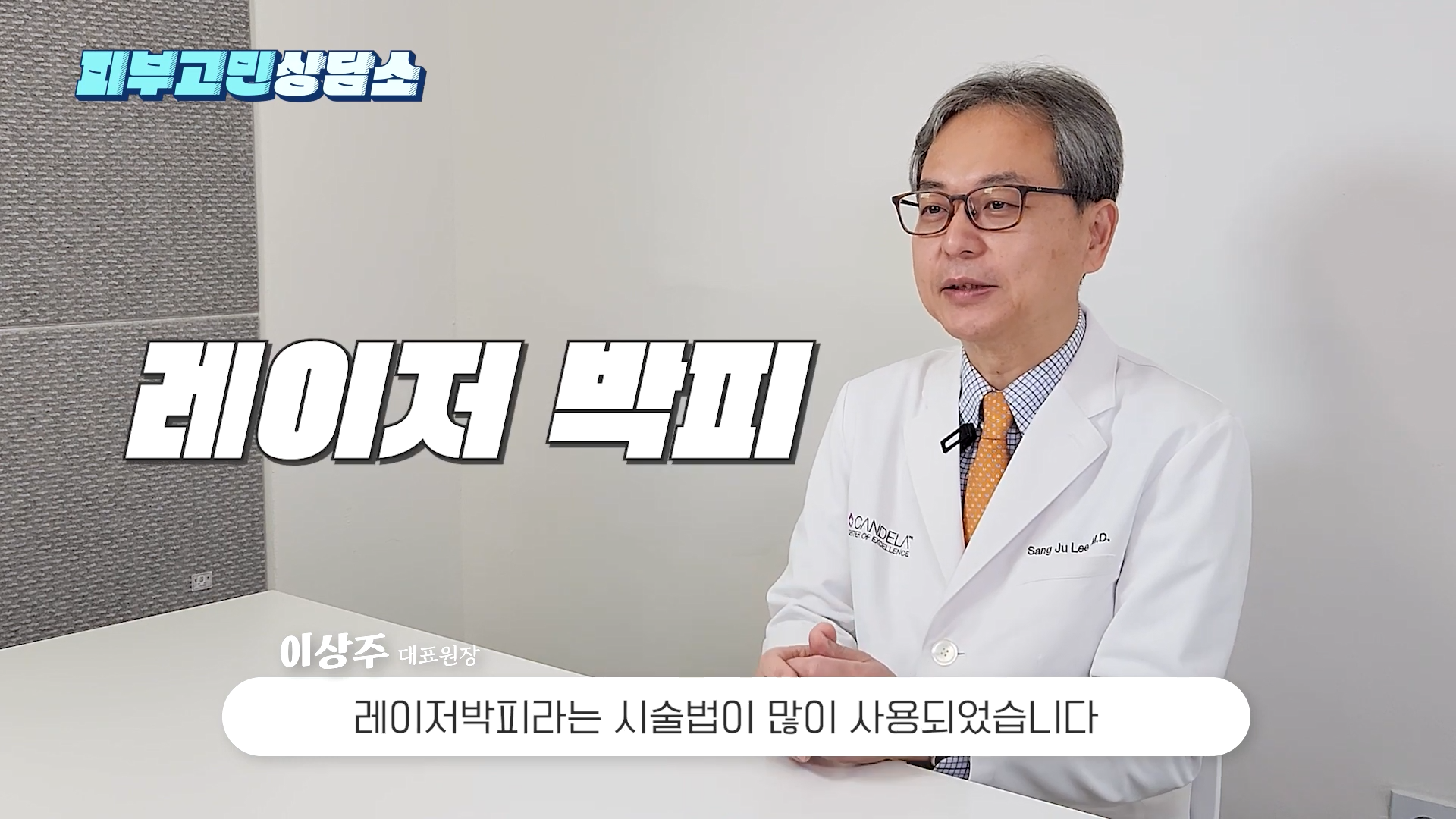
When the edges are refined with a 29040nm wavelength erbium YAG laser, the skin depressed by chickenpox becomes similar in height to normal skin, which can lead to satisfactory results. A similar principle applies to scars with clear height differences, such as surgical scars or cosmetic surgery scars.
Things to Know Before Treatment
Immediately after the procedure, bruising or slight erythema may appear.
It is helpful to check the following points in advance when planning your treatment:
- If you have an important appointment or meeting within a week after the procedure, it is advisable to postpone the treatment slightly.
- Repeated treatments are required at one-month intervals, for a minimum of 5 sessions or more.
- It is generally reported that repeated treatments lead to over 70% improvement, and the degree of improvement may vary individually.
- It is reported that the improved areas from combination treatment tend to maintain without chickenpox scars recurring in the same spot.
Conclusion
Today, we looked at the treatment direction for old adult chickenpox scars. Even if chickenpox was commonly suffered in childhood, if it left deeply depressed scars, improvement can be expected through a combination of subcision and erbium YAG laser. Since the condition of scars varies from person to person, establishing a personalized plan is the first step.
If you have been hesitant due to old scars, please check your current condition through chat consultation regarding adult chickenpox scars.
Chief Director Dr. Sang-Joo Lee (MD, PhD, Yonsei University College of Medicine and Graduate School, Completed Dermatology Residency at Severance Hospital, President of the Korean Dermatological Association) Chief Director Dr. Sang-Joo Lee Profile First Published 2024-06-20 / Last Reviewed 2026-06-16
This article is for general information purposes only. The depth and condition of scars vary for each individual, so please consult with medical staff for an accurate diagnosis and treatment plan.