

Hard Lump on Your Ear After Piercing, Could It Be a Keloid?
Piercing is a way to express individuality, but for some, unexpected side effects like piercing keloids can occur. As the ear is the most common site for piercings, many people visit us concerned about hard, raised lumps, contemplating Triamcinolone Scar Injection or surgical treatment for ear keloids.
Initial questions are generally similar: “Is this just a scar, or is it a keloid?” A keloid is known as a scar where scar tissue grows excessively beyond the original wound boundaries. Even if it starts as a small bean-sized lump, over time it can lead to pain, itching, and enlargement, potentially deforming the ear. Therefore, it is advisable to assess the progression of keloid scars as quickly and accurately as possible.
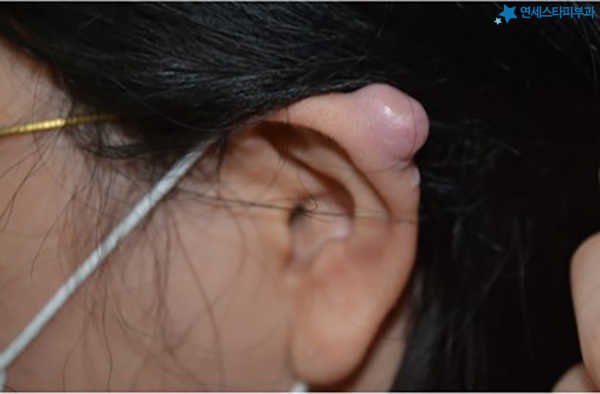
Why Do Keloids Form After Piercing?
Keloids are scar tissues that result from excessive collagen proliferation in damaged skin areas, beyond what is typical for normal scars. Although piercing involves making a small hole, the skin perceives it as a wound, initiating the wound healing process. If tissue grows excessively during this healing process, what is commonly known as a piercing keloid can appear.
Especially in areas like the ear, where cartilage and thin skin meet, blood circulation is limited, which is reported to increase the likelihood of keloid formation. In the clinic, it is not uncommon to see patients who have experienced a keloid on one ear complain of similar lumps at a piercing site on the other ear.
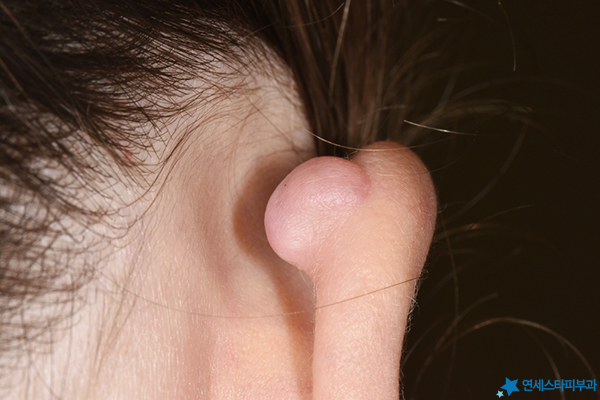
It is more accurate to understand keloids not merely as a cosmetic issue, but as complex scars intertwined with constitutional characteristics and the skin's healing process.
Keloid Treatment: How Do Injections and Surgery Differ?
Keloid treatment primarily involves Triamcinolone Scar Injection and surgical removal. These two methods differ in their underlying principles.
Surgical removal involves directly excising the keloid tissue. While it offers an immediate reduction in volume, the recurrence rate is relatively high, which may lead to dissatisfaction with the cost-benefit.
Generally, treatment to reduce the raised area and lower its height is performed through Triamcinolone Scar Injection. Injections aim to gradually reduce the size of the scar tissue itself.

| Category | Triamcinolone Scar Injection | Surgical Removal |
|---|---|---|
| Principle | Scar tissue volume reduction | Direct excision of keloid tissue |
| Effect Onset | Gradual | Immediate |
| Characteristics | Repeated treatments, height reduction | Requires recurrence management after removal |
If you have questions, contact us for a chat consultation on choosing between keloid injections and surgery.
What Changes When Laser Treatment is Combined?
Another method for removing ear keloids involves using a laser to excise and remove the raised keloid tissue. Unlike general scar laser treatments that are performed repeatedly, this approach uses an excision method, allowing for relatively quick confirmation of piercing keloid removal effects.
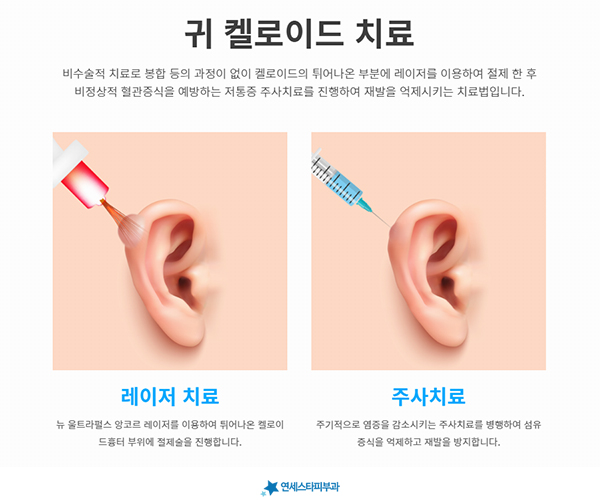
While the immediate removal effect is similar to surgical methods, this approach combines it with Triamcinolone Scar Injection to help maintain the effect and reduce recurrence rates. Triamcinolone Scar Injection, which reduces scar size, and laser treatment, which prevents the development of larger scars, each have their own characteristics. Recently, combining both methods is often preferred over using keloid injections alone.
The characteristics of the combined approach can be summarized as follows:
- Excises raised tissue to quickly reduce volume
- Manages recurrence risk by adding injections
- Post-treatment course is reported to be relatively stable
- Tendency for longer duration of results
- Number and interval of treatments adjusted based on scar condition

Can I Get a Piercing Again After Keloid Treatment?
Many people wonder if they can get a piercing again after keloid treatment. To put it simply, careful consideration is needed.

Keloids have a constitutional tendency. This means that once they have formed, there is a high possibility of them recurring in the same or other areas. If you have already experienced a keloid on your ear, there is a risk of recurrence in the same spot even after treatment. Therefore, even if you strongly wish to get another piercing for cosmetic reasons, it is safer to consult with a specialist to assess the risks before making a decision on your own.
Here are some items to check before considering another piercing:
- Has the previous keloid sufficiently stabilized?
- Is there a history of recurrence in the same area?
- Is there a family history of keloid tendency?
- Were there any signs of change, such as pain or itching, after the procedure?

If the scar is different in nature from a keloid, for example, a surgical scar, approaches such as refining the texture of cosmetic surgery scars or Surgical Scar Revision may be considered. Even if scars appear similar, if their cause and progression differ, the treatment strategy will also differ.
In Summary
Piercing keloids are scars where constitution and the healing process interact. Even if they start small, pain or changes in size may accompany them. Therefore, it is advisable to get an accurate early assessment and, together with medical staff, determine the appropriate course of treatment among injections, surgery, or combined laser treatment, based on your condition.

Sang-Joo Lee, Chief Director (MD, PhD, Yonsei University College of Medicine and Graduate School, completed dermatology residency at Severance Hospital, President of the Korean Dermatological Association) Chief Director Sang-Joo Lee Profile First published 2025-09-18 / Last reviewed 2026-06-16 Treatment results and recurrence possibilities may vary depending on individual constitution and scar condition. Please confirm accurate diagnosis and treatment direction through consultation with medical staff.