

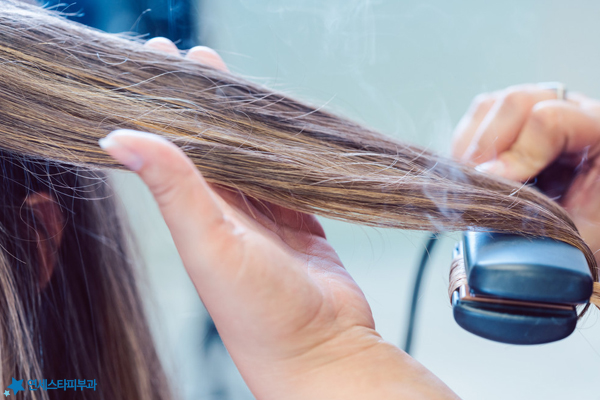
Burns caused by hot hair iron plates touching the skin are more common than one might think. At the moment of the burn, it's easy to dismiss it, thinking "it will subside quickly," but the first question patients often ask is, "Will this mark remain as a scar?" To put it simply, if the management timing is missed, burns can lead to burn scars, and early intervention is especially crucial for frequently exposed areas like the face or neck.
As these can remain as bothersome marks for a long time, beyond simple cosmetic issues, it's better to approach them according to their condition rather than taking them lightly.
Immediately After the Burn, Should Blisters Be Popped?
One of the most frequently asked questions is about blister management. Blisters are more like a protective barrier that our body creates to shield the damaged area from the external environment. It is more beneficial not to intentionally pop them and to avoid irritating them until they disappear naturally, which helps prevent them from developing into larger burn scars.
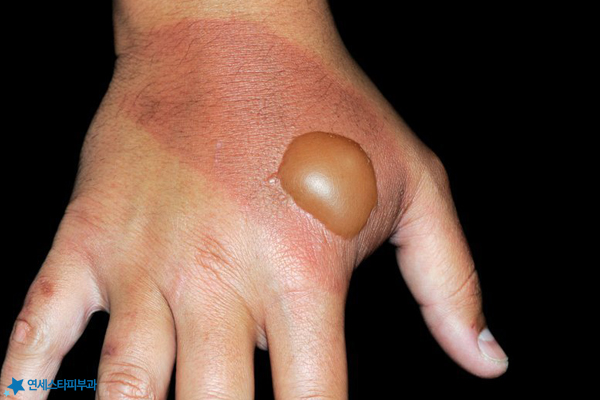
If a blister pops, the risk of infection increases, and it can lead to post-inflammatory hyperpigmentation, so caution is needed. Here are the points to observe initially:
- Do not intentionally pop blisters; let them subside naturally.
- Keep the affected area clean and avoid touching or scratching it with your hands.
- Block UV rays, as direct sun exposure increases the risk of pigmentation.
- If redness or pain persists for a long time, do not rely solely on self-treatment; seek medical consultation.
Will Red Marks Disappear Over Time?
It's common for burned areas to remain red. Some may fade over time, but if the vasodilatory response persists, the redness can linger. In the early stages of a burn, a vascular reaction causing skin redness appears first. If this redness stage is not improved and time passes, differences in skin texture or prominent marks can harden into old scars.
Burn scar treatment approaches differ between the redness stage and the hardened white scar stage, so identifying which stage your skin is currently in is the starting point of treatment.
Therefore, even for marks caused by hair irons, it is advisable to assess the condition early and consider professional treatment if necessary.
Is Ointment Alone Sufficient?
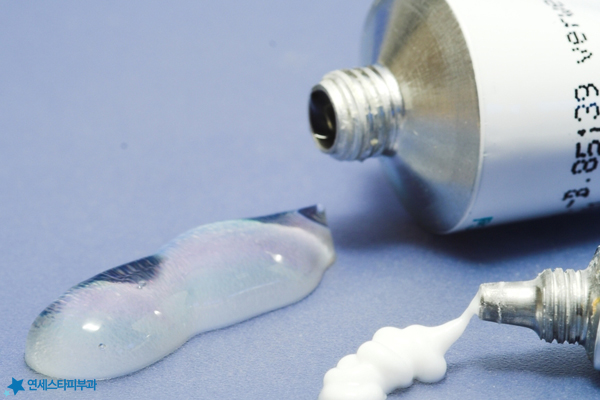
Many people ask if continuously applying ointment will be enough. If the damage is minor or in the early stage of scarring, it may offer some help. However, if the burn is a deep second-degree burn or worse, with existing damage to the dermis, it's necessary to boost the skin's regenerative capacity, and ointment alone may not show significant changes. In such cases, additional treatment may be required.
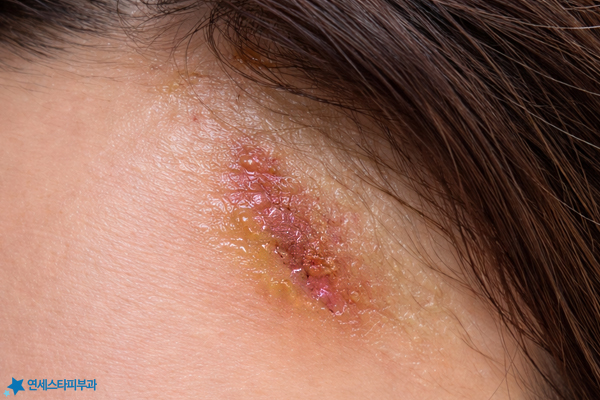
Thus, the extent of recovery with self-care varies depending on the depth of the damage. In clinical practice, even with the same hair iron burn, the progress varies depending on the time of the burn, its depth, and location.
Treatment Directions Vary by Stage
Burn scar treatment approaches the condition by dividing it into stages. The table below summarizes the general directions according to the timing, but actual plans may vary individually.
| Stage | Skin Condition | Approach Direction |
|---|---|---|
| Early Redness | Appears red due to vascular reaction | Laser selectively targeting blood vessels |
| Pigmentation Stage | Brown or dull marks | Pigment-focused management |
| Hardened Scar | Shiny or altered texture | Skin regeneration-focused approach |
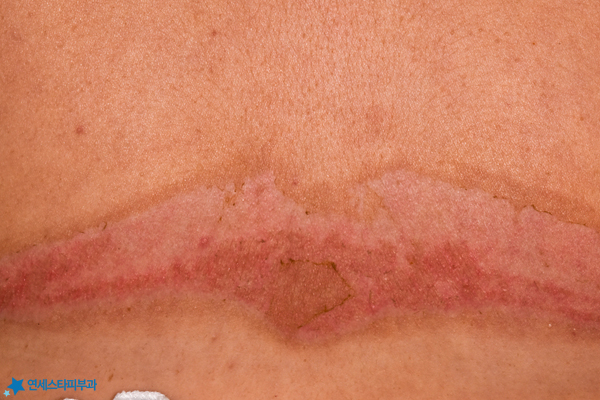
In the early vascular reaction phase, lasers that selectively target blood vessels may be helpful. Since the plan must be formulated by comprehensively considering various factors such as the individual's skin condition, the extent and location of the burn scar, a thorough assessment of the condition is necessary before starting.
If you have any questions about the burned area, you can comfortably leave them via chat consultation regarding burn scar treatment.
For Hardened Scars, a Regeneration-Focused Approach is Used
When natural recovery reaches its limit over time, marks can remain with an altered skin texture, such as an unusually shiny appearance compared to normal skin. At this stage, a regeneration-focused approach is needed, rather than just pigment treatment to restore skin color.
Methods that activate deep skin regeneration using high-output energy, such as StarLux and Ultrapulse Alpha, are utilized. Combining laser equipment with treatment methods like Pinhole Technique can facilitate regeneration more smoothly.

Pinhole for Burn & Surgical Scar is a treatment method used to improve burn scars, and it is currently one of the frequently used methods as it can bring positive changes to various other types of scars. It provides micro-thermal stimulation to the skin's depth, aiding collagen remodeling and activating skin regeneration. Depending on the depth and extent of the scar, treatments with adjusted output and methods, such as Pinhole Alpha, may also be considered.
This can lead to gradual improvement in skin texture or color even for old burn scars, and positive changes can be expected in alleviating depressed or prominently bordered scars.
What About Treatment Sessions and Recovery?
Pain varies individually, but it is usually managed with topical anesthetic cream. The number of treatment sessions depends on the depth, color, and timing of the scar. The most important aspect of scar treatment, including burns, is regenerative capacity, and it typically involves 5 or more sessions, sometimes over 10 sessions, with intervals of 1 to 2 months.
This method allows for an easy return to daily life after treatment. However, to achieve satisfactory improvement of scar marks, repeated treatments are necessary, so it is advisable to proceed safely with consistent recovery periods, rather than setting treatment intervals too short.
Aiming for Gradual Improvement
In daily life, it's not uncommon to handle hot objects for short moments, not just hair irons. Even seemingly minor accidents can result in burn scars if factors like skin condition or daily health overlap.
Laser treatment for burn scars is a commonly used method. Scar treatment often aims for gradual improvement rather than complete disappearance in a short period, and instead of expecting change in one go, it approaches making the marks less noticeable in daily life through repetitive treatments.
Here are some items to check yourself before starting treatment:
- When did the burn occur, and what stage is it currently in (redness, pigmentation, hardened scar)?
- Were there any blisters that popped or signs of infection?
- Are the marks fading, or becoming more prominent?
- Do you notice any changes with self-care (e.g., ointment)?
Hair iron burns may seem minor, but they can lead to scars depending on the management timing. Especially since the treatment approach differs based on color and form, such as the redness stage and white scars, accurately assessing the current condition is paramount.
If a dull mark has not disappeared after a considerable time, or if damage such as popped blisters has not recovered, you may consider using chat consultation to check burn scar stage to discuss what stage it is in.


Sang-Joo Lee, Chief Director (MD, PhD, Yonsei University College of Medicine & Graduate School, Dermatology Resident at Severance Hospital, President of Korean Society for Dermatology) Chief Director Sang-Joo Lee's Profile First published 2026-03-24 / Last reviewed 2026-06-16
This article is for general information purposes only, and treatment effects and progress may vary individually. Please confirm accurate diagnosis and treatment direction through consultation with medical staff.