
![Can Cosmetic Surgery Scars Be Treated Without Reoperation? Laser Treatment Timing and Methods [Yonsei Star Dermatology Sinchon]](/_next/image?url=https%3A%2F%2Fagqdgbuateknhwpocrgu.supabase.co%2Fstorage%2Fv1%2Fobject%2Fpublic%2Fsources%2Fbbf3bebe-45b6-4415-bd04-bda18b2cac0f%2Fblog-images%2F224188385834_00_39717a721266.jpg%3Ftype%3Dw966&w=3840&q=75)
Many people suffer from emotional distress due to scar marks remaining after cosmetic surgery, contrary to their expectations. Scars can appear as redness, slight elevation, or darkening of color, regardless of the surgical site, such as eyes, nose, facial contours, or breasts. The first question that usually comes to mind is: Do these scars necessarily require reoperation to improve? To conclude, not all cosmetic surgery scars require reoperation, and improvement can be expected with laser treatment tailored to the scar type.
Why do cosmetic surgery scars form, and what do they look like?
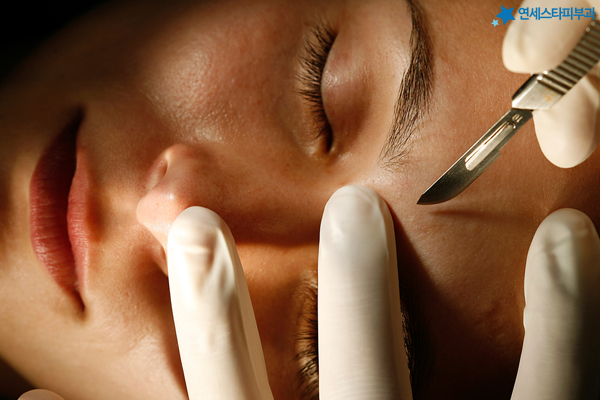
When the skin is incised, our body responds by dilating blood vessels and producing collagen to heal the wound. The color and shape of the scar vary depending on where and how actively this healing process occurred. In the clinic, even for surgery on the same area, the healing pattern can differ significantly from person to person.
Scars after cosmetic surgery are broadly categorized into three types:
- Red scars (vascular scars), where blood vessel proliferation is active during the wound healing process
- Raised scars (hypertrophic scars), where collagen has proliferated excessively
- Darkened scars (pigmentation), where pigment remains after inflammation has subsided
Some scars may fade over time. However, if left untreated, their shape can solidify, so it is advisable to examine the scar type and approach treatment at an appropriate time. Even for the same scar, understanding the principles and management of cosmetic surgery scars first can make it much easier to determine the treatment direction.
If reoperation is a burden, laser is an option
Reoperation, which involves re-incising and suturing the scar, entails a significant recovery burden and the possibility of new scars forming. Therefore, selecting laser equipment tailored to the scar type has recently gained attention.
From early scars with redness to older scars that are raised and whitish, choosing equipment suitable for the symptoms can help naturally refine the marks while minimizing unnecessary irritation. This is a step-by-step approach rather than an aggressive reoperation.
The essence of scar treatment is not to eliminate the scar all at once, but to approach it according to its type and timing.
How do lasers differ by scar type?
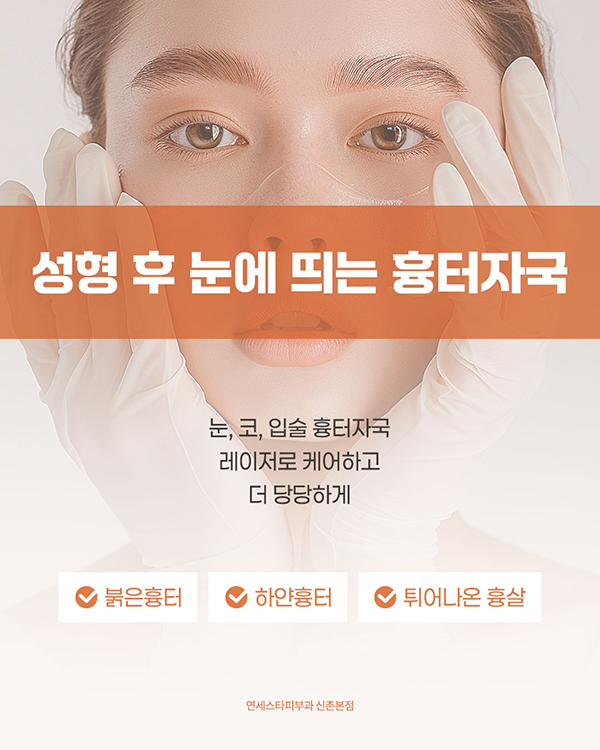
For red scars, Vbeam Prima, which selectively acts on blood vessels, is considered. This device can help alleviate redness by targeting blood vessels and suppress scar progression. It is often considered for use after 2-4 weeks post-surgery, once the wound has stabilized. If the timing is missed by simply considering it a minor wound, it can develop into a difficult-to-treat scar, but even in this case, gradual improvement can be expected with regenerative lasers.
For raised scars, Ultrapulse Alpha, a fractional CO2 method, is used. This method induces the rearrangement of abnormal collagen structures in the deep layers of the skin with a microscopic beam. It is considered for application after 2-3 months post-surgery, once the scar has stabilized to some extent.
For dark scar marks, i.e., brown or black pigmentation, PicoWay, which uses short picosecond pulses, is utilized. This method finely breaks down pigment particles and is known as a device that aims to improve pigmentation while reducing the burden on surrounding tissues compared to conventional nanosecond lasers.
| Scar Type | Laser Used | Purpose |
|---|---|---|
| Red Scars | Vbeam Prima | Vascular target, redness reduction |
| Raised Scars | Ultrapulse Alpha | Induce collagen rearrangement |
| Dark Pigmented Scars | PicoWay | Pigment breakdown, minimal tissue burden |
Similar principles apply to red acne scar management and depressed acne scar treatment, approaching them according to their type.
You can also comfortably leave any questions via chat consultation for cosmetic surgery scar laser treatment.
Scars require different approaches at different times

It is important to remember that scars require different approaches at different times. The process for naturally refining marks after cosmetic surgery is as follows:
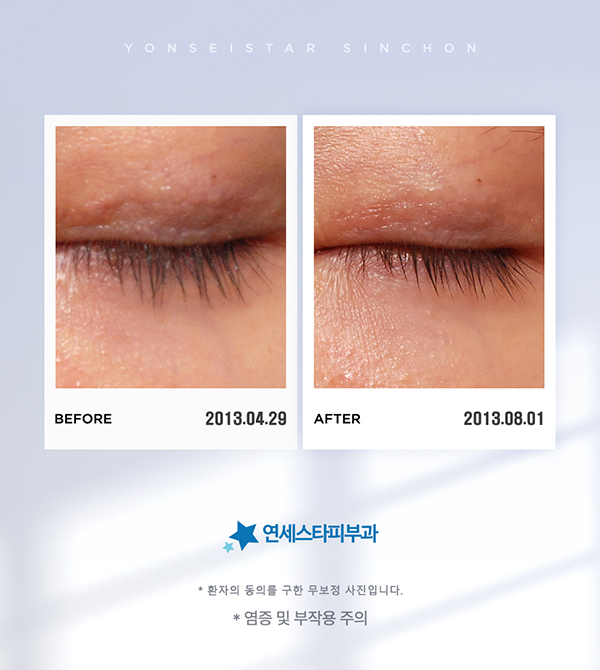
- Immediately after suture removal, observe the progress first.
- If redness persists, consider vascular laser treatment.
- If unevenness remains after 2-3 months, consider fractional laser treatment.
- If pigmentation remains, consider Pico laser treatment.
Is faster always better?

If too much time passes, the treatment process tends to be longer. However, faster is not always better. To treat scars, the wound must first heal well and recover, so immediately after surgery, it is a priority to rest sufficiently. Combining equipment according to the scar type after the foundation for recovery has been established leads to more natural improvement.
Without reoperation, step by step

Early management of cosmetic surgery scars can help reduce their progression, and different laser approaches are needed depending on the type. More and more people are seeking gradual improvement with non-surgical treatments instead of aggressive reoperation, and a step-by-step plan combining equipment according to the scar type is becoming established.
However, treatment methods can vary from person to person depending on the scar condition and skin characteristics. If you have similar concerns, Surgical Scar Revision may be more suitable, so we recommend consulting with a specialist to create a plan that is right for you, rather than self-diagnosing.
If you need detailed consultation, 💬 Consult now
Representative Director Lee Sang-joo (MD, PhD, Yonsei University College of Medicine and Graduate School, completed dermatology residency at Severance Hospital, President of the Korean Dermatological Association) Representative Director Lee Sang-joo's Profile First published 2026-02-19 / Last reviewed 2026-06-16
Treatment results and recovery patterns may vary from person to person, so please consult directly with medical staff in the examination room for an accurate diagnosis.