
![Can Cleft Lip and Palate Surgical Scars and Philtrum Scars Be Improved with Laser Treatment? | [Yonsei Star Dermatology Sinchon]](/_next/image?url=https%3A%2F%2Fagqdgbuateknhwpocrgu.supabase.co%2Fstorage%2Fv1%2Fobject%2Fpublic%2Fsources%2Fbbf3bebe-45b6-4415-bd04-bda18b2cac0f%2Fblog-images%2F223978536975_00_24d85011b78a.jpg%3Ftype%3Dw966&w=3840&q=75)
The philtrum is located in the center of the face, making even small scars easily noticeable. If a scar from childhood cleft lip and palate surgery remains on the philtrum, the first question that comes to mind is often, "Can this scar also be lightened with a laser?" To answer directly, you can certainly expect improvement with laser treatment tailored to the cause and condition of the scar.
What is Cleft Lip and Palate, and Why Does It Occur?
Cleft lip and palate refers to a congenital condition where the lip or palate is not fully joined and is split. While the name might sound rare, it is actually one of the relatively common congenital conditions reported.
The background of its occurrence is broadly divided into two categories:
- Genetic factors. It is reported that the likelihood of developing the condition increases if parents or family members have a history of it.
- Environmental factors. Nutritional imbalance, medication, smoking, and alcohol consumption during early pregnancy can have an influence.
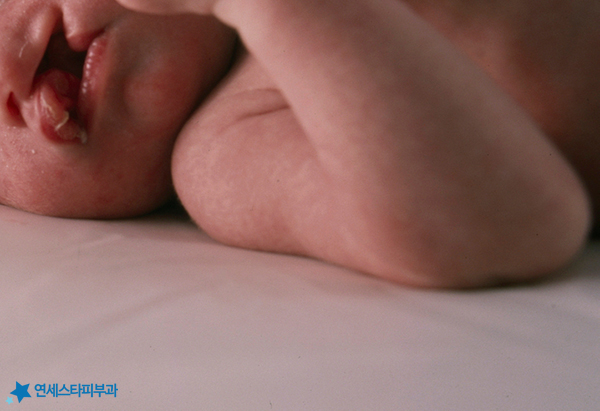
Most surgeries are performed in childhood to resolve functional and aesthetic issues. However, in many cases, the appearance of a scar on the philtrum after surgery leads to new concerns.
What Do Scars Remaining on the Philtrum After Surgery Look Like?
The most commonly discussed issue after cleft lip and palate surgery is the noticeable philtrum scar. The philtrum is slightly protruding and directly exposed to light, so a scar of the same depth may appear more prominent there than elsewhere.
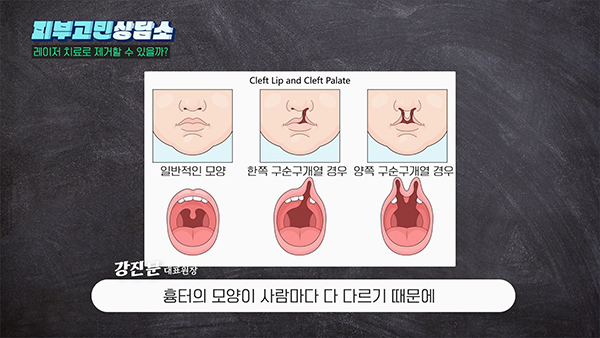
If scar tissue adheres, the lip shape may appear asymmetrical, or unnatural movements may occur in facial expressions when smiling. Such changes can be burdensome, as they can affect not only simple cosmetic discomfort but also self-confidence and social life. If you have similar concerns, examining the principles of surgical scar formation and the process of improving cosmetic surgery scars together may help you understand.
Can Philtrum Scars Be Improved with Laser Treatment?
Yes, it is possible. However, since all scars vary in shape depending on their cause and condition, it is important to choose a clinic that can provide appropriate treatment. It is also better to understand the process as refining the scar to blend naturally with the surrounding skin, rather than "completely erasing the trace."
Remembering that scar treatment is about making the scar resemble the surrounding skin, rather than erasing it, will make it much easier to set the direction of treatment.
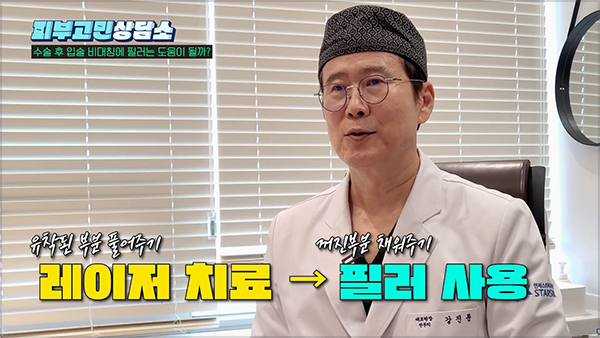
The changes you can expect from laser scar treatment are as follows:
- Alleviation of scar tissue thickness and redness
- Inducing skin regeneration to smooth the surface
- Releasing adhered tissue to restore smooth lip movement
If necessary, filler procedures can be combined to fill in insufficient volume and address lip asymmetry. Surgical Scar Revision to treat hardened scar tissue itself, or methods like RePott Laser to induce regeneration, can also be options depending on the condition.
If you have any questions, please feel free to leave them via chat consultation for philtrum scar laser treatment.
How Does the Approach Differ by Scar Type?
Even for the same philtrum scar, the primary considerations change depending on its characteristics.
| Scar Pattern | Main Characteristics | Primary Consideration |
|---|---|---|
| Predominantly Redness | Surface is red and color is prominent | Laser focused on redness alleviation |
| Indentation, Depression | Surface is sunken, creating shadows | Inducing skin regeneration |
| Adhesion, Pulling | Unnatural lip movement | Loosening adhered tissue, then volume supplementation |
This table is a broad framework to aid understanding, and in reality, various patterns are often mixed, so the combination will be determined through consultation.
When is the Best Time to Start Scar Treatment?

The basic principle of scar treatment is that the earlier it is started, the better the results. This is because older scars tend to harden, making improvement more difficult. Generally, it is considered ideal to start laser treatment once the surgical scar has healed to some extent and skin regeneration has stabilized.
However, even if a scar is old, there is no need to give up. In the clinic, we often see that even long-hardened adhesions can be significantly softened and refined with appropriate laser equipment for regeneration and consistent customized procedures. Since individual results may vary, it is best to consult with a specialist to assess your condition first.
Here are some points to check before starting treatment:
- The time the scar appeared and its changes over time
- Which pattern is prominent: redness, depression, or adhesion
- Whether lip asymmetry or restricted movement is present
- History of previous scar-related procedures

Philtrum Scars: The Change That Consistency Creates
The lips and philtrum are among the most prominent areas in the center of the face. Many people experience additional stress due to cleft lip and palate surgical scars. We will assist you in alleviating and naturally refining scars with consistent laser treatment tailored to your situation, helping to reduce the burden on your daily life.

The scar pattern, treatment timing, and whether to combine procedures vary from person to person. If you are curious about the right approach for your philtrum scar, feel free to ask below.
💬 Consult NowChief Director Lee Sang-joo (MD, PhD, Yonsei University College of Medicine and Graduate School, Completed Dermatology Residency at Severance Hospital, President of the Korean Dermatological Association) Chief Director Lee Sang-joo's Profile First Published 2025-08-21 / Last Reviewed 2026-06-16
This content is for general information purposes only, and treatment responses and results may vary individually. Accurate diagnosis and treatment plans should be determined through consultation with medical staff.