
We often hear stories of satisfaction with breast augmentation results, but a persistent concern about a remaining mark at the incision site.
Even when incisions are made in less visible areas like the armpit, inframammary fold, or areola, it's not uncommon for red lines or raised marks to remain.
If the cause is viewed solely as the incision itself, the management approach will be misguided.
Scars are created by pulling force, not knife marks
When an implant is inserted, that area becomes larger and heavier than its original state. The surrounding skin remains continuously stretched to that extent.
Although the skin has a tendency to heal, if this tension repeatedly acts upon it, no matter how meticulously the sutures are done, the incision line may widen or the scar may thicken.
The more mobile the area, the greater the tension. This is why scars tend to remain relatively easily on the chest area.
In other words, scar management is less about erasing marks and more about reversing the results created by tension.

The optimal time is when redness remains
The most common question we receive is when laser treatment can begin.
Immediately after surgery, the body needs time to recover, and treatment is difficult to start while the wound has not yet healed. Generally, treatment can be approached 1-2 weeks after suture removal.
At this time, the scar still has a reddish color. This means that the tissue is actively reorganizing, and this stage is the most favorable time for intervention.
| Timing | Scar Condition | Approach |
|---|---|---|
| Immediately after surgery | Wound healing | Treatment not possible, prioritize recovery |
| 1-2 weeks after suture removal | Redness, tissue reorganizing | Favorable time to start |
| Several months later | Thickened or hardened white | More sessions and longer duration needed |
What changes if the timing is missed?
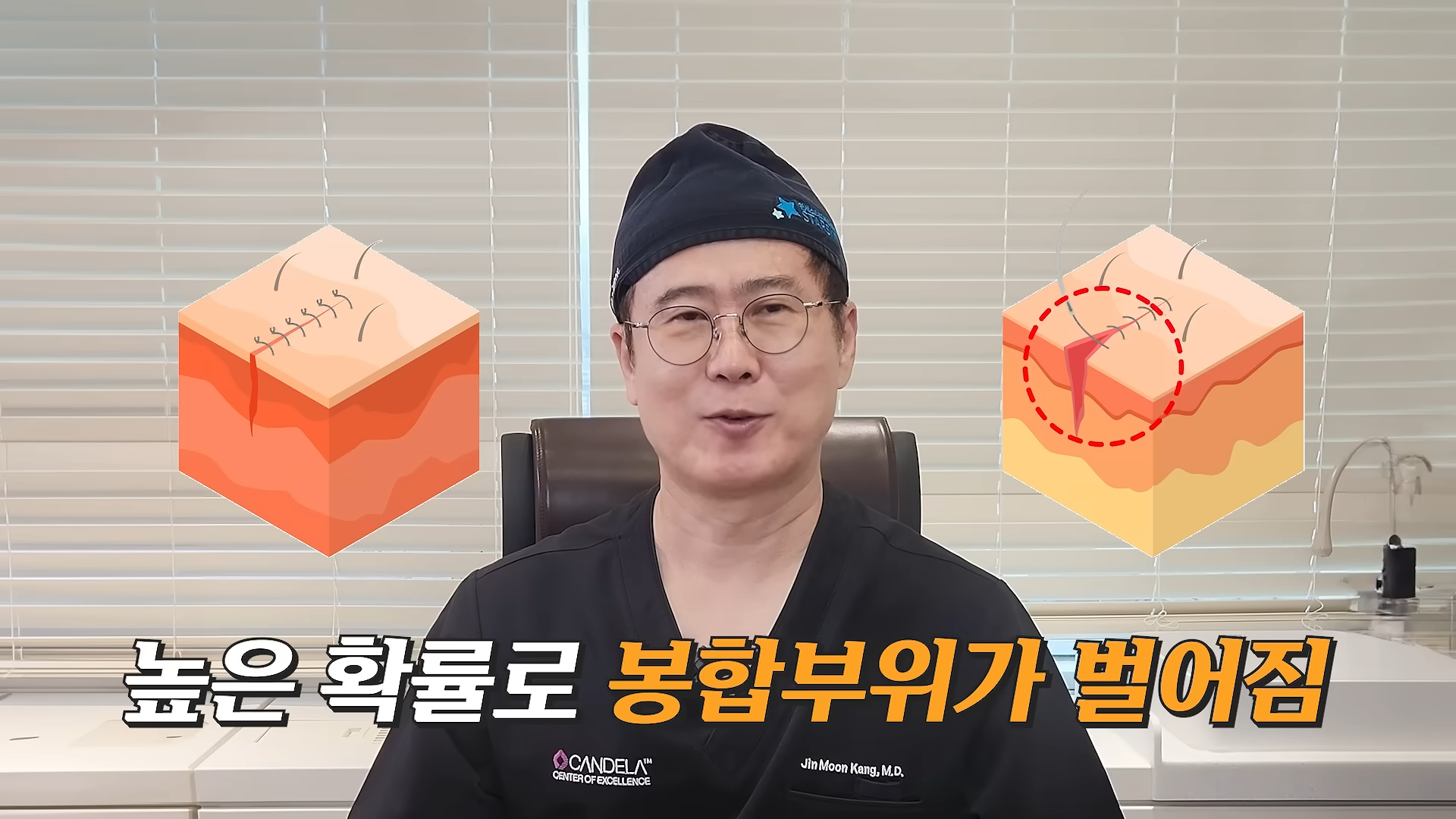
If treatment begins after the scar has fully settled, it will take more sessions and a longer period to achieve the same results.
In the red stage, both color and thickness can be addressed, but after it has hardened white, the tissue itself needs to be reorganized, making the approach more intensive.
The reason it is advantageous to start early is that the direction can be set before the scar hardens.
However, it varies from person to person
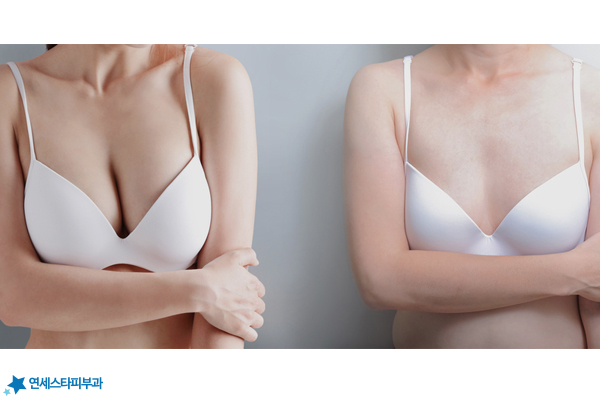
There is significant individual variation in recovery speed and how scars develop. Even if the same surgery is received at the same time, one side may heal thinly while the other remains thick.
If there is a constitutional tendency towards keloids, the approach itself changes.
Therefore, the principle is to determine the starting point by directly checking the scar condition, rather than by the calendar.
In summary
Breast augmentation scars are more a result of the tension created by the implant than a problem with the incision line. If approached in the early stage when redness remains, the direction can be set before it thickens or hardens, and if the timing is missed, it will take longer to achieve the same results.
However, recovery patterns and scar tendencies vary greatly from person to person, so please use check your scar stage through consultation and chat with us to determine which stage your scar is in and when to start.
This article was reviewed by Dr. Lee Sang-Joo (Dermatologist), the lead director. He leads Yonsei Star Dermatology Sinchon and will serve as the president of the Korean Dermatological Association in 2026. First published 2026-08-14 · Last reviewed August 16, 2026
This content provides general medical information, and individual responses to conditions and procedures may vary. Please consult with a doctor to determine treatment eligibility and methods.