
Many people look into eyebrow tattoo removal because their brows have turned reddish or bluish, have blurred, or now look awkward as trends have changed. An eyebrow tattoo is pigment placed inside the skin, so it does not come off with face washing or exfoliation; instead, a laser is used to break the pigment into small pieces so it fades over time. We have put together what to check before getting eyebrow tattoo removal laser treatment in Sinchon, focusing on a comparison of PicoWay and the R0 method.

How Eyebrow Tattoo Removal Lasers Work
An eyebrow tattoo, which is largely semi-permanent in nature, is a procedure that implants pigment within the skin. That is why simply washing it off like makeup or peeling away dead skin will not remove it cleanly.
A tattoo removal laser sends energy into the pigment to shatter the particles into smaller pieces, and the broken pigment is gradually cleared out through the body's metabolic processes. This is why, rather than disappearing on the day of treatment, you watch it fade over time.
How Is PicoWay Different From Other Lasers?
PicoWay is a pico laser device that delivers energy in an extremely short instant measured in picoseconds, or trillionths of a second. It reduces the burden of heat spreading to surrounding tissue and focuses on breaking pigment into fine pieces with an instantaneous shockwave.
Each pigment color responds best to a different wavelength, and a strength of PicoWay is that several wavelengths can be selected within one device. Because we first check the black, brown, or reddish pigment left in the brows and adjust the wavelength and intensity accordingly, eyebrow tattoo removal can be finely tailored to each situation.
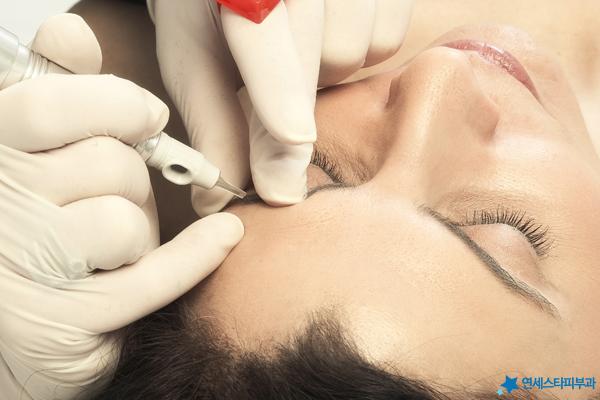
Comparing the R0 Method With the Waiting Method
When the laser hits the pigment, white bubbles rise up on the treated area. This white film blocks the next laser pulse from reaching the pigment, so until the bubbles subsided, it was difficult to fire the laser again at the same spot.
The R0 method quickly clears away the bubbles formed after the laser is fired and then continues laser treatment right away.
| Comparison | Waiting for the bubbles to subside | R0 method |
|---|---|---|
| Bubble handling | Wait until they subside on their own | Quickly cleared with a special solution |
| Repeat treatment on the same day | Limited by the waiting time | Repeated passes while checking the skin condition |
| What to expect | Pigment fades step by step | Eases the burden of the number of sessions |
Using PicoWay, which is well suited to breaking pigment into fine pieces, together with the R0 method allows the pigment to be targeted again within a single visit. With the same goal in mind, this can help reduce the burden of the number of sessions.
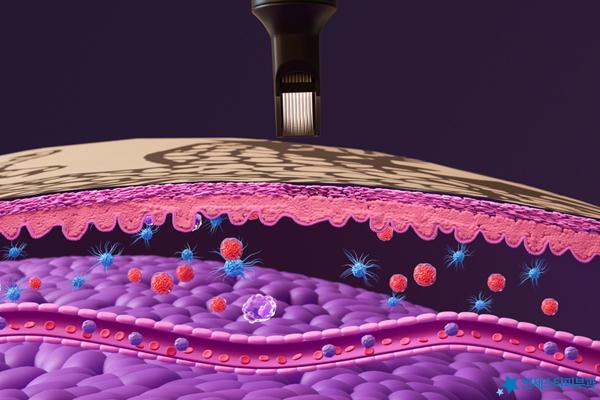
How Many Sessions Does Eyebrow Tattoo Removal Take?
How many sessions are needed depends on the type and amount of pigment, how deep it went, how many touch-ups were done, and how well your skin recovers, so it is hard to say in advance. Nor can we guarantee that no scars or marks will remain. Forcing the intensity up to remove the tattoo faster increases the risk of burns, pigmentation, and scarring, so we proceed step by step, giving the skin time to recover.
Pain, Anesthesia, and Aftercare
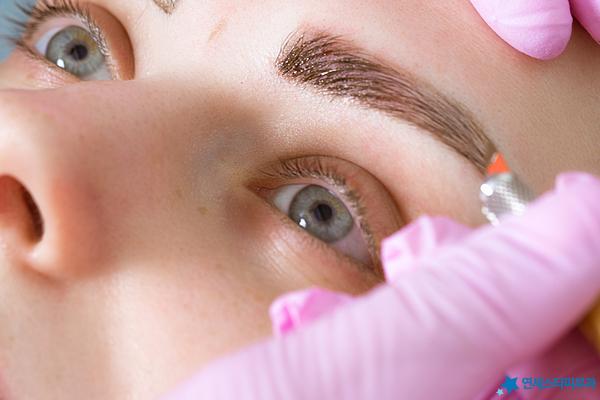
For laser tattoo removal, including on the eyebrows, there are several anesthesia and pain relief options to choose from depending on the situation. Numbing cream or cooling anesthesia with cold air can be used, and if needed, non-sleep sedation using nitrous oxide is also available. Non-sleep sedation is safe because you can talk with the medical staff during the procedure, and its advantage is that you can return to your daily routine right after it ends. Since the degree of pain differs from person to person, discussing any concerns during your consultation in advance can make the treatment more comfortable.
After the procedure, care for the area as follows.
- Apply the prescribed ointment as instructed and moisturize consistently.
- Do not deliberately pick off scabs or pop blisters.
- Use sun protection whenever you go outside.
- Avoid saunas, drinking alcohol, and vigorous face washing while you recover.
- If pain, swelling, or oozing gets worse, or your eyes feel uncomfortable, seek medical care right away.
Frequently Asked Questions
Can an eyebrow tattoo be removed by face washing or exfoliation?
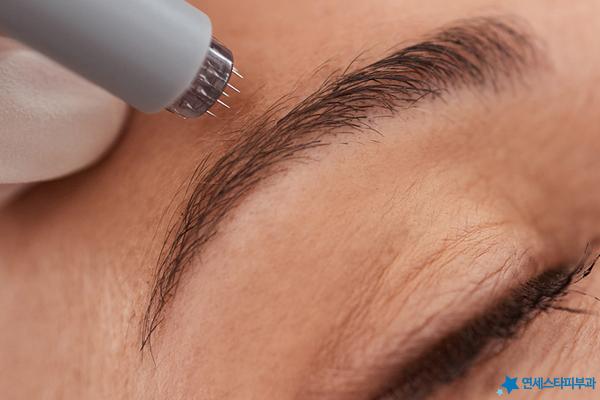
Because the procedure places pigment inside the skin, it is difficult to remove cleanly just by washing or exfoliating. A laser breaks up the pigment, and then you watch it fade over time.
What are the benefits of non-sleep sedation?
Using nitrous oxide, you can communicate with the medical staff during the procedure and return to your daily routine as soon as it is over.
Eyebrow Tattoo Removal Clinic Checklist: Confirm a Board-certified Dermatologist
Eyebrow tattoo removal does not end with simply firing a laser. It requires anticipating how the pigment will respond, setting the intensity to match the skin condition, and handling burns or pigmentation if they occur. That is why it is a good idea to check whether a board-certified dermatologist personally oversees everything from consultation to treatment and aftercare.
If a clinic's sign reads "○○ Dermatology Clinic", it was opened by a board-certified dermatologist. "○○ Clinic" with dermatology listed among its departments is a different designation, so check the doctor's specialist credentials separately.
Eyebrows are close to the eyes, and the ingredients of semi-permanent pigments vary widely, so it is important to examine the pigment and skin condition before removal. Rather than focusing only on removing it quickly, make a step-by-step plan that considers both eye safety and skin recovery. If these are brows you have worried about for a long time, it is best to start with an accurate assessment.
This article was reviewed by Dr. Lee Sang-Joo, Representative Director (board-certified dermatologist). Last reviewed November 29, 2026.
This article is intended to provide general medical information. Treatment results and downtime may vary depending on each individual's skin condition. Please consult a board-certified dermatologist for an accurate diagnosis and treatment plan.