
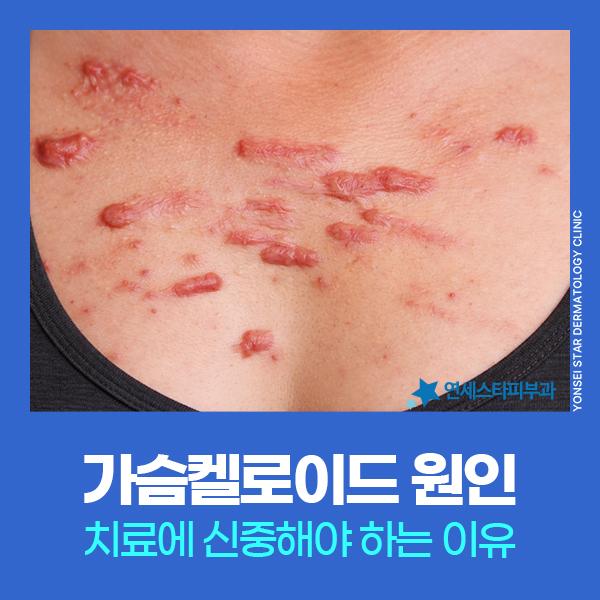
Chest keloids often begin where acne has healed or along a breast surgery incision line, and the order in which removal methods are chosen differs depending on the cause. If, after acne settles or after implant surgery, the area turns red and rises, and months later it spreads wider instead of shrinking and becomes itchy or aches, you should suspect a keloid before assuming it is an ordinary scar. In winter it is easy to put off because the area is hidden under clothing, but once treatment begins there are many things to think about and the process is not a small burden, so many people hesitate. Here we go through, in order, why chest keloids form, why keloid lasers and injections are used together, and what to check before starting treatment.

Chest keloids form when collagen does not stop
When the skin is injured, the body produces collagen to fill the wound. In people prone to keloids, this collagen production does not stop at the amount needed and keeps increasing, spreading beyond the original injury and becoming a scar that bulges above the skin. The causes of chest keloids can be divided into two broad groups.
Acne keloids. When inflammatory acne on the chest, back or jawline damages the skin down to the dermis, an acne keloid can remain as it heals. Habits such as squeezing acne or touching it often add irritation and raise the risk.
Surgical keloids. When an incision is made in the armpit or under the breast to place an implant, the dermis is also damaged. A surgical keloid can form while that area heals, and it commonly stands out as a long, straight red or white line.
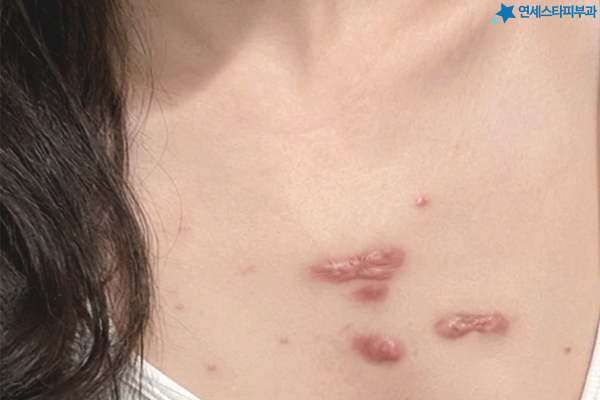
The skin of the chest is thicker than facial skin and has relatively few skin appendages. With every breath, a pulling force repeats on the same spot, so scars easily become prominent. That is why chest keloids are considered harder to manage than scars elsewhere on the body.
How to recognize a keloid scar
A keloid scar grows as if spreading sideways beyond the original injury border, feels hard and raised to the touch, and is red or dark in color. Itching and pain may come with it, and since it rarely disappears on its own with time, consistent care is needed.
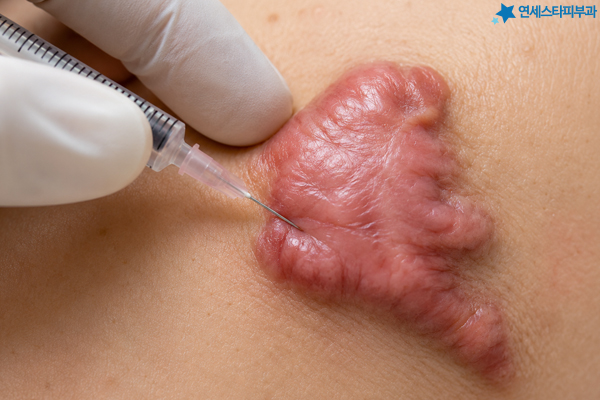
Chest keloid removal methods: why lasers and injections are used together
In keloid scar removal, the goals come down to two. One is lowering the raised height, and the other is calming the redness caused by excessively dilated blood vessels. Keloid lasers and injections are combined in order to address both goals at once.
| Category | Keloid injection | Keloid laser |
|---|---|---|
| Role | Lowering the height of the raised scar | Bringing redness and skin tone closer to the surrounding skin |
| Action | Triamcinolone helps break down excessively increased collagen | Improves blood vessels and color tone to restore skin condition |
Using the two methods together manages height, redness and skin tone at the same time, so a more natural improvement can be expected, although results vary from person to person. With triamcinolone injections, the level of pain and the results differ depending on how the medication is mixed and how it is injected. The chest is an area where injections are quite painful, and more than a few people have stopped treatment partway. Adding low-pain vibration therapy can ease the burden during injections and help you continue to the end.
Four things to check before treatment
Consider non-surgical methods first. Cutting the scar out creates a new wound, and a larger keloid may form there. For this reason, non-surgical care centered on injections and lasers is recommended first as a chest keloid removal method.
Do not miss the window right after surgery. If you have had breast surgery, it is best to begin laser care to prevent scarring from two weeks after the stitches are removed.
Ask how pain is managed. So that you can keep coming regularly throughout the treatment period, it helps to check in advance whether a low-pain injection method is used.
Make a long-term treatment plan. Keloids are treated step by step rather than finished in a single session, and the treatment period and results differ from person to person.
Why it matters who treats your chest keloid
Even under the same name of keloid injection, the way the medication is mixed, the way it is injected and the way pain is handled differ from clinic to clinic, and results can differ as a result. How the laser is combined also changes how much the redness and skin tone recover. If you are troubled by a chest keloid, it is best to first check whether a dermatologist with extensive scar treatment experience diagnoses and treats you in person.
The longer a chest keloid is left alone, the longer the care period may become. Whether the cause is acne or surgery, if a scar has started to rise, consult a dermatologist early and set up a removal method and treatment plan that fit your current condition.
This article was reviewed by Dr. Lee Sang-Joo, Representative Director (board-certified dermatologist). Last reviewed November 23, 2026.
This article is intended to provide general medical information, and treatment results and downtime may vary depending on individual skin condition. Please confirm an accurate diagnosis and treatment plan through a consultation with a dermatologist.