

English phrases or dates tattooed on the wrist, collarbone, or ankle may have once been meaningful choices, but once you decide to remove them, you might be surprised to hear that Tattoo Removal for lettering can take longer than expected. Many people wonder why the number of Tattoo Removal sessions is high even for small letters, or if increasing the intensity can reduce the number of sessions. To put it simply, Tattoo Removal for lettering tends to require more sessions due to ink density, and a gradual laser Tattoo Removal approach, rather than increasing output, is the way to achieve results without Scarring.
This article explains why Tattoo Removal for lettering is challenging, the risks of excessive output, Pinhole for Burn & Surgical Scar management, and the criteria for gradual laser Tattoo Removal.
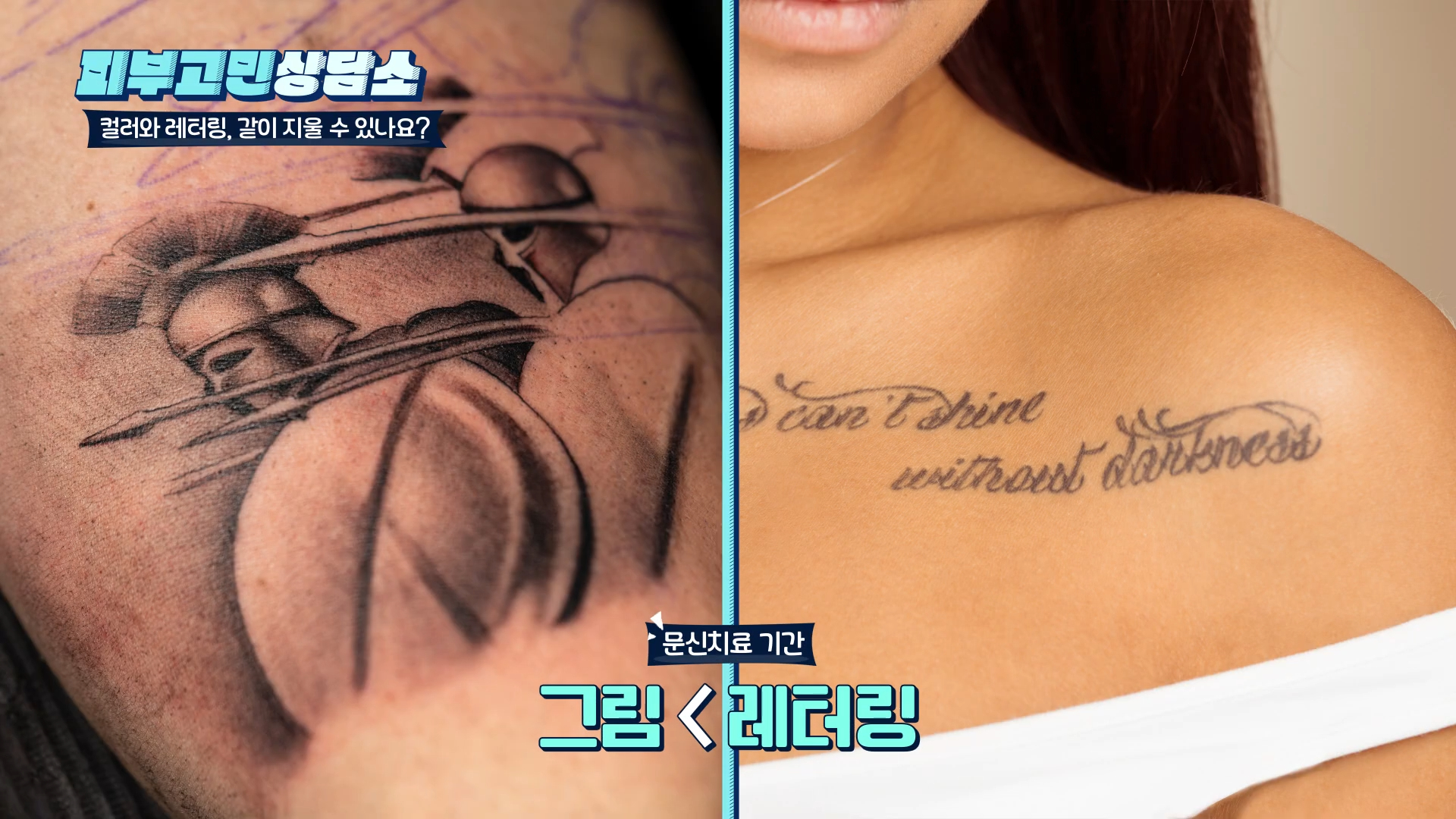

Three Reasons Why Lettering Tattoo Removal Requires More Sessions
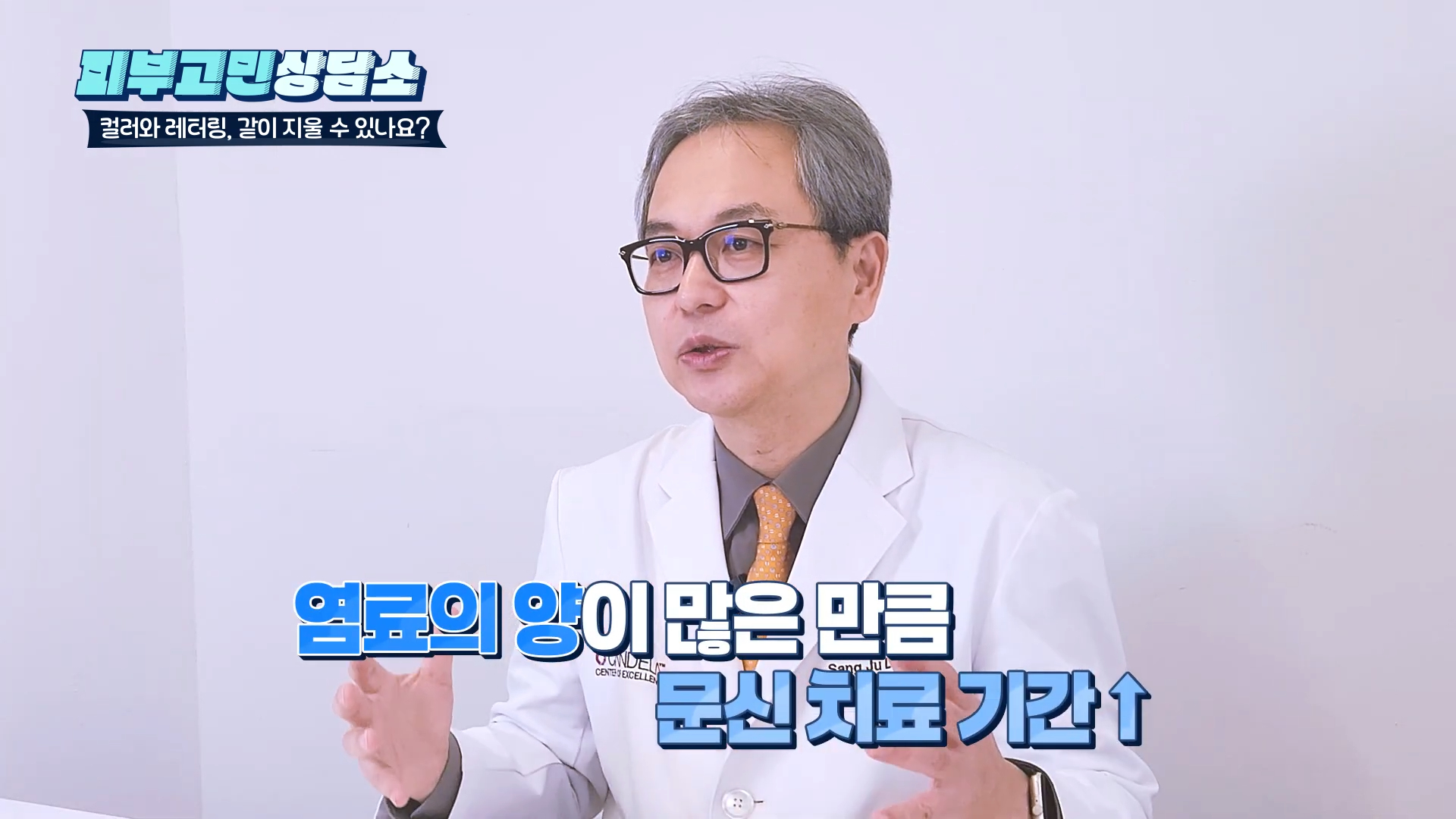
1. The ink is exceptionally dense. Lettering designs require each fine line to be clear, so ink tends to be packed densely within narrow lines. Even with the same area, if the pigment is concentrated, the amount to be broken down at once increases, which may lead to more laser Tattoo Removal sessions.
2. It is often tattooed darkly and thickly. Dark black ink is primarily used for lettering, and it is common for lines to be made thick and dark to ensure clarity. While black is known to respond well to lasers, the darker and deeper the pigment, the more limited the lightening effect may be in a single session.
3. Even with a single color, the duration is long. Although it may seem like a single color would be removed quickly, the actual treatment duration is determined by ink density, depth, and line thickness. Because lettering is read exactly as the letters are formed, even a small amount of remaining pigment will show, requiring more stages until it feels sufficiently lightened.
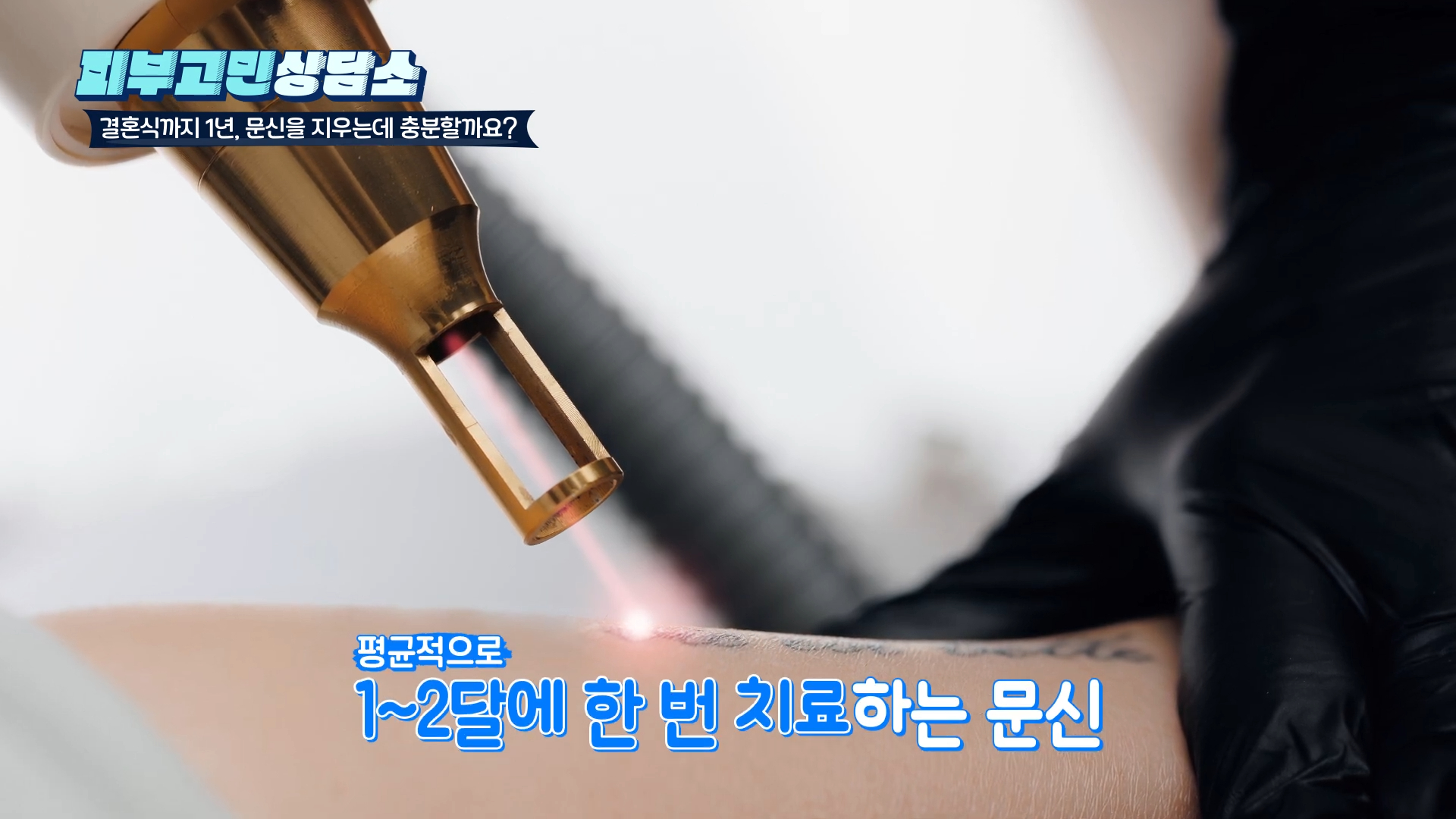
What Happens When Laser Tattoo Removal Output Is Excessively Increased
You might feel pressured by the duration and wish to reduce the number of Tattoo Removal sessions by using a strong laser at once. However, if the output of laser Tattoo Removal is excessively increased, thermal damage can spread not only to the pigment but also to surrounding normal tissues, increasing the likelihood of problems such as Burn, severe Blistering, pigment changes, and Scars.
In lettering, the pigment is concentrated to make the lines clear, so energy tends to be focused on a small area. Furthermore, it is often tattooed on thin-skinned areas like the wrist or ankle, requiring even greater caution. Once a Scar forms, it is difficult to reverse, so Tattoo Removal for lettering must be approached carefully from the beginning, thoroughly considering safety.
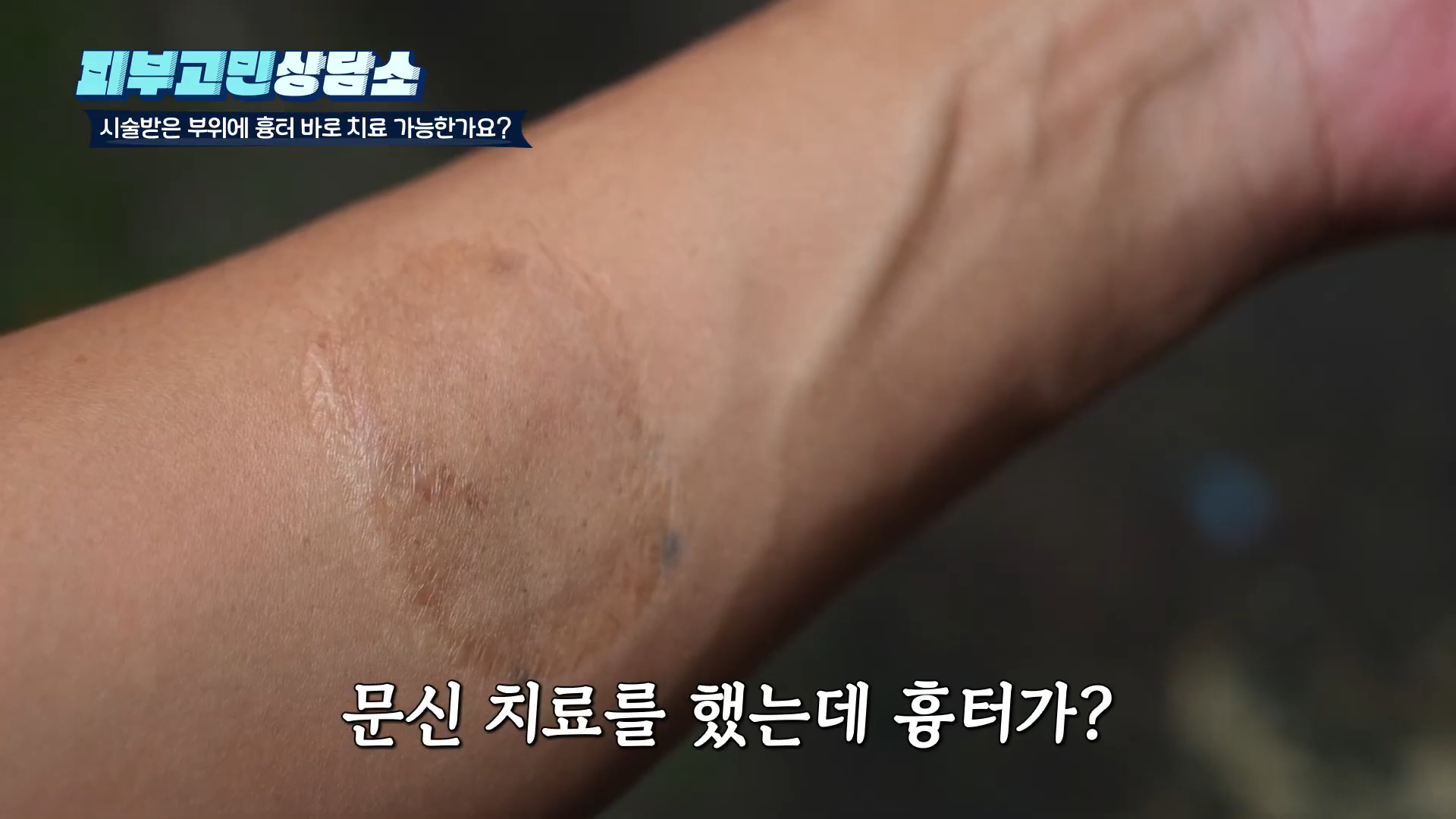
Pinhole for Burn & Surgical Scar Management After Laser Tattoo Removal
After laser Tattoo Removal, Blisters or scabs may form due to residual thermal stimulation. In such cases, using Pinhole for Burn & Surgical Scar together can efficiently create an environment that aids skin recovery.
Pinhole for Burn & Surgical Scar is a method that helps heat, waste products, and Blister contents escape from within the skin through microscopic holes. It began to gain attention as an effective method for treating early Burn Scars, and is now also used in various Scar treatments, Stretch Mark improvement, and management to reduce side effects of Tattoo Removal lasers.
Whether and when to apply Pinhole for Burn & Surgical Scar depends on the skin condition, area, and degree of reaction. Therefore, do not pop Blisters yourself or treat them arbitrarily; always proceed according to the medical staff's judgment.
Comparison of High-Output Treatment and Gradual Laser Tattoo Removal
Tattoo ink, broken down into tiny fragments by the laser, gradually exits the body over time. This process requires a recovery period, so proceeding gradually with intervals is fundamental to laser Tattoo Removal.
The number of Tattoo Removal sessions for lettering varies depending on ink depth and density, when the tattoo was done, the area, and skin condition, so there is no fixed number. It is more important to safely continue each session while checking the skin condition than the number of sessions itself.
In Summary
Tattoo Removal for lettering tends to require more sessions because the ink is dense and dark, but excessively increasing the output can leave a greater burden of Scars. Rather than being impatient, gradual laser Tattoo Removal, adjusted to the skin's recovery speed, is the safest approach, and if necessary, management like Pinhole for Burn & Surgical Scar can be added according to the medical staff's judgment. If you are looking into Tattoo Removal for lettering in Sinchon, you can check the number of sessions and plan suitable for your tattoo and skin condition through a consultation inquiry [blocked].

Author · Dr. Lee Sang-Joo / Dermatologist As the representative director of Yonsei Star Dermatology Sinchon Main Branch, Dr. Lee Sang-Joo provides treatment for various skin procedures including skin boosters, Scars, and Pores. Detailed history can be found in the Medical Staff Profile. · Last reviewed October 25, 2026
This article is intended to provide general medical information, and treatment effects and downtime may vary depending on individual skin conditions. For an accurate diagnosis and treatment plan, please consult with a dermatologist.