

Many people get tattoos with the intention of keeping them for a long time, but as time passes, more people than expected wish to remove them for various reasons. When looking into Tattoo Removal, people often expect it to be quickly and cleanly removed because of advances in Tattoo Removal laser equipment. However, they may hesitate after encountering reviews such as, "The change is slow even after several sessions," or "The color seems to have become darker." It's natural to wonder why the results vary so much from person to person, even with the same Tattoo Removal laser.
In this article, for those considering removing an old tattoo, we will examine the reasons why the Tattoo Removal period differs, how to approach Tattoo Removal laser intensity, and the R0 method, which helps reduce the burden of multiple sessions.
Why Tattoo Removal Results Differ Even with the Same Number of Sessions
Tattoo Removal does not yield the same results even with the same number of sessions. The determining factor is the inherent conditions of the tattoo itself, and these conditions vary from person to person.
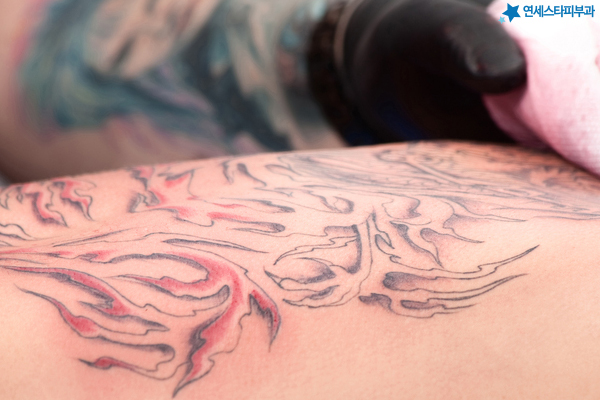
The first condition is the amount and depth of the ink. If there is less tattoo pigment in the skin, the fading per session tends to be significant. However, for tattoos with a lot of pigment, such as lettering or Color Tattoos, it is often difficult to expect satisfactory changes with a single Tattoo Removal laser treatment.
The second condition is the color of the ink. The degree to which each color reacts to the laser differs, so the progress of a tattoo predominantly black may differ from one with various colors mixed in. Thirdly, the area where the tattoo was placed, the skin condition, and individual constitution also affect the Tattoo Removal period.
Temporary Change: Color Appears Darker in Early Stages of Treatment
It's also good to be aware of temporary changes that may occur during treatment. Tattoo ink is embedded across various layers of the skin, and when Tattoo Removal laser treatment begins, the ink in the upper layers is broken down into fine particles. During this process, the color may appear to become darker.
This kind of change is a common occurrence. Rather than being surprised and stopping Tattoo Removal, it is important to continue treatment and allow it to gradually fade.
Tattoo Removal Laser Intensity: Will a Stronger Setting Remove it Faster?
The question, "Won't it disappear faster if the intensity is increased?" is frequently asked. There is certainly a correlation between intensity and removal effectiveness. If the output is too weak, the tattoo pigment may not break down sufficiently, leading to slow changes. However, simply increasing the intensity excessively is not the correct answer.
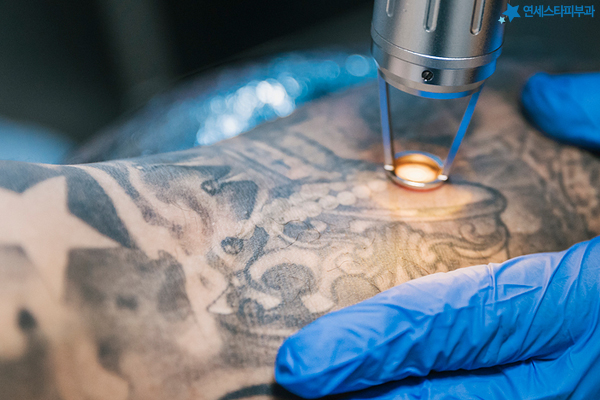
If the intensity is too high, the tattoo pigment can break apart explosively, potentially leaving damage to the surrounding skin. For individuals prone to Scarring, there is a risk of developing noticeable Scars or hyperpigmentation. If the skin takes longer to recover, the interval between subsequent sessions may lengthen, which could actually prolong the overall removal period. The path to fast Tattoo Removal is not in indiscriminately increasing intensity, but in consistently maintaining an appropriate intensity tailored to the skin condition.
Is Old Tattoo Removal More Difficult?
Many people believe that Old Tattoo Removal is always difficult, but it's also hard to conclude that it will be easy just because it has faded with age. If the ink has faded or spread to some extent over time, the process of removing the remaining pigment may feel easier. On the other hand, old tattoos that initially had a lot of pigment or where the ink is deeply embedded in the skin may still require multiple treatment sessions.
Therefore, the criteria for Old Tattoo Removal are not the age of the tattoo, but rather the amount, depth, and color of the ink, as well as the current skin condition. If you are planning Old Tattoo Removal, we recommend consulting with a specialist who can directly examine your current tattoo condition and discuss the estimated number of sessions and duration.
Possible Reactions After Tattoo Removal Laser Treatment
After Tattoo Removal laser treatment, redness, swelling, and stinging may occur. Rarely, problems such as blisters, burns, Scars, or hyperpigmentation may also appear. The risk of these side effects can be reduced by how you manage your skin before and after the procedure, so it is advisable to follow the given care instructions.
The R0 Method: Reducing the Burden of Treatment Duration
The biggest concern with Tattoo Removal laser treatment is undoubtedly the long duration. Typically, it involves a minimum of 10 sessions at 1-2 month intervals, which can take from 1 year to over 3 years, causing many people to become exhausted midway. Among the various attempts to safely continue treatment while reducing this burden, the R0 method is a notable procedure.
With conventional Tattoo Removal lasers, a single pass causes white bubbles to appear on the skin's surface, making it difficult to immediately repeat the treatment in the same spot. The R0 method helps by quickly removing these bubbles with a special solution after the first pass, allowing for additional passes soon after. This means up to 4 repetitions can be performed during a single visit.
Comparing the two methods, conventional Tattoo Removal lasers typically make it difficult to perform more than two consecutive passes due to the bubbles, and often require 10 or more sessions at 1-2 month intervals. The R0 method differs in that it quickly removes the bubbles, allowing for up to 4 repetitions in a single visit.
The significance of the R0 method lies in the expectation that it can achieve the effect of multiple treatments in a single visit without excessively increasing the Tattoo Removal laser intensity. Since treatment efficiency can be enhanced while keeping the intensity low, it is a viable option for those who wish to continue treatment with less burden on their skin. Of course, the results and the number of sessions required may vary from person to person depending on the type of tattoo and skin condition.

In Summary
The key to Old Tattoo Removal is not how strong the laser is, but how consistently and safely the treatment is continued, tailored to your skin and tattoo condition. Please understand that the duration varies depending on the amount, depth, and color of the ink, and consult thoroughly at a clinic that can set the Tattoo Removal laser intensity appropriately and manage side effects. If you are looking for Old Tattoo Removal in Sinchon, you can check the estimated number of sessions for your tattoo and whether the R0 method is suitable through a consultation inquiry [blocked].
Author · Dr. Lee Sang-Joo / Dermatologist As the representative director of Yonsei Star Dermatology Sinchon Main Branch, Dr. Lee Sang-Joo provides comprehensive dermatological treatments including skin boosters, Scars, and Pores. Detailed credentials can be found in the Medical Staff Profile. · Last reviewed October 11, 2026
This article is intended for general medical information purposes, and treatment effects and downtime may vary depending on individual skin conditions. For accurate diagnosis and treatment plans, please consult with a dermatologist.