
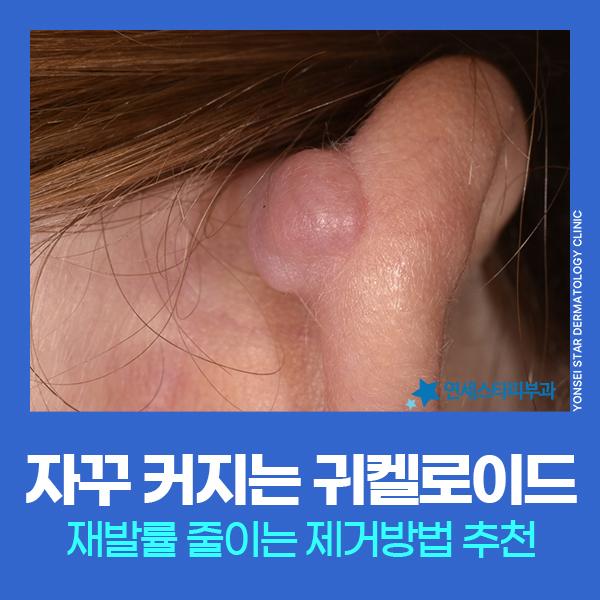

If you notice a small bump on your earlobe or helix after getting a piercing, and it doesn't go away over time, you should consider the possibility of an Ear keloid. Initially, it might appear to be the size of a millet seed and seem like it would subside on its own, but Ear keloids often grow larger over time. In this article, we will sequentially examine why you shouldn't delay Ear keloid pain, methods for Ear keloid removal, and recurrence management after removal.
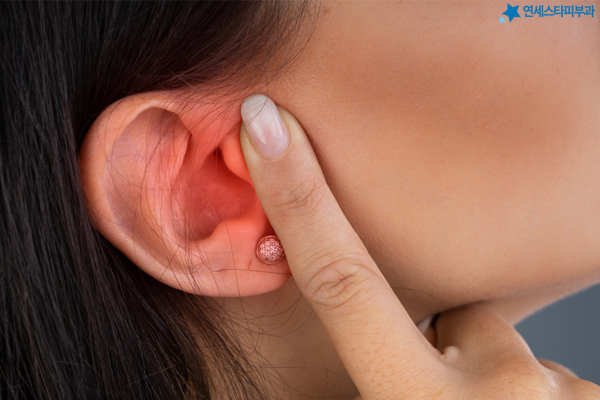
Ear Keloid Pain: Why You Shouldn't Delay It
As Ear keloids grow, their redness deepens, and discomfort such as a pulling sensation and itching can accompany Ear keloid pain. Even being pressed by a pillow or brushed by a collar can be bothersome, and many people experience stress due to their noticeable appearance.
Therefore, rather than neglecting it by saying, "Let's wait and see a little longer," we recommend getting a diagnosis from a dermatologist when you notice changes in size, color, or Ear keloid pain.
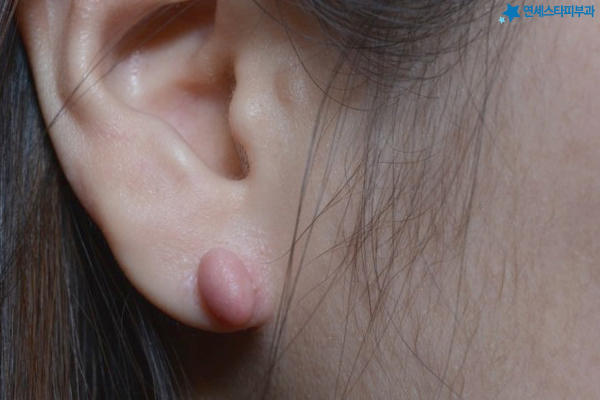
Differences Between Keloids in Other Areas and Ear Keloids
Keloids that form in other areas of the body are typically treated by gradually reducing their size and thickness with a combination of steroid injections and Laser Treatment. In contrast, Ear keloids often grow as bulging lumps, and the borders of the lesion are relatively distinct. Thanks to these characteristics, Ear keloids can be treated by surgically removing the lesion itself using laser excision.
Ear Keloid Removal: Characteristics of Laser Excision
Laser excision used for Ear keloid removal is a method that cuts out the problematic lesion with a very fine beam. Its advantage is that it can be applied precisely and cleanly even in areas with complex curves, such as the earlobe and helix.
Many people worry about Laser Treatment having to be received multiple times. However, Ear keloid removal is usually completed quickly with a single laser excision, which means less time commitment. Adding injection management to reduce the risk of recurrence and maintain the effect for a long time enhances the completeness of the treatment. However, whether laser excision can be applied and the results may vary depending on the size and location of the lesion and individual skin reactions, so an accurate diagnosis must be made during the consultation first.

Recurrence Management After Ear Keloid Removal
A Keloid is not a Scar that ends once it's removed. Due to a constitutional tendency for Scar tissue to grow excessively, there remains a possibility of recurrence if only excision is performed. After Ear keloid removal, management treatment to prevent recurrence and maintain the improved state for a long time should be planned together.
This involves observing the progress by combining steroid injections and Laser Treatment, tailored to the condition, to calm remaining Scar cells and inflammatory reactions after excision. Treatment satisfaction tends to be high when recurrence management is continued together after excision, and the duration and frequency of management vary depending on each individual's Keloid responsiveness.
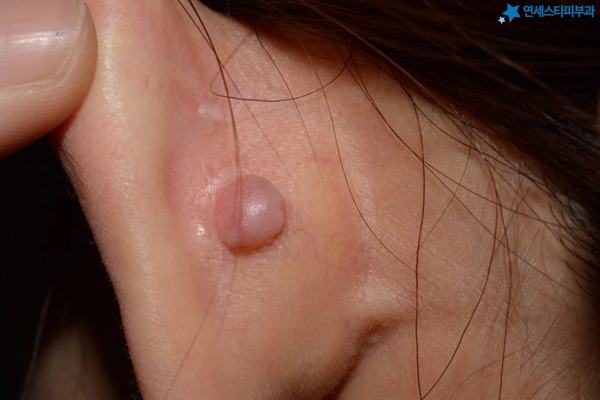
In Summary
Since Ear keloids can appear in noticeable areas and may recur, it is important to establish a treatment plan from the outset. If the size has increased and Ear keloid pain has begun to appear, we recommend getting a diagnosis before it grows further and checking how to proceed with laser excision and recurrence management. If you are curious whether your Ear keloid is suitable for laser excision or how long recurrence management should be continued, you can find out through consultation inquiry.

Author · Dr. Lee Sang-Joo / Dermatologist As the chief director of Yonsei Star Dermatology Sinchon Main Branch, Dr. Lee Sang-Joo provides comprehensive skin treatments including skin boosters, Scars, and Pores. Detailed credentials can be found in the Medical Staff Profile. · Last reviewed October 5, 2026
This article is intended to provide general medical information, and treatment effects and downtime may vary depending on individual skin conditions. Please confirm an accurate diagnosis and treatment plan through a consultation with a dermatologist.